


























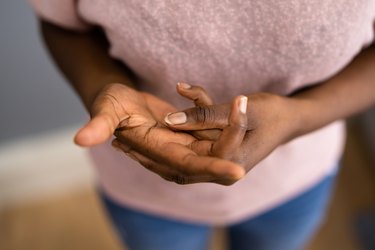




























Spousal abuse is a common reality, though the victim may be in denial. Unfortunately, the failure to recognize or prevent this type of abuse can have lasting effects, and may even result in death. Help is available to you, from law enforcement to abuse shelters. If you personally know someone who is abused by her partner, try to encourage her to seek help. People get married to spend the rest of their lives with the person they love, not to endure domestic abuse.
Facts
Spouses abuse their partners to attempt to control them. Helpguide.org explains that the abuser accomplishes this by making excuses for his actions, threatening or intimidating you, humiliating you, and taking complete control of your marriage.
Types
Spousal abuse is often associated with physical abuse, including sexual abuse. However, another form of spousal abuse is emotional abuse. Sadly, emotional abuse is often overlooked and not identified as quickly, as the problem is not seen. Spouses who are emotionally abused may find that it takes longer to recover from this type of trauma.
Identification
A victim of spousal abuse is in constant fear of her partner and is subconsciously expecting the next round of abuse. Aside from physical abuse, your partner may restrict your lifestyle, isolate you from family and friends, control your money, constantly put you down and force you into actions you would not commit on your own. Your abuser may also manipulate your actions, preventing you from having your own voice. As a result, you may feel depressed, anxious, guilty, numb and even suicidal.
Considerations
Sadly, death is not uncommon in situations of spousal abuse. The American Bar Association (ABA) reports that 50 percent of all people serving time in prison for domestic violence had killed their spouse. The presence of a gun in the home increases your risk. Also, female spousal abuse victims far outnumber male victims, although husbands can still succumb to this type of abuse. According to the ABA, approximately 84 percent of spousal abuse victims are women.
Prevention/Solution
Do not assume that the abuse will simply stop or improve. You must take action to protect yourself. Ideally, you should leave the abusive situation, especially if you are in constant physical danger. However, if you feel you are in a situation in which you cannot leave, call the National Domestic Violence Hotline at (800) 787-3224. A representative can provide guidance in your particular situation and also recommend a shelter. If you are in need of immediate help, call 911.


Member Comments