














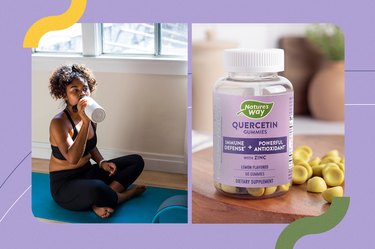

























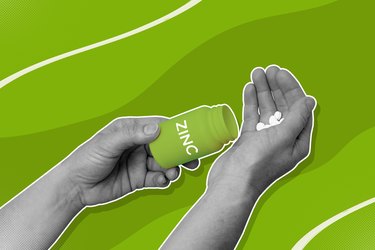




According to the National Institutes of Health's National Center for Complementary and Alternative Medicine (NCCAM), many Americans use dietary supplements in order to maintain and improve health. Some supplements appear promising in the prevention of cold and flu. Many of these supplements, however, are regulated less strictly than prescription and over-the-counter drugs, so consumers should take care to evaluate claims critically. There are many cold and flu prevention supplements on the market.
Echinacea
According to a 2007 article in "Alternative Medicine Reviews," echinacea is the most recognized herbal supplement for the prevention and treatment of colds and flu. Randomized clinical trials, however, have shown mixed results, with some studies reporting a significant reduction in the severity and duration of symptoms and others showing no benefit. When taken by mouth, says the NCCAM, echinacea rarely produces side effects with one caveat: echinacea is a member of the daisy family, so people with a history of asthma or other allergies to other plants in the daisy family such as ragweed, chrysanthemums, marigolds and daisies, should not take echinacea.
Elderberry
According to the well-regarded German Commission E Monographs, which were translated into English by the American Botanical Society in 1998, elderberry provides effective relief for colds, fevers and catarrh (excessive respiratory tract secretions). Critics have pointed out that there is little research behind the monographs. Elderberry-treated influenza-infected human cells demonstrate impaired ability to infect other cells compared to untreated cells, however. Elderberry also activates phagocytes, which are specialized immune cells that engulf and digest cells virus-infected cells. In clinical trials, elderberry appeared to reduce the duration of influenza symptoms from 7 or 8 days in untreated individuals to 3 or 4 for treated individuals. NCCAM recommends that only cooked, ripe, black or blue elderberries or supplements prepared from these be consumed. Green and/or raw elderberry can cause nausea, vomiting and severe diarrhea.
North American Ginseng
Panax quinquefolium, also called North American ginseng, has been shown in controlled trials to reduce the incidence, duration and severity of colds and flu in both sick and healthy people, according to 2007 research presented in "Alternative Medicine Reviews." In a 4-month study among healthy adults who reported a history of two or more colds during the previous year, participants who took the standard dose of the supplement reported a 12.8 percent decrease in the risk of developing a cold, a 31 percent decrease in self-assessed symptom severity and a 34.5 percent reduction in the number of days of symptoms (duration) compared to participants who received a placebo. Additionally it was determined that, among elderly people who also received a flu shot, 32 percent of treated patients developed an upper respiratory tract infection compared with 62 percent of patients who received a placebo and the average symptom duration was reduced by one week (a little more than 5 1/2 days for treated people vs. 12.6 days for placebo).
According to NCCAM, the most common side affects of Panax species are headache and sleep and gastrointestinal problems. Products containing Asian ginseng have been associated with breast tenderness, menstrual irregularities and elevated blood pressure, but these effects may have been due to another component of the product. People taking ginseng or any other supplement should always report this information to their health care provider.
References
- NCCAM: Using Dietary Supplements Wisely
- "Alternative Medicine Reviews;" Colds and Influenza; M. Roxas and J. Jurenka; 2007
- "Complete German Commission E Monograph;" American Botanical Council; M. Blumenthal; 1998


