

























Exercise & Kids

Exercise & Kids
Photo Credit OLYMPUS DIGITAL CAMERA image by fejas from Fotolia.com

Exercise and physical activity are important elements of childhood development. There are numerous physical and mental benefits of exercise for kids. Kids should exercise frequently and pick fun activities that interest them. Also, parents should play an important role by encouraging their children to engage in exercise and physical activity often.

Benefits of Exercise for Kids

Kids experience many of the same benefits from exercise as adults. For example, exercise can help kids build stronger bones and muscles and decrease their risk for conditions such as diabetes, high blood pressure and obesity. Also, according to a recent review article in the Educational Psychology Review by Phillip D. Tomporowski and colleagues, exercise can increase children's mental functioning and thus cognitive development. Therefore, exercise can provide both physical and mental benefits for kids.

How much should kids exercise?

The National Association for Sport and Physical Education (NASPE) has developed specific guidelines detailing how much kids of all ages should exercise. For infants (ages 0 to 12 months), NASPE recommends that caregivers often encourage them move and explore their environments. Toddlers (ages 1 and 2 years) should exercise for at least 30 minutes and preschool-aged children (ages 3, 4 and 5 years) for at least 60 minutes each day. NASPE also recommends toddlers and preschool-aged kids get additional time daily for unstructured exercise, movement and play. For preadolescent children (ages 6 through 12 years), NASPE recommends at least 60 minutes of exercise nearly every day.

Types of Exercise for Kids

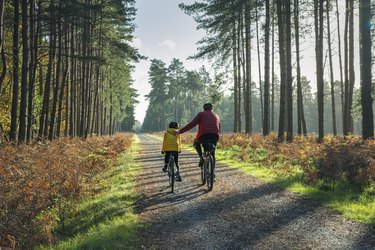
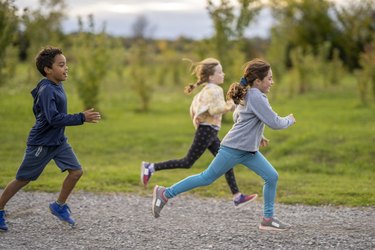
Infants' movement capabilities are limited. However, when they are able, infants should often be encouraged to reach for objects, roll over, crawl and walk. Exercise for toddlers can include dancing to music, imitating animal movements, playing movement games and playground time. For preschool-aged children, exercises might include playing at a park or on a playground, practicing general motor skills such as hopping and jumping, riding a bicycle or tricycle and running or walking. Finally, for preadolescent kids, exercise time can be filled with a wide variety of activities such as biking, hiking, jogging, movement games, running, skiing, team sports and walking.

Parental Involvement

It is important for parents to help their kids exercise. First, parents should set a good example for their children by exercising often themselves. Second, parents should give their kids plenty of opportunities to be physically active by taking them to parks, playgrounds, swimming pools and the like. Parents should also pick age-appropriate exercise activities that interest their children. If kids are engaged in their activities, they will have more fun. Third, parents should ensure that their kids' exercise environments are safe by taking precautions such as removing potentially dangerous obstructions. Finally, parents can encourage their children to be more physically active by limiting their time on the computer, watching television and playing video games.

Warnings

Whenever kids participate in exercise activities, the possibility for injury increases. There are several steps kids and parents can take to minimize the risk for injury. First, kids should wear activity-appropriate equipment. For example, kids should wear a helmet when biking and playing baseball, football, hockey or softball. Kids should also exercise under appropriate adult supervision. Last, kids should always warm up before participating in exercise or physical activities.

References

Article reviewed by Greg Duran Last updated on: Mar 1, 2010

Must see: Photo Galleries

Member Comments