Celery Nutrition Information

Celery Nutrition Information
Photo Credit medicinal herbs - apium graveolens image by Shirley Hirst from Fotolia.com

The first record of celery being used for food was in France in 1623, and it wasn't until the 17th century that the stalks and leaves were eaten, according to the Texas A&M Department of Horticultural Sciences. Celery is a great source of vitamins K and A, folate, potassium, vitamin C and dietary fiber.

Definition

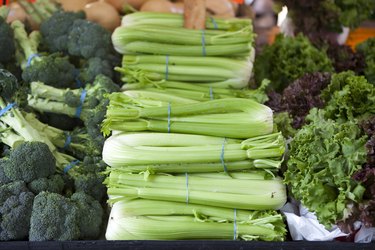
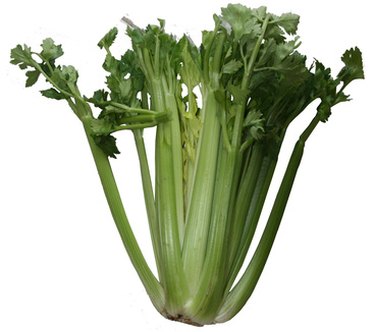
There are two types of celery; yellow (also called self-blanching) and green, which is known as Pascal and is the most popular celery in the United States. The nutrition information is provided for a serving size of one large stalk, measuring 11 to 12 inches and weighing 64 g.

Basic Nutrition

Containing only 10 calories, one celery stalk has 0.1 g of polyunsaturated fat, 2.2 g of carbohydrates and 0.4 g of protein. These values represent 1 percent of the recommended daily value (DV) of protein and carbohydrates based on a 2,000 calorie a day diet. The amount of fat is too small to be significant. Celery provides 1 g of dietary fiber, which is 4 percent of the recommended daily value.

Vitamins

Celery is an exceptional source of vitamin K, containing 18.7 micrograms (mcg), or a whopping 23 percent DV from just one stalk. It's also a great source of vitamin A (287 IU or 6 percent DV), folate (23 mcg or 6 percent DV) and vitamin C (2.0 mg or 3 percent DV). Celery provides 0.013 mg of thiamin, 0.036 mg of riboflavin, 0.2 mg of niacin, 0.2 mg of pantothenic acid and 0.047 mg of vitamin B6. These values represent 1 to 2 percent of the recommended daily value.

Minerals

The most abundant mineral in celery is potassium, providing 166 mg, or 5 percent DV. It supplies 3 percent DV of calcium (25.6 mg) and manganese (0.1 mg). You'll also obtain 0.1 mg of iron, 7 mg of magnesium, 15.4 mg of phosphorus, 51.2 mg of sodium, 0.1 mg of zinc and 0.022 mg of copper.

Flavonoids

Flavonoids are a group of compounds found in fruits and vegetables that function as antioxidants, may inhibit the growth of abnormal cells to reduce the risk of cancer, and may lower the risk of heart disease by decreasing inflammation and blood clots, states information from the Linus Pauling Institute at Oregon State University. According to the USDA Database for Flavonoid Content, green celery hearts contain 22.6 mg per 100 g of flavonoids.

Phthalide

The unique taste and smell of celery comes from the chemical 3-n-butyl phthalide. Information from Florida State University states that this compound may reduce high cholesterol and lower blood pressure by relaxing the muscles in blood vessels.

Celery Seed

Ayurvedic medicine used celery seed to treat colds, arthritis and diseases of the liver and spleen. Today we know that celery seed increases urine output, according to information from the University of Maryland Medical Center. The seeds may also treat arthritis and reduce inflammation, but this hasn't been verified by research studies. Animal studies suggest that celery seed oil helps lower blood pressure and cholesterol.

References

Article reviewed by Andrea Reuter Last updated on: Mar 3, 2010

Must see: Photo Galleries

Member Comments