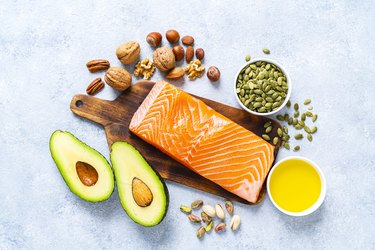
When it comes to eating a heart-healthy diet, your heart is not an island. Heart-smart dietary choices all support your blood vessels to contribute to overall cardiovascular health. Here's a look at how to strengthen blood vessels naturally through food.
Why Healthy Blood Vessels Matter
Video of the Day
Your ticker is the obvious star of the heart-health show, but it's just one part of a larger system that includes thousands of miles of blood vessels, according to the Cleveland Clinic. These lengthy pathways carry life-giving blood to and from your cells day in, day out. When vessels become damaged, clogged or blocked, this can block the flow of blood, eventually resulting in heart disease, heart attack or stroke.
Video of the Day
For this reason, it's critical to take good care of the interior of your blood vessels (called the endothelium) through lifestyle choices like diet. Health experts suggest choosing whole foods rich in omega-3s, nitrates, micronutrients and antioxidants to eat to support your blood vessels.
Omega-3s and Vascular Health
Omega-3 fatty acids are the polyunsaturated fats that get lots of good press for supporting heart health, and research supports those benefits. "Both randomized control trials and observational studies have shown omega-3 fatty acids positively impact cardiovascular health," says Kris Sollid, RD, senior director of nutrition communications for the International Food Information Council, based in Washington, D.C.
The power of omega-3s to improve circulation lies primarily in their anti-inflammatory action. A March 2010 PLOS Medicine review, still considered landmark research on the topic, found replacing saturated fat with polyunsaturated fats like omega-3s calms systemic inflammation, resulting in healthier, more open blood vessels. Sollid says omega-3s also have anticoagulant properties, meaning they can help blood flow smoothly without clotting.
Many people get their omega-3s through fish oil pills or other supplements, but you can get a daily dose in many whole foods, too. "ALA is the plant form of omega-3 and is found in foods like flaxseed and walnuts, as well as canola and soybean oils," says Sollid. "DHA and EPA are marine forms of omega-3. They are produced by microalgae and end up in the tissues of fish like anchovies, mackerel, salmon and sardines."
Nitric Oxide for Vascular Health
You may not see it on nutrition facts labels, but nitric oxide is another important contributor to restoring arterial elasticity. Nitric oxide is a vasodilator, according to the Mayo Clinic, meaning it helps blood vessels relax and widen to allow better blood flow.
Increasing the amount of nitric oxide flowing in your veins starts with eating nitrates, found in a surprising number of common foods. "Eating fruits and vegetables that are rich in nitrates contributes to nitric oxide production in our bodies," Sollid says. "Good vegetable sources include arugula, beets, bok choy, broccoli, carrots, celery, kale, lettuce, radishes, spinach and Swiss chard."
Vitamins and Minerals Help, Too
Food high in potassium — like bananas, sweet potatoes, watermelon, spinach and others — also support healthy blood vessels. "Potassium can help lower blood pressure, especially if you have high blood pressure," Sollid says. When blood pressure stays within normal range, it places less burden on your arteries and veins.
Foods high in folic acid and other B vitamins break down homocysteine, an amino acid that can damage the endothelium, so stock up on B-vitamin-rich citrus fruits, beans and leafy greens, according to Harvard Health Publishing.
Antioxidant compounds in foods can also help keep blood vessels clean and clear. A small August 2017 study in the Anatolian Journal of Cardiology showed antioxidants in garlic improved endothelial function better than a placebo, while a small July 2013 study in the Journal of the American College of Nutrition found a flavonoid in onions improved blood vessel dysfunction.
- Kris Sollid, RD, senior director, nutrition communications, International Food Information Council, Washington, D.C.
- PLOS Medicine: “Effects on Coronary Heart Disease of Increasing Polyunsaturated Fat in Place of Saturated Fat: A Systematic Review and Meta-Analysis of Randomized Controlled Trials”
- Harvard Medical School: “Folic Acid, a B Vitamin, Lowers Stroke Risk in People With High Blood Pressure”
- Anatolian Journal of Cardiology: “Effects of Garlic on Brachial Endothelial Function and Capacity of Plasma To Mediate Cholesterol Efflux in Patients With Coronary Artery Disease”
- Journal of the American College of Nutrition: “Chronic Intake of Onion Extract Containing Quercetin Improved Postprandial Endothelial Dysfunction in Healthy Men”
- Cleveland Clinic: "How Does Blood Flow Through Your Body"
- Mayo Clinic: "Nitric Oxide (Inhalation Route)"
Is this an emergency? If you are experiencing serious medical symptoms, please see the National Library of Medicine’s list of signs you need emergency medical attention or call 911.