When you set out to lose weight, your goal may to be as slim and trim as the people you see on the cover of fashion magazines. To help you on your way, supermodel Kelly Bensimon has created the 3-Day Supermodel Diet, which also includes an exercise plan.
If you're interested in a lifestyle change, you could use the 3-Day diet to jump-start your diet, then switch to less restrictive dieting tactics for longer term weight loss. Consult your doctor before you start any weight-loss diet or change your exercise routine.
Video of the Day
Video of the Day
Supermodel Diet Plan
Bensimon's three-day diet plan, as discussed by foxnews.com, is about eating clean, which means filling your diet with whole, minimally processed foods. In addition to excluding processed foods such as cake and cookies, the supermodel diet also excludes oil, alcohol, nuts, sugar, salt and caffeine.
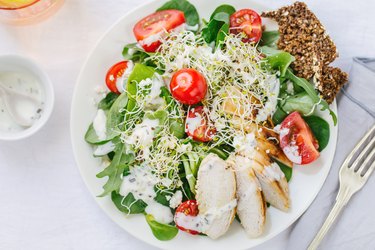
For breakfast, drink Kelly green juice, which is a blend of mint, parsley, kale, broccoli, lime juice, orange juice and water. At lunch, eat lean proteins such as chicken, steak and fish; whole grains such as brown rice; and vegetables such as spinach or salad. Dinner is the same as lunch, minus the whole grains. For detoxification, you also need to drink eight glasses of water a day.
The supermodel offers a number of tips to help you lose the weight, such as using a smaller plate to control portions, chewing your food eight times before swallowing and brushing your teeth after each meal to limit your desire to eat more after meals.
Supermodel Exercise Plan
The exercise portion of the supermodel's diet plan is a 25-minute workout. The workout includes an 18-minute run, followed by two minutes of jump rope. Bensimon's exercise plan also includes planks, which are done for two minutes, and five pelvic thrusts.
Although not part of the 25-minute workout, Bensimon also suggests you include 20 minutes of light exercise such as Pilates, yoga, walking or biking, on the supermodel diet plan. She refers to these exercises as restorative.
Supermodel Diet Pros and Cons
Bensimon's diet plan isn't that far off from what models typically eat, according to Diets in Review. While the supermodel's diet plan encourages you to eat healthy foods, it's very restrictive and is missing major food groups such as fruit, dairy and fat.
Additionally, while you may lose weight quickly following the diet, it may not last. You can't lose fat weight in three days, so those three to five pounds you lost is most likely muscle and water.
Realistic Weight Loss
While you might dream of supermodel thinness, the University of Wisconsin says a supermodel's body size is unrealistic for many people — not to mention unhealthy — if you're not meant to have a model's body type.
Making changes to your eating habits that help you lose weight slowly at a rate of 1 pound to 2 pounds a week is not only healthy, but may result in longer lasting weight loss, according to the American Academy of Family Physicians.
Start by making low-calorie fruits and vegetables the focus of your meals, and filling in with nutrient-rich whole grains and lean proteins.
- Foxnews.com: "Kelly Bensimon's 3-Day Supermodel Diet"
- University of Wisconsin: "Depleting Body Image: The Effects of Female Magazine Models on the Self-Esteem and Body Image of College-Age Women"
- Diets in Review: "The Model's Diet"
- American Academy of Family Physicians: "What It Takes to Lose Weight"