






























































1. Starting Off Right
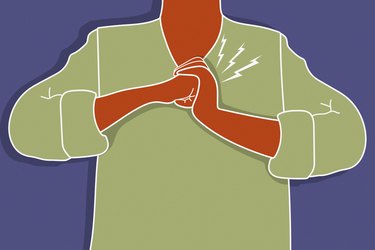
When working to recover strained shoulders, the first few days after injury are extremely important. Drink lots of water. When muscles are injured, they release toxins which build in the tissue to cause stiffness and pain. Water will help to keep the shoulder joint lubricated and flush toxins from the body. Try to keep your shoulder stationary during acute injury, even using a sling if necessary. Acute injury usually lasts for 3 to 7 days and is characterized by hot, inflamed tissues. During this period, it is also important to apply ice to the area four to five times daily for 15 to 20 minutes at a time to help reduce inflammation, calm the pain and push toxins away from the area.
2. Healing With Heat
Heat can help to heal strained shoulders by increasing blood circulation and can be applied four to five times a day for 10 to 15 minutes after inflammation has subsided. It is important to remember that heat can aggravate acute injury, so never apply heat if the tissue already feels hot or inflammation is apparent. Additionally, if the application of heat tends to aggravate things, apply an ice pack immediately after removing heat.
3. To Medicate or Not to Medicate
Often anti-inflammatory medications can help to treat shoulder strain; however, only take pain medications if absolutely necessary, as masking the pain can cause you to strain the shoulder further by performing activities that would otherwise be uncomfortable. The best option is ice after the initial injury and then heat combined with topical creams with menthol which help to reduce pain and relax the muscles.
4. Use It or Lose It
Physical therapy for strained shoulders should begin as soon as the acute injury has passed, as some loss of range of motion can potentially become permanent if you do not incorporate stretches and gentle exercises into your shoulder strain treatment. Simple exercises such as shoulder shrugs, cross the body and behind the head stretches and arm circles are a great way to keep things moving; however, the stretches and exercises that are best for you will depend on the injury. It is important that you see a professional physical therapists for an exercise plan which includes stretches, strength exercises as well as information on how many repetitions and sets you should perform each day.
5. Keep Moving
While it may seem obvious, try not to hold your shoulder in a stationary position throughout the day, which may seem like a natural way to prevent pain, but can reduce your long-term range of motion. Try to keep the arms moving as normal, working through the discomfort. Additionally, self-massage or treating yourself to a professional massage can be a great way to promote healing and reduce pain.


