



























































What Are the Treatments for Knee Tendon Tear?

Torn knee tendons, also known as tearing or rupture of the patellar tendon, is a fairly common sports injury. It can be quite painful as this tendon allows the quadriceps to connect to the lower leg, allowing full extension of the leg at the knee joint. This kind of injury requires full healing before the joint can become fully functional again.

RICE

As SportsInjuryClinic.net explains, once there is a rupture (either partial or complete) of the patellar tendon, there are some immediate treatments that can be administered to help lessen the pain and swelling. The site recommends RICE, which is an ancronym for rest, ice, compression and elevation. This set of treatments helps relieve swelling, which can cause the knee joint to become stiff and difficult to move. The clinic also recommends the use of NSAIDs, which are non-steroidal anti-inflammatory drugs. These medications will help relieve pain and will also reduce the swelling. These sets of treatments will not only relieve the immediate pain and inflammation, they will also make further evaluation easier. For very minor tendon tears, this regimen may be sufficient.

Immobilization and Therapy

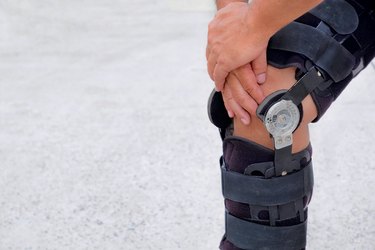
The American Association of Orthopedic Surgeons explains that small, partial tears of the patellar tendon can be healed without surgery. Immobilization typically uses a brace or specially fitted immobilizer to keep the knee joint straight while the tendon heals. This type of treatment typically requires 3 to 6 weeks for the tendon to heal, and most patients need to use crutches to avoid putting weight on the injured joint. This treatment is usually combined with leg-strengthening exercises which are performed under the care of a trained physical therapist.

Standard Surgery

Complete tears of the patellar tendon almost always need to be treated surgically so that the tendon can be sewn back together. The standard method of surgically repairing the tendon involves drilling small holes in the patella, or kneecap. This allows the surgeon to use sutures to connect the torn tendon back together and then to thread the sutures through the patella for additional support.

Suture Anchors

The American Association of Orthopedic Surgeons notes that a novel way of repairing torn patellar tendons involves the use of special devices called suture anchors. Suture anchors allow the surgeon to affix the tendon to the bottom of the kneecap, meaning that holes do not need to be drilled into the bone. Because this technique is new, not all surgeons perform it. Its long-term efficacy hasn't been studied, but because it does not involve drilling, the recovery can be easier and quicker.

References

Article reviewed by Libby Swope Wiersema Last updated on: Mar 18, 2010

Must see: Photo Galleries