


































































5 Things You Need to Know About Plantar Flexion

1. What is it?

Plantar flexion is the movement of the foot away from the body by bending the ankle. Plantar flexion occurs when you stand on your tiptoes or when you push down on the gas pedal in your vehicle. Plantar flexion depends on the muscles of the ankle and calf to work properly.

2. Muscles and More

The muscles involved in plantar flexion are mostly in the posterior compartment of the leg. The three main deep muscles used include the flexor hallucis longus, the flexor digitorum longus and the tibialis posterior. There are also three superficial posterior compartment muscles used: the gastrocnemius, the soleus and the plantaris. In the lateral compartment of the leg, the muscles involved are peronaeus longus and peronaeus brevis. The muscles in the lateral compartment have only weak participation in the plantar flexion. The joints in the ankle are highly involved in plantar flexion. The nerves associated with plantar flexion are the S1 and S2 nerves which run from the lower back to the bottom of the foot.

3. Exercises

One of the best exercises for the muscles and joints involved in plantar flexion is calf raises. To do a calf raise, start by standing up, knees slightly bent and legs shoulder-width apart. Lightly hold onto a chair or rail for balance if necessary. Raise yourself up by standing on your tiptoes. Return to the starting position by slowly lowering yourself. Do twelve repetitions to complete a set and complete three sets a day. Once you master doing calf raises without added weight, you can raise the difficulty by using a weighted bar, just like doing squats or by holding weights in your hands as you do calf raises.

4. Injury

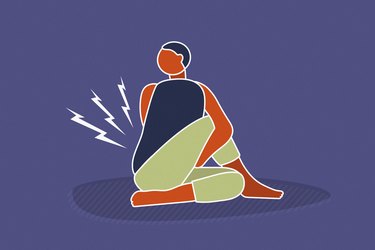
Plantar flexion injuries are fairly common. The most frequently diagnosed injury that affects plantar flexion is ankle sprains. Plantar fasciitis is another common injury to the plantar flexion movement. Plantar flexion issues can also lead to back pain, since the S1 nerve runs from the foot to the lower back.

5. Normal Range

The normal range of plantar flexion is from 30 to 40 degrees when the ankle is fully bent. However, in some cases, angles of up to 50 degrees are normal. Heel raises are also a good assessment of plantar flexion. When you stand on your tiptoes, there should be at least five inches between the heel and the floor.

Last updated on: Nov 19, 2009

Must see: Photo Galleries