Your diet affects every part of your health — and sexual health is no exception. For people with vaginas, diet, hydration and nutrient intake are key in supporting sexual wellness and even help prevent conditions like urinary tract infections (UTIs) and yeast infections.
"Sexual health is directly connected to physical wellbeing with lifestyle measures such as diet, exercise, stress and sleep playing integral roles," says Shannon M. DeVore, MD, clinical assistant professor in the Department of Obstetrics and Gynecology at NYU Langone Fertility Center and a reproductive endocrinologist with the fitness brand Pvolve.
Video of the Day
Video of the Day
Of course, no one food will improve sexual health all on its own, Dr. DeVore says. But by incorporating certain food groups, vitamins and nutrients, you can improve your diet and better support your body.
Below, find the top foods that support vaginal sexual health.
A Note on Language
Here at LIVESTRONG.com, we believe sex and gender are spectrums, not binaries, and we typically use inclusive language to reflect that belief. Any binary terms used below are to match the language used by the primary source for accuracy.
1. Yogurt
You may already know probiotics — a type of live, good-for-you bacteria in your gut — are part of a healthy diet. Probiotics can help maintain the balance of bacteria in your body, which can support your immune system, tamp down inflammation and keep your digestive system running smoothly, according to the Cleveland Clinic.
But probiotics can also play a role in supporting sexual health.
"Greek yogurt and other probiotic-rich foods can be helpful not only to support a healthy gut microbiome, but to maintain diverse and stable vaginal flora, which may prevent yeast infections and bacterial vaginosis," says Emily Maus, RD, a registered dietitian specializing in women's health.
Keep in mind not all yogurt has live probiotics. Look for active culture yogurts — like Greek yogurt — and options that aren't overly sweetened. Other probiotic-rich foods include kefir, a fermented milk drink, kombucha, sauerkraut and kimchi.
2. Nuts and Seeds
Sunflower seeds, almonds and avocado are among the many foods rich in vitamin E, a nutrient with antioxidant properties — meaning it can help protect your body against disease.
Getting enough vitamin E from your diet is also thought to play a role in maintaining normal function of the reproductive system, according to a March 2022 article in Molecules, which reported vitamin E's antioxidant properties have been linked to lower rates of complications during pregnancy. (It's worth repeating these findings are about dietary vitamin E only. Taking vitamin E supplements during pregnancy is not recommended, according to the World Health Organization.)
Vitamin E has also been tied to improved endometrial response in women with unexplained infertility in a small February 2018 study in Antioxidants.
Plus, vitamin E increases blood and oxygen flow to tissue, Dr. DeVore says. "There is some thought that it is helpful for vaginal dryness, including vaginal atrophy, which occurs in postmenopausal women, though data is mixed."
If vaginal lubrication is a particular concern, some research suggests fruit — particularly apples, which are high in antioxidants and phytoestrogens — can support lubrication and vaginal function when eaten daily, per a July 2021 article in the American Journal of Lifestyle Medicine.
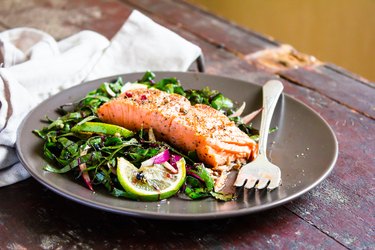
3. Salmon
Salmon (and other fatty fish) is a rich source of omega-3s, healthy fats that support your heart and hormonal health. Getting enough omega-3s is linked to a lower risk of heart disease, blood clots, dementia and certain kinds of cancer, including breast cancer, according to the Cleveland Clinic.
Omega-3s have been associated with improvements in a host of sexual health concerns, including infertility, premature birth, menopausal symptoms and postpartum depression, per older but frequently cited October 2004 data in Obstetrical & Gynecological Survey. The fatty acids are thought to help by improving blood flow to the uterus (and the placenta, in the case of pregnancy).
"Similarly, foods rich in omega-3 fatty acids, such as salmon and flaxseeds, help to decrease inflammation and support blood flow to the vaginal tissue," Dr. DeVore says.
In more recent research, omega-3 supplements were linked to lower anxiety among pregnant women, which in turn improved sexual function, according to a small July 2022 International Journal of Impotence Research study.
Maus recommends chia seeds, flaxseeds and fatty fish like salmon to boost your omega-3 intake.
4. Spinach
Almonds, bananas, black beans, brown rice and spinach are all good sources of magnesium, a mineral involved in muscle and nerve function, blood pressure regulation and bone development, according to the Office of Dietary Supplements.
It's is also associated with mood stability. "A diet high in magnesium supports the balance of progesterone and estrogen, which supports a stable mood throughout the menstrual cycle," Maus says.
Some studies have shown people with polycystic ovary syndrome (PCOS) and those who experience certain pregnancy complications, like preterm labor and preeclampsia, are more likely to have lower levels of magnesium, according to June 2021 research in the Journal of the Society of Nutrition and Food Science, but more studies are needed to fully understand this association.
Aim for 310 to 320 milligrams of magnesium a day from your diet, according to the Cleveland Clinic.
Other Ways to Support Your Sexual Health
In addition to diet, there are other steps you can take to support your sexual wellness and a healthy sex life:
- Manage stress: "Stress is a killer for libido," Maus says. "It is important to manage your stress to support a healthy menstrual cycle, lower PMS and create space for intimacy." You can help manage stress with plenty of sleep, exercise, quality time with friends and family and professional mental health support like therapy.
- Exercise: "I always recommend incorporating exercise into your daily routine, not only because it improves overall life quality, but it actually benefits sexual wellness," says Monique Gary, DO, a women's health specialist and medical director of the Grand View Health/Penn Cancer Network. Regular physical activity may also support a healthy libido and your ability to orgasm, she says.
- Stay hydrated: Getting enough water everyday is important for vaginal lubrication and preventing UTIs. To stay properly hydrated, aim for 11.5 to 15.5 cups of fluids per day (water, tea, coffee and other sugar-free beverages all count), according to the U.S. National Academies of Sciences, Engineering, and Medicine.
- Quit smoking: Smoking comes with a number of sexual health risks, including reduced fertility and increased risk of pregnancy complications, according to the Centers for Disease Control and Prevention.



When to Get Help
If you are experiencing any sexual health issues — including irregular periods, severe PMS symptoms, pain during sex, vaginal dryness, fertility issues or low libido — you should consult with your health care provider on how best to address your concerns.
"There isn't a one-size-fits-all approach when it comes to diet and sexual wellness," Dr. Gary says. "You need to consider your personal circumstances — including any chronic illnesses, your current lifestyle habits and what foods you have access to — to help tailor a plan to meet your needs."
- Cleveland Clinic: "Probiotics"
- Molecules: "Are Vitamin E Supplementation Beneficial for Female Gynaecology Health and Diseases?"
- Antioxidants: "Vitamin E as an Antioxidant in Female Reproductive Health"
- American Journal of Lifestyle Medicine: "Dietary Approaches to Women’s Sexual and Reproductive Health"
- Cleveland Clinic: "Omega-3 Fatty Acids"
- Obstetrical & Gynecological Survey: "Women and Omega-3 Fatty Acids"
- International Journal of Impotence Research: "Effect of Omega-3 fatty acid supplementation on sexual function of pregnant women: a double blind randomized controlled trial"
- ODS: "Magnesium"
- Journal of the Society of Nutrition and Food Science: "Effect of magnesium supplementation on women's health and well-being"
- Cleveland Clinic: "Magnesium Rich Food"
- U.S. National Academies of Sciences, Engineering, and Medicine: "Report Sets Dietary Intake Levels for Water, Salt, and Potassium To Maintain Health and Reduce Chronic Disease Risk"
- CDC:"Maternal and Infant Care Settings and Smoking Cessation"
- WHO: "Vitamin E supplementation in pregnancy"
Is this an emergency? If you are experiencing serious medical symptoms, please see the National Library of Medicine’s list of signs you need emergency medical attention or call 911.