Polycystic ovary syndrome (PCOS) is an endocrine condition that affects 1 in 10 people with ovaries of reproductive age, per the U.S. Department of Health and Human Services — but it's different for everyone.
Common signs and symptoms include irregular menstrual cycles, elevated testosterone levels, follicles on the ovaries, acne, facial hair growth and so-called male-pattern baldness — but no matter your symptoms, healthy lifestyle changes like a well-balanced diet and regular exercise can often help.
Below, experts explain how PCOS affects metabolic health, why nutrition matters if you have PCOS and how healthy behaviors can help manage the condition.
PCOS and Your Metabolic Health
PCOS is still somewhat mysterious. "The interesting thing about PCOS is that we still don't completely understand the actual cause," says Margaret Nachtigall, MD, reproductive endocrinologist and clinical associate professor in the Department of Obstetrics and Gynecology at NYU Langone.
"Risk factors are different depending on the type of PCOS, but family history and genetics definitely play a big role," she says. If you have a parent or sibling with PCOS, you have a greater chance of having the condition, too.
While there's not much we can do to alter our genes (if only…), there are steps people with PCOS can take to ease their signs and symptoms.
One example is treating insulin resistance with healthy lifestyle choices, including diet and physical activity.
People with insulin resistance have heightened insulin production in the body. Insulin is known to stimulate the production of testosterone by certain cells in the ovaries. This testosterone typically gets converted to estrogen for people with ovaries, per a December 2013 study in the Journal of Steroid Biochemistry and Molecular Biology. However, after a certain point, the body can't make estrogen from all of the excess testosterone.
FYI: Not everyone with PCOS will have insulin resistance, but many do, Dr. Nachtigall says. PCOS statistics show that some 65 to 70 percent of people with PCOS are estimated to have insulin resistance, per a January 2012 article in Fertility and Sterility.
But when it comes to PCOS and insulin resistance, there's a bit of a chicken-or-the-egg conundrum.
"We don't totally know: Is it insulin resistance that causes PCOS or does PCOS cause insulin resistance?" Dr. Nachtigall says. "It's probably both, meaning in some women it's one way and in other women it's the other way."
The result is excessive circulating insulin, elevated testosterone and potential side effects of both (like weight gain and facial hair, among others), Dr. Nachtigall says. "Fortunately treating insulin resistance can improve PCOS symptoms," she adds. "When you lower insulin, you can decrease testosterone production." This may also help promote weight loss.
Related Reading
How Your Diet Can Help With PCOS Symptoms
"PCOS is so individualized," says Samara Abbott, RDN, a North Carolina-based registered dietitian who specializes in nutrition coaching for PCOS. "Nutrition can play a major role in PCOS treatment, especially if insulin resistance is driving elevated androgen levels. Addressing elevated insulin levels through nutrition can improve symptoms and regulate periods."
You'll want to be thoughtful about which diet you choose (if any). "Intermittent fasting, for example, is not a good idea since we want to keep blood sugar levels stable throughout the day for those with insulin resistance," Dr. Nachtigall says.
For some, nutrition interventions may be all they need to treat insulin resistance associated with PCOS. For others, additional therapies like a low-dose birth control pill and/or Metformin (a prescription medication that helps control insulin and blood sugar levels) may be needed, per the Mayo Clinic.
Whether or not you take medication, healthy eating and regular physical activity are worth it, Dr. Nachtigall says. "Good diet and exercise habits may lower the dosage of medication a woman needs, or simply help to improve PCOS symptoms in general."
Focusing on joyful body movement, stress management and improved sleep and addressing environmental factors can also help, Abbott says.
Related Reading
The Best Foods for PCOS
There is no one-size-fits-all PCOS diet plan, but there are some simple dietary changes that can't hurt to try.
"I recommend prioritizing foods that are high in protein, fiber and unsaturated fats, and adding in non-starchy vegetables that are enjoyable," Abbott says. "This food combination is great if someone is experiencing insulin resistance and inflammation."
Add good-for-you fats to your plate, too. The unsaturated fats found in fish, nuts and seeds may help improve hormone balance in people with PCOS, Abbott says.
The Protein-Fiber-Fats Combo in Action
Here are some examples of meals you can try:
- Baked salmon (protein and unsaturated fat) with a side salad (non-starchy vegetables) and quinoa (fiber and protein)
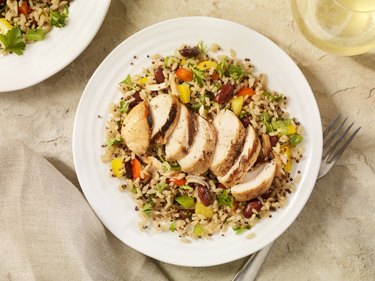
- Grilled chicken (protein) paired with brown rice (fiber) and roasted veggies (non-starchy vegetables) with avocado (unsaturated fat)
Nutrition advice if you have PCOS echoes recommendations for pretty much everyone:
- Prioritize whole foods
- Embrace fruits and vegetables
- Choose high-quality lean protein sources (think: fish, lean meats, tofu, eggs, legumes, nuts and seeds)
- Incorporate healthy fats like those found in fatty fish, nuts and seeds, olive oil and avocado.
It can also be helpful for people with PCOS to limit excess added sugars and add more unrefined whole grains — like oats, brown rice, farro, quinoa and 100 percent whole-grain bread — to their plate to minimize the risk or severity of insulin resistance over time.
Tip
Include a source of protein at every meal and snack and avoid skipping meals for better blood sugar control, per the Academy of Nutrition and Dietetics.
Are There Any Foods to Avoid With PCOS?
"I recommend that women with PCOS focus on having a balanced diet with foods that they enjoy rather than focusing on limiting and avoiding foods," Abbott says. She refrains from telling clients with PCOS that they have to restrict any foods.
"High amounts of added sugar or refined carbohydrates can affect insulin resistance, but approaching nutrition changes by being hyper-focused on decreasing and eliminating these foods is typically not very effective in managing PCOS long-term," she says.
That's because focusing on elimination can heighten cravings and instead promote overeating over time.
Why Your PCOS Diet Shouldn't Focus Solely on Weight Loss
The connection between PCOS and weight is complicated. "I find that unfortunately medical providers tend to recommend weight loss as the only 'treatment' for PCOS," Abbott says.
Achieving a healthy weight can contribute to positive health outcomes like improved fertility, maximized medication efficacy and decreased insulin resistance for some with PCOS, per the Mayo Clinic.
But the key is to focus on health-promoting behaviors like diet changes instead of a number on the scale. Emphasizing weight loss above all else can compromise outcomes for people with PCOS, potentially leading to:
Hormone Damage
"When someone is focused on weight loss they are more likely to be restricting calories, cutting out food groups and over-exercising, all things that can actually be damaging to hormones and make PCOS symptoms worse," Abbott says.
Here's why: Hormones are already out of whack in people with PCOS. Adding unnecessary stress to the body — be it in the form of excessive exercise or prolonged, severe calorie restriction — could potentially lead to elevated cortisol levels. And those higher cortisol levels can in turn exacerbate PCOS symptoms like amenorrhea (missed periods), per a March 2015 review in the Journal of Clinical Endocrinology and Metabolism.
Weight Cycling
What's more, calorie restriction (i.e. dieting) often results in weight cycling, meaning people repeatedly lose weight, then gain it back — and usually gain back additional pounds, too.
"Weight cycling is associated with an increase in insulin resistance, which can further exacerbate PCOS symptoms," Abbott says.
Also important to note: Experts don't exactly know why, but weight loss can be even harder to achieve for people with PCOS, per Johns Hopkins Medicine.
Binge Eating
Restriction also raises one's risk of binge eating, which is common among people with PCOS, Abbott says. In fact, people with PCOS were found to be more than three times as likely to be diagnosed with an eating disorder compared to people without PCOS, per a May 2019 meta-analysis in Neuropsychiatric Disease and Treatment .
"If you feel like you're always hungry, always thinking about food or you find yourself binge eating in the evenings, then check in with whether you're eating enough throughout the day," Abbott says.
"Snacking can be a great way to stabilize blood sugars when you're going long periods of time without eating." Instead of holding off on a quick bite between meals, evaluate your hunger levels and consider if a snack will be helpful if it's more more than four hours or so, she says.
The Bottom Line
Working with both an endocrinologist and registered dietitian can help you manage a PCOS diagnosis, since diet contributes to hormone health. While many people with PCOS experience insulin resistance and may benefit from a diet low in refined and processed carbohydrates, there's no single "PCOS diet."
"Managing PCOS with nutrition is highly individualized," Abbott says. "What works for someone else may not work for you. Work with a provider who specializes in PCOS and can give you the individualized care that you need."
Is this an emergency? If you are experiencing serious medical symptoms, please see the National Library of Medicine’s list of signs you need emergency medical attention or call 911.