

























































10 Facts About Lung Cancer

10 Facts About Lung Cancer
Photo Credit factory image by Zbigniew Nowak from Fotolia.com

Lung cancer can occur in smokers and non-smokers alike. It is now understood that a combination of genes and environmental factors can lead to lung cancer, and some individuals are at higher risk than others. Lung cancer prevention, treatment and survival rates depend on many factors. Through research and advanced technology, more facts about lung cancer have been revealed during the last decade.

Air Pollution Increases Lung Cancer Risk

The American Cancer Society explains that a combination of gases from exhaust fumes and factory smokestacks combine with oxygen to create particulate matter in the environment. When fine particles are inhaled, the risk of lung cancer increases. Long-term exposure to high levels of air pollution that forms particulate matter is equivalent to the dangers of second hand smoke.

Smoking is the Leading Cause of Lung Cancer

The No.1 cause of lung cancer is tobacco smoking. Tobacco cessation can significantly lower the chances of cancer occurrence. Stopping smoking is beneficial for patients already diagnosed with lung cancer and may prevent a second cancer. The American Cancer Society estimates that 87 percent of deaths from lung cancer result from smoking.

Lung Cancer Prognosis Differs Between Types

SCLC and NSCLC are the two types of lung cancer. Small cell lung carcinoma (SCLC) and non-small cell lung carcinoma (NSCLC) carry different prognoses because they have different characteristics. NSCLC is the most common. Small cell lung carcinoma is quite aggressive and carries a poor prognosis.

Lung Cancer Treatment Depends on Stage

Lung cancer treatment depends on the stage of the disease. Staging lung cancer is a tool used by clinicians to reflect the extent of lung cancer in the body. Staging is also used to describe invasiveness and spread of tumors.Stage 1 lung cancer may require surgery and is usually confined. Stage 4A or 4B cancer that has metastasized to other areas of the body requires aggressive chemotherapy or may be so widespread that only palliative treatment is offered.

Response to Treatment May Depend on Genes

Genes play a role in individual response to lung cancer treatment, according to two studies, "Genetic polymorphisms and treatment response in advanced non-small cell lung cancer", and "DNA repair gene polymorphisms predict favorable clinical outcome in advanced non-small-cell lung cancer." Both studies reveal how genetic makeup predicts how a person will respond to lung cancer treatment. Patients with NSCLC were genotyped, and response to different lung cancer treatments were observed. Increased survival associated with several different types of treatment was found to be dependent on individual genetic components. The articles, published in 2007 and 2009 respectively, appear on the website PubMed.

Lung Cancer Diagnosed Early Improves Survival

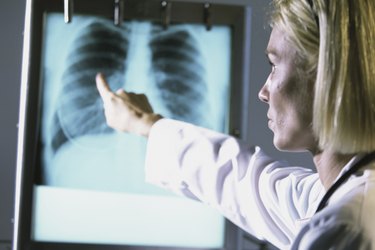
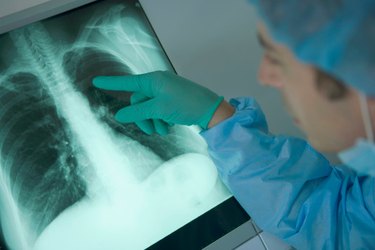
Improved imaging techniques for lung cancer screening have led to earlier diagnosis and improved survival, according to the study, "Survival of Patients with Stage I Lung Cancer Detected on CT Screening." Stage 1 cancer patients who underwent surgery experienced a 92 percent 10-year survival rate among 302 patients studied who had surgery. These findings are detailed in the October 2006 issue of the "New England Journal of Medicine."

Fruit and Vegetable Rich Diet might Help with Prevention

The U.S. Centers for Disease Control and Prevention reports that research is ongoing regarding the role of fruits and vegetables for preventing lung cancer. It is likely that fruits and vegetables do provide protection from the disease.

Photodynamic Therapy Treats Inoperable Lung Cancer

Photodynamic therapy (PTD) uses a laser light to destroy lung cancer. PTD is reserved for patients with inoperable lung cancer and is used to relieve symptoms of non-small cell lung cancer. PTD is not effective when cancer has metastasized (spread to other organs), and is used to treat small tumors.

Lung Cancer has Become more Prevalent among Women

The National Lung Cancer Partnership explains that only recently has the incidence of lung cancer stabilized in women after increasing for decades. Twenty years ago, lung cancer was more prevalent in men.The reason for the increased prevalence is that more women began smoking.

Lung Cancer is Higher among African Americans

The American Cancer Society says that African Americans suffer more from lung cancer and lung cancer mortality than any other ethnic group. Statistically, 54 out of 100,000 whites are diagnosed with lung cancer each year, compared to 73 out of 100,000 African Americans. Mortality rates are higher compared to whites.

References

Article reviewed by Libby Swope Wiersema Last updated on: Mar 28, 2011

Must see: Photo Galleries