

























































Hereditary Lung Diseases

Hereditary Lung Diseases
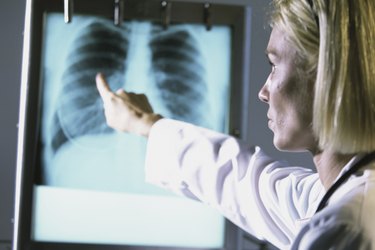
Photo Credit chest x-ray, lateral image by Allen Penton from Fotolia.com

A variety of genetic disorders can affect lung structure and function. The severity of these disorders depends on the degree to which lung function is impaired. Hereditary lung diseases such as alpha-1 antitrypsin deficiency, cystic fibrosis, Niemann-Pick disease and primary ciliary dyskinesia typically cause significant lung damage and impairment, which often results in a shortened lifespan.

Alpha-1 Antitrypsin Deficiency

The human body has a system of checks and balances to ensure proper levels of activity. Alpha-1 antitrypsin is an important enzyme that limits the activity of white blood cells, thereby preventing damage to body tissues. With alpha-1 antitrypsin deficiency, an abnormal gene causes decreased levels of this enzyme, leading to tissue damage and scarring in the lungs. Smoking accelerates lung damage caused by alpha-1 antitrypsin deficiency, and people with alpha-1 antitrypsin deficiency may develop emphysema. According to the National Heart, Lung and Blood Institute, Caucasians of northern and western European heritage are at greatest risk for alpha-1 antitrypsin deficiency.

Cystic Fibrosis

Cystic fibrosis is a condition in which abnormal genes lead to production of aberrant secretions, including thick mucus in the lungs. The gel-like mucus sticks to the airways, causing clogging and frequent infections. Over time, repeated lung infections cause scarring and decreased lung function. Shortness of breath and decreased capacity for physical activity result. Cystic fibrosis is typically diagnosed in infancy or early childhood. According to the Cystic Fibrosis Foundation, approximately 30,000 people in the United States are living with cystic fibrosis.

Niemann-Pick Disease

Niemann-Pick disease is an inherited disorder of fat metabolism and storage. The disease causes a damaging accumulation of fat in the tissues of the lungs, liver, spleen, bone marrow and brain. There are four types of Niemann-Pick disease, A through D. Type A is the most severe form, frequently causing death in infancy. Those with Niemann-Pick disease types B, C and D have a variable prognosis, depending on disease severity. According to the National Heart, Lung and Blood Institute, the effects of Niemann-Pick disease in the lungs precipitate frequent infections with associated scarring and progressively decreased lung function.

Primary Ciliary Dyskinesia

The cells lining the airways have tiny, hair-like projections called cilia. The cilia act together to move mucus up and out of the airways. Ciliary action keeps the airways clean and free of harmful infectious agents. Primary ciliary dyskinesia, also known as immotile cilia syndrome, is an inherited condition in which the cilia do not move. Lung mucus stagnates in the airways, causing frequent lung infections and respiratory distress. The sinuses, which also contain the defective cilia, are similarly prone to frequent infection. Dr. M. Zariwala and colleagues report in "Gene Reviews" that 50 percent of people with primary ciliary dyskinesia also have situs inversus totalis, a congenital defect in which the location of the internal organs is reversed.

References

Article reviewed by Roman Tsivkin Last updated on: May 18, 2010

Must see: Photo Galleries