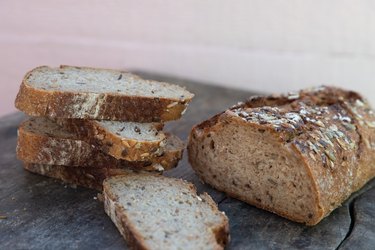
Sprouted grain bread and whole wheat bread are both whole grain foods, made from entire wheat kernels. Unlike white breads and other refined-grain products that lose the outer bran and inner germ parts of the wheat grain in the milling process.
Whole grain breads are good sources of fiber and other nutrients, but there are slight differences between sprouted grain and whole wheat breads because of the different ways they are processed.
Video of the Day
Video of the Day
Whole Grain Bread Benefits
Both sprouted grain bread and whole wheat bread have some potential important health benefits. Whole grains are significant sources of protein, B vitamins, iron, magnesium and selenium. Unlike refined grain foods, whole grain breads are rich in dietary fiber.
According to the U.S. Department of Agriculture (USDA), eating fiber-rich foods may reduce your risk of developing coronary heart disease. The fiber found in whole grain foods is also useful for weight management, because it helps you feel full with relatively few calories.
Sprouted Grain Bread Benefits
Sprouted grain bread has a few advantages over whole wheat bread. Whole wheat bread is made from whole wheat kernels ground into flour, while sprouted grain bread is made from kernels that are allowed to sprout before they're baked into bread.
Many sprouted grain breads also a variety of grains and legumes, such as barley, oat, millet and even lentils. This diversity provides a larger array of amino acids than found in whole wheat bread.
According to the Whole Grains Council, sprouted grains are also easier to digest compared to other whole grains, while the sprouting process increases the bioavailability of some vitamins and minerals.
Sprouted Grain Bread vs. Whole Wheat
Although sprouted grain bread may have a few nutritional advantages over other whole grain breads, these differences are not significant, according to American Dietetic Association spokeswoman Ruth Frechman in the Chicago Tribune.
She states that, while the nutritional discrepancies between whole grains and refined grains are vast, the differences between sprouted grain and other whole grain breads are inconsequential -- both types of bread provide relatively comparable amounts of fiber, vitamins, minerals and other nutrients.
The most significant distinctions between are a matter of taste: If you enjoy an earthy taste and a rough, nutty texture, you'll probably like a sprouted grain bread, but if you prefer a finer-textured bread, whole wheat bread is still a fine source of nutritious whole grains.
How to Choose the Healthiest Bread
When it comes to selecting a healthy bread at the grocery store, it's important to choose a product made from whole grains, whether you pick a sprouted grain or whole wheat bread.
Choose a bread that has "whole grains" listed among the first items in the ingredient list and also has at least 3 grams of dietary fiber per serving. If you prefer the taste and texture of white bread to wheat bread, keep in mind that white whole wheat bread offers the same nutritional benefits as other whole grain breads.
Sprouted grain breads are often free of preservatives and therefore need to be stored in the refrigerator or freezer.