





































































BMI & Definition of Obesity

BMI & Definition of Obesity
Photo Credit overweight woman image by Inger Anne Hulbækdal from Fotolia.com

The epidemic of obesity has spread rapidly in the United States. In 2008, the Journal of the American Medical Association reported that 68 percent of all Americans are either overweight or obese. This roughly equates to more than 210,800,000 Americans who are at risk for developing diabetes, cardiac disease and orthopedic problems because of their weight. Knowing your body mass index is a useful tool in assessing your risk of developing obesity-related diseases.

Defining BMI

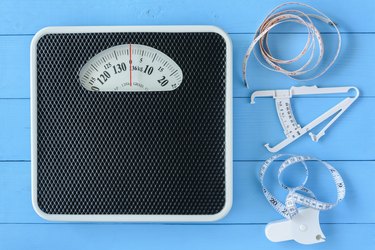
The National Academy of Sports Medicine defines body mass index, or BMI, as a "quick and easy method for determining if your client's weight is appropriate to his/her height." BMI cannot replace body composition measurements, such as skin-fold caliper or circumference measurements, but it is a tool to easily assess your relative risk for weight-related disorders.

How to Determine BMI

BMI, is determined by a simple mathematical formula. To calculate your BMI, choose between two formulas--weight in kilograms divided by height in meters, squared, or weight in pounds divided by height in inches squared, multiplied by 703. The number obtained from these equations can then be used to interpret the amount of body fat that an individual is carrying on her body.

BMI Classifications

The Centers for Disease Control and Prevention, breaks down and classifies individuals as either underweight, normal, overweight, or obese class I, II or III. Underweight individuals have a BMI of less than 18.5kg/m2. Individuals with a BMI between 18.5 and 24.9 kg/m2 are considered normal. Individuals with a BMI greater than 25kg/m2 are classified as overweight. Individuals with a BMI greater than 30kg/m2 are considered clinically obese and are further broken down into class I, II or III. Obesity class I are individuals with a BMI from 30 to 34.9kg/m2. Class II individuals have a BMI from 35 to 39.9kg/m2. Class III individuals, those with a BMI above 40kg/m2, are classified as suffering from extreme obesity.

BMI Accuracy

Because of vast differences in the body composition of fit individuals versus overweight ones, BMI should not be considered the most accurate and appropriate measurement for determining the amount of lean body mass versus fat. Other tests, including a DEXA scan or body measurements, provide a more reliable assessment of body mass measurements. As the Journal of American Medical Association states, "BMI does not distinguish fat and lean tissue or represent adiposity directly."

Risks Associated with Being Overweight

Individuals who are overweight generally have one fundamental issue in common--energy balance. Organizations such as the National Strength and Conditioning Association and the National Academy of Sports Medicine identify consuming a greater number of calories than the total number expended in a day as the most common cause of becoming overweight and obese. Being overweight or obese is associated with increased risks of hyperlipidemia, or elevated blood lipids, coronary heart disease, stroke, hypertension, glucose intolerance, type 2 diabetes, gallbladder disease, osteoarthritis, sleep apnea and some types of cancer.

Other Measures of Obesity

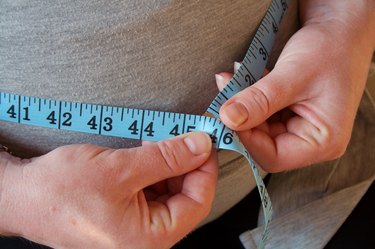
If you remain unsure whether your weight places you at risk for developing disease, there are other tools for measuring your risk. Waist circumference provides an indicator of abdominal fat in relationship to total body fat. Men who have a waist circumference that is greater than 40 inches or 102cm and women who have a waist circumference of greater than 35 inches or 89cm are at the greatest risk for developing obesity-related disorders.

References

Article reviewed by Eric Lochridge Last updated on: Jun 10, 2010

Must see: Photo Galleries

Member Comments