













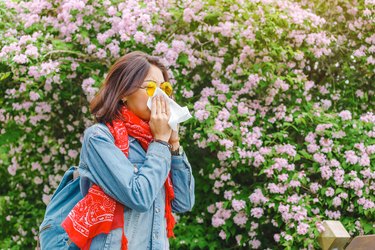











With new outbreaks of swine flu and avian flu being reported every flu season, simply treating the flu does not seem enough. Thoughts turn to the possibility of preventing flu altogether. Five different herbs--ginger, garlic, echinacea, elderberry, and andrographis--show promise of being able to do just that. Of course you should check with a doctor for specific instructions on how to use these herbs for your particular health concerns.
Ginger
Ginger might have some benefit in warding off flu. An in-vitro study reported in the 2002 issue of East African Medical Journal, showed that the essential oil of ginger kills influenza virus. The essential oil is far too strong to take internally, however. A better course of action would be to make a tea from a thumb-sized piece of fresh ginger root. Simmer it covered in three to four cups of water for 20 minutes. Don't drink more than one batch per day.
Garlic
Heinrich P. Koch, author of "Garlic: The Science and Therapeutic Application of Allium Sativum and Related Species," suggests garlic for preventing and treating influenza. Garlic contains sulfur compounds, the very compounds that make your breath stink when you eat it. It is these compounds that are active against the flu virus. The only catch is that these compounds break down with sustained heat. Raw or very lightly cooked garlic will be more effective than fried or boiled.
Echinacea
Echinacea is one of the best-studied herbs for flu and cold. According to "Western Herbs for Martial Artists and Contact Athletes," echinacea not only kills influenza viruses in vitro, it also has a proven track record in human studies as well. In one study echinacea tincture stimulated the immune system in people within 24 hours of when it was taken. Make sure the echinacea you get is produced by a reputable company and is fresh and potent.
Elderberry
Elderberry extract is most commonly used to relieve the symptoms of a cold or flu already in progress. A single study, however, suggests that it might also be able to activate the immune system before exposure to the flu virus. This study, reported in the 2001 issue of European Cytokine Network, looked at Sambucol, a commercially available blend of elderberry and other herbs. The study showed that it stimulated the immune system, strengthening it against future attack.
Andrographis
According to K. Bone's "The Story of Andrographis paniculata, a New 'Immune System' Herb," andrographis contains andrographolides, compounds thought to have immune stimulating and anti-inflammatory properties. Several studies show andrographis' effectiveness against existing colds, but Bone's work suggests that if might be able to fight off a cold that has yet to become established as well.
References
- "East African Medical Journal"; Antibacterial Effect of Zingiber officinale; J. F. Akoachere; November 2002
- "Garlic: The Science and Therapeutic Application of Allium Sativum and Related Species." Heinrich P. Koch; 1996
- "Planta Medica"; Andrographis Paniculata in the Treatment of Upper Respiratory Tract Infections; Joanna Thompson Coon; 2004
- "European Cytokine Network" The Effect of Sambucol, a Black Elderberry Based, Natural Product, on the Production of Human Cytokines; V. Barak; April 2001
- "Nutrition and Healing"; The Story of Andrographis paniculata, a New "Immune System" Herb; K. Bone; September 1998


