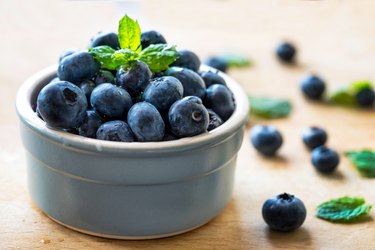
















































Bilberry is a plant closely related to blueberries. The University of Maryland Medical Center, UMMC, states that the bilberry is a close relative of the huckleberry. But both the National Center for Complementary & Alternative Medicine, NCCAM, and the Memorial Sloan-Kettering Cancer Center, MSKCC, web sites give “huckleberry” as one of the common names for the bilberry. Other common names for this fruit, which tastes like the American blueberry, are bog bilberry, European blueberry and whortleberry. Its scientific name is Vaccinium myrtillus. Bilberry fruit is used to make jams or pies and has been used for over 1,000 years as a medicinal herb in Europe.
Before beginning use of any medicinal herb, including bilberries, you should consult with your health care provider for instructions.
Bilberry Uses
Bilberry is rich in antioxidants and is used as a culinary fruit and in medicinal preparations. Glaucoma.org describes the bilberry as one of the alternative medicines used to treat glaucoma. It is said to protect and strengthen the capillaries in the eyes.
The U.S. National Library of Medicine, USNLM, adds these common medicinal uses of bilberries and presumably huckleberries: to treat cataracts, chronic venous insufficiency, diabetes mellitus, diarrhea, fibrocystic breast disease, painful menstruation, retinopathy, stomach ulcers, or peptic ulcer disease, and to improve night vision. The MSKCC site gives these additional uses for the fruit: cancer prevention, hemorrhoids, macular degeneration, mucositis and varicose veins.
Portions of the Plants Used
The fruit of the bilberry or huckleberry bush can be eaten fresh or dried. The fruit or the leaves can be made into an extract or used to make tea.
Side Effects & Interactions
The UMMC web site cautions that taking bilberries while taking medications such as blood thinners or diabetes medications can be dangerous. The USNLM site adds the warning that bilberries can interfere with the effects of anticancer agents and estrogen-containing medications. Bilberry may also cause diarrhea.
Research
The UMMC site explains that there have been few clinical studies of bilberry. Most research so far has either been in vitro or in animal studies. The active components in the herb’s fruit are called anthocyanosides. These compounds strengthen the blood vessels and improve the circulation in the body. They also keep the blood cells from clumping into clots. Bilberry is also known to have a high level of antioxidants, which act to protect the cells from damage from free radicals. The NCCAM and MSKCC sites mention several studies that suggest that bilberry is useful to improve night vision or other eye conditions.
Considerations
The NCCAM site says that bilberries are considered safe. But it warns that prolonged high doses of bilberries may be toxic.
Any supplement can cause an allergic reaction. If you notice a rash, hives or shortness of breath while using bilberry, discontinue its use and contact your health care provider.


Member Comments