































































How Can I Gain Weight Healthily?

How Can I Gain Weight Healthily?
Photo Credit thai nut mix image by Adrian Hillman from Fotolia.com

Because obesity is such a problem in the United States and elsewhere, more emphasis is placed on strategies for losing weight than for gaining weight. Being underweight also poses risks, however, such as decreased immunity, frailty, weakness, and, according to a 2005 report in the "Journal of the American Medical Association," early death. Ingesting high amounts of fat and sugar may add weight to your frame, but does nothing to improve your health. Although gaining weight is not easy, it can be done in a way that supports good health.

Step 1

Figure out how many calories you need to eat to gain weight. Input your height, weight and age into the calorie goal calculator at The Daily Plate website to determine your goal intake to gain 1 to 2 pounds per week.

Step 2

Keep a daily food journal to make sure you are hitting your calorie goals. Note any skipped meals and situations that interfere with your ability to take in enough calories. Devise strategies to remind yourself to eat or always have food available.

Step 3

Add more food to your meals. Add toast with peanut butter to breakfast. Eat a bowl of chunky soup like chowder with your lunch. Include an extra ounce of protein and a half-cup more starch.

Step 4

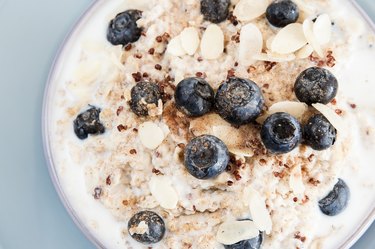
Increase the calorie density of your existing meals. Sprinkle nuts over cereal and salads, stir dried milk or dehydrated potatoes into soups and casseroles and toss olive oil into your pasta.

Step 5

Drink extra calories between meals. Whip up a smoothie with frozen fruit, protein powder and juice. Choose 100-percent juices high in antioxidants like pomegranate, grape and blueberry to obtain calories and nutrients. Have a glass or two of low-fat milk. Do not drink too many liquids with meals, as this may squelch your appetite, Joanne Larson warns on the Ask the Dietitian website. Stay away from non-nutritious, sugary beverages like soda and energy drinks.

Step 6

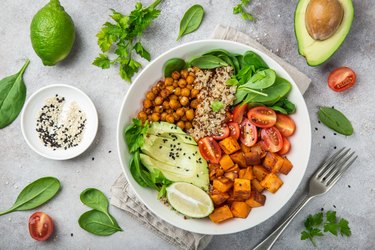
Eat smaller meals often, especially if you have a light appetite. Begin with breakfast and eat every two to three hours until bedtime. Make meals with calorie-dense foods like granola, dried fruits, nuts, low-fat cheese, avocado, protein and starches.

Step 7

Stay away from high-calorie foods that provide little nutrition. Do not choose unhealthy fried, greasy foods like chicken nuggets, fatty beef and French fries, as these will simply pile on fat, rather than a mix of fat and muscle. Underweight people are still at risk of developing high cholesterol and heart disease from overconsumption of saturated and trans fats.

Step 8

Exercise with weights and light cardiovascular routines. Strength-train two times a week to develop and maintain lean muscle mass. Take a leisurely walk with a friend, for example, to stimulate your appetite.

References

Article reviewed by Will McCahill Last updated on: Jul 12, 2010

Must see: Photo Galleries

Member Comments