



















Echinacea, or purple coneflower, is currently one of the most popular medicinal herbs used today, according to the U.S. National Library of Medicine, or USNLM, website. In fact, the sales of this herb make up about 10 percent of the U.S. market for medicinal herbs. There are three varieties of echinacea used medicinally: echinacea angustifolia, echinacea pallida and echinacea purpurea. Echinacea purpurea is considered the most potent. Before you begin to use echinacea, be sure to discuss it with your health care provider to get specific instructions.
Echinacea & Blood Pressure
Echinacea is commonly used to boost the immune system, to decrease the duration and severity of the common cold and to help wounds heal. But this herb is not normally used to lower blood pressure. There is no evidence that echinacea is effective in treating high blood pressure.
Research
One specific study of echinacea's effect on the body's blood pressure and electrocardiograph results was conducted and documented by the U.S. National Library of Medicine. In it, test subjects were given echinacea, then monitored to see if their blood pressure was affected. Unfortunately, the test showed that the participants had no noticeable change in their blood pressure. This was only one study, and more research needs to be done to determine whether echinacea is beneficial in lowering blood pressure.
Side Effects
According to the Memorial Sloan-Kettering Cancer Center website, the most common potential side effects of taking echinacea are headache, dizziness, nausea, constipation and rash. Some severe allergic reactions have also been reported.
Drug Interactions
The website of the National Center for Complementary & Alternative Medicine warns of possible harmful interactions between echinacea and immunosuppressant medications. Patients that have been diagnosed with systemic lupus erythematosus, rheumatoid arthritis, multiple sclerosis and other progressive collagenous disorders, tuberculosis, HIV and AIDS are also cautioned to never take echinacea. The herb may make the conditions worse instead of better.
Forms Used
The Medicinal Herb info site reports that the roots and the leaves of the echinacea plant are used medicinally. They are either used fresh or dried and can be taken as tea, capsules, extracts or ointments.
Caution
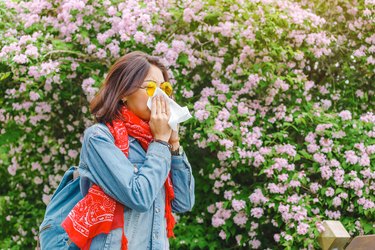
Echinacea is a part of the daisy family of plants. People with known allergies to these plants should avoid taking echinacea. It's also possible to develop a new allergy to any substance at any time. Be aware of any shortness of breath, swelling of the face, lips or tongue or other allergic reactions while taking echinacea. If you have an allergic reaction to the herb, stop using it and contact your health care provider.


