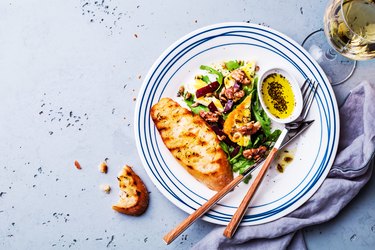
Halloumi cheese has a very high melting point, which makes it perfect for frying or tossing on the grill. Halloumi nutrition information varies depending on the brand of cheese, but it's typically high in protein and fat with a good dose of calcium, too. The calories in halloumi are also relatively low when compared with other cheeses like Parmesan, cheddar, Swiss and American.
What is Halloumi Cheese?
Video of the Day
Halloumi cheese, sometimes spelled as haloumi, is a white, semi-hard cheese with a very high melting point. Because of this, it can easily be grilled, pan-seared or fried without melting. Grilled halloumi is a tasty, protein-filled addition to burgers, salads, kebabs and more. There's no rind on halloumi cheese, so it's an easy and fuss-free option for quick recipes.
Video of the Day
Halloumi originally hails from the Middle East and is traditionally made from a mixture of goat's milk and sheep's milk, but some types of halloumi cheese are made with cow's milk. Methods of preparation vary, but Murray's Cheese Halloumi goes through two rounds of curd cooking — once before it is packaged, and once afterwards.
The number of calories in halloumi cheese varies depending on the ingredients and serving size. One serving of Grillies Pre-Sliced Halloumi Cheese provides 140 calories, 11 grams of fat, less than 1 gram of carbohydrates, 9 grams of protein, 30 milligrams of cholesterol and 520 milligrams of sodium. The ingredients are pasteurized sheep's milk, non-animal rennet, salt and mint.
A single serving of Mt. Vikos Halloumi provides 85 calories, 7 grams of fat, 0 grams of carbs, 6 grams of protein, 20 milligrams of cholesterol and 300 milligrams of sodium. The ingredients are pasteurized sheep's milk, microbial rennet, salt and mint.
A one-slice serving of Charalambides Christis halloumi cheese provides 74 calories, 5 grams of protein, 6 grams of fat and 0 grams of carbs. It also contains 180 milligrams of calcium, 300 milligrams of sodium and 25 milligrams of cholesterol.
Halloumi Nutrition Benefits
As with many cheeses, halloumi nutrition facts show that the cheese provides protein and healthy fats. Plus, the protein from dairy is just as good as that from meat. If you eat a plant-based diet or are looking to cut down on your meat consumption, consider getting some of your protein from cheese and plenty from legumes and beans — just keep an eye on the number of calories in halloumi.
Looking to add more halloumi cheese to your diet? There are tons of different ways to use this versatile ingredient. You can add some grilled halloumi to a healthy salad recipe topped with crunchy seeds and a zesty vinaigrette.
Halloumi won't melt into gooey, delicious strings like some other cheeses (mozzarella and cheddar, for example). So, it's a great firm cheese to use on top of burgers — whether you are grilling them or making them in the oven.
If you need tasty vegetarian options for a party or BBQ, grilled halloumi kebabs are bound to be a crowd-pleaser. Pop them onto skewers with cubes of zucchini, eggplant, red onion and peppers, and serve with a tangy dipping sauce to complement those flavors.
- Grillies: "Pre-Sliced Halloumi Cheese"
- Mt. Vikos: "Halloumi, 8oz"
- Murray's Cheese: "Halloumi"
- USDA: " Full Report (All Nutrients): 45135930, HALLOUMI® CHEESE, UPC: 529003600104"
- Tufts Nutrition Letter: "Is Dairy Protein As Good As Meat Protein?"
- Harvard Health: "What Is a Plant-Based Diet and Why Should You Try It?"