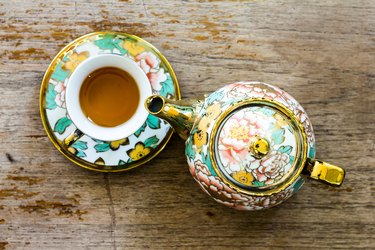
Burdock root, scientifically referred to as arctium lappa, has been used for centuries in Europe, North America and Asia as a digestive treatment and a diuretic. More recently it's been used to treat chronic diseases such as cancer, diabetes and AIDS. Although burdock root is eaten as a cooked vegetable, you get similar health benefits from drinking tea made by steeping the root in boiling water.
Provides Potent Antioxidants
Video of the Day
Burdock root contains powerful antioxidants, such as phenolic acids, quercetin and luteolin. Antioxidants are substances that help protect your body from free radicals, which are unstable molecules that damage healthy cells. An article published in "BMC Complementary and Alternative Medicine" in 2011 noted that burdock root tea is a promising beverage because of its antioxidant properties and its ability to slow tumor-cell growth.
Video of the Day
Protects Liver
Liver disease, such as cirrhosis or alcoholic hepatitis, can result from alcohol abuse. Over time, heavy alcohol consumption causes inflammation and scarring of the liver. According to a study published in the "Journal of Biomedical Science" in September 2002, properties in burdock root help prevent damage to the liver and are effective in treating liver damage caused by alcohol use.
Detoxifies Blood
Because blood is the life fluid of your body, it's important to keep it as free from toxins as possible. Traditionally, burdock root has been used as a blood purifier -- clearing toxins from the bloodstream. A study published in "Inflammopharmacology" in October 2011 found burdock detoxifies blood and promotes blood circulation to skin surface, improving skin texture and mitigating conditions like eczema.
Taking Burdock Root Safely
Pregnant women should avoid burdock because it may damage the fetus, according to University of Maryland Medical Center. In addition, if you're sensitive to ragweed, daisies or chrysanthemums, you could experience an allergic reaction -- including the red, swollen, itchy symptoms of dermatitis -- when taking burdock. People who are dehydrated should avoid burdock because of its diuretic properties, which can make dehydration worse. Also, it's important to buy burdock root from established companies to avoid possible contamination with harmful herb roots such as belladonna, which resembles burdock root.
- University of Maryland Medical Center: Burdock
- University of Maryland Medical Center: Alcoholic Liver Disease
- Inflammopharmacology: A Review of the Pharmacological Effects of Arctium Lappa (Burdock)
- BMC Complementary and Alternative Medicine: Antioxidative and In Vitro Antiproliferative Activity of Arctium Lappa Root Extracts
- Journal of Biomedical Science: Hepatoprotective Effects of Arctium Lappa Linne on Liver Injuries Induced by Bhronic Ethanol Consumption and Potentiated by Carbon Tetrachloride
- Herbal Encyclopedia: Burdock