




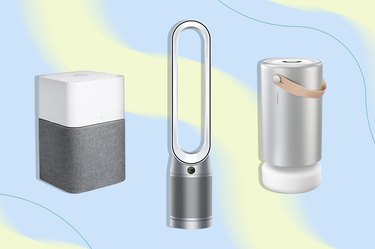





















































An aromatherapy nebulizer diffuses peppermint and other essential oils. This technique encourages the inhalation of peppermint oil mist combined with air and allows the treatment of several individuals at once. Although the inhalation of peppermint oil in small quantities is safe for most adults, always consult your personal physician before use.
Peppermint Oil
The crushed distilled or extracted leaves stems and flowering branch tips of the peppermint plant yield peppermint essential oil. Menthe piperita, the peppermint plant, grows cultivated and wild in Europe, Asia and the United States. Its active ingredients menthol, menthone, isomenthone, limonene and flavonoids contribute to its therapeutic value. These constituents exhibit the following therapeutic properties: antibacterial, antiviral, decongestant, secretolytic, stimulant, antidepressant and antispasmodic. While initial research supports these functions in some individuals, more research is needed to compare the use of diffused peppermint oil to other treatment modalities.
Aromatherapy Nebulizer
An aromatherapy nebulizer converts liquid essential oils to a fine vapor and releases them into the air to encourage inhalation and absorption by the lungs. The nebulizer, constructed of glass or Pyrex, acts as an expansion chamber through which compressed air propels oil droplets before breaking them into smaller ionized micro-particles. These micro-particles release as a fine mist and remain suspended in the air for up to several hours. An aromatherapy nebulizer is an essential component of an electric or ionizing diffuser. Other components include: air compressor, air tubing and nebulizer base, bracket or cup which holds essential oils. Aromatherapy nebulizers do not provide a mouthpiece or face mask for direct respiration as this method of inspiration is not recommended.
Therapeutic Uses
Germany's regulatory agency for herbs, also known as the commission E, states the inhalation of small quantities of peppermint oil is safe for most individuals. Peppermint oil uses include: coughs, colds, infections, allergies, sinus congestion, headaches, exhaustion, depression and pain.
Research
Preliminary research supports nebulized peppermint oil for tiredness, exhaustion, depression and pain. A 2004 study by Phillip Zoladz, Bryan Raudenbush and Sarah Lilley suggests peppermint oil inhalation improves alertness, attention to detail, virtual recognition memory, working memory and mood while reducing fatigue. Earlier research by Shannon Barker, Pamela Grayhem, Jerrod Koon, Jessica Perkins, Allison Whalen and Bryan Raudenbush in 2003 also demonstrated increased cognitive performance with inhaled peppermint oil. Peppermint oil inhalation increased pain tolerance in another study by Bryan Raudenbush, Jessica Koon, Brian Meyer, and Nicholas Flower in 2002. Pain reduction accompanied a decrease in reported frustration and measured blood pressure. While topical and diffused peppermint oils exhibit antibacterial activity in research, more human studies are needed to research the impact of nebulized peppermint oil on coughs, colds, infections, and other respiratory conditions.
Safety
The diffusion of peppermint oil using a nebulizer without a mouth or nose piece is safe for most adults. Allergic reactions including rashes, hives, respiratory distress and asthma may occur. Avoid eye contact. Avoid peppermint oil when pregnant or breast feeding. Avoid diffusing peppermint oil prior to attempting sleep. Peppermint oil is not recommended for infants and young children. See Resources for additional warnings and safety information. Always consult your personal physician before using peppermint oil in a nebulizer.
References
- "Aromatherapy Workbook"; Marcel Lavabre, 1990
- "PDR for Herbal Medicines"; Medical Economics Company, 2000
- University of Maryland Medical Center; Peppermint Oil
- Sense of Smell; The effects of peppermint on enhancing mental performance; and cognitive functioning, pain threshold and tolerance, digestion and digestive processes, and athletic performance; Bryan Raudenbush, PhD, 2004
- American Cancer Society; Peppermint


