




Signs of Infection While Using IUD Birth Control
Overview
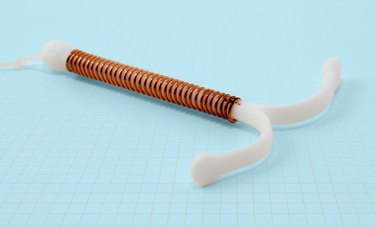
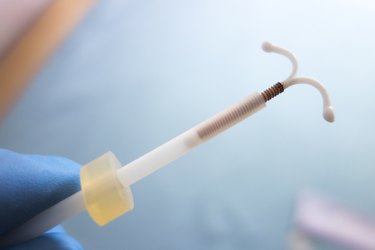
An IUD, or intrauterine device, is a T-shaped plastic birth control mechanism that is inserted into a woman's uterus and fallopian tubes. IUDs have a near 100 percent success rate in preventing pregnancy, according to The University of Maryland Medical Center. The device becomes effective immediately after insertion and can be removed to restore fertility. Currently, two percent of American women using a form of birth control opt for using an IUD. Though infections when using an IUD are rare, it is important to recognize and understand the signs and symptoms. A common cause for infection is when bacteria is transported into the uterus during the insertion procedure. Infections are most likely to occur within three weeks of IUD placement.
Menstrual Period
An abnormally late menstrual period is one sign of infection; spotting, cramping and general bleeding are also abnormal signs. Menstrual periods may last unusually long and may be heavier than usual. However, extremely light or missing periods are also a cause for concern.
Pain
If intercourse if painful, or sexual activity is extremely uncomfortable, an infection may be present. Bleeding during sex is also an abnormal reaction and should be brought to a medical professional's attention. Abnormal spotting or bleeding is also a sign of an ectopic pregnancy, where an embryo has begun to develop in the fallopian tubes. Pain may also be present in the abdominal area, causing severe cramping.
Discharge
Abnormal discharge can be signs of an infection or that an STD is present. Discharge may be yellow or white in color and has as foul odor that may resemble a metallic smell. The discharge will have a thick mucous-like texture.
Fever
If the body temperature rises above 98.6 degrees or if general chills and flu-like symptoms are present, an infection may be present in the uterus or pelvic region. Muscles may ache and a person may feel general malaise.
Missing String
A small string will appear at the opening of the vaginal canal when an IUD is properly placed. If the string is missing, there is a chance the IUD has perforated the wall of the uterus, and if the perforation has gone unnoticed for several weeks, an infection may have set in. Commonly, other signs of infection will also be present besides the string missing. Visit a medical professional to replace or remove the IUD and inspect the uterus.


Member Comments