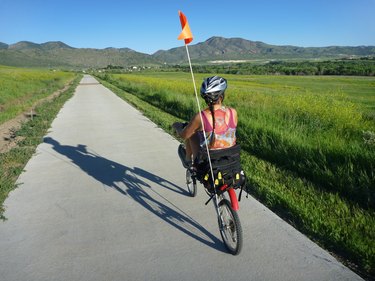
If riding a bike sounds intimidating to you, consider using a recumbent bike. This type of bike is a cardiovascular machine that gives you a similar workout to a regular exercise bike. The difference is with the way the bike is set up.
On a recumbent bike, there is a bucket seat with a backrest. The pedals are out in front of you, so when you operate the machine, you are in a horizontal position. This can take pressure off your lower back and prevent you from slouching.
Video of the Day
Video of the Day
Even though the bike is a piece of aerobic equipment, there are multiple muscles that you will work when you use one. The muscles used for a recumbent bike versus an upright bike are very similar.
Tip
Recumbent bike benefits include working muscles throughout your legs, including the glutes, quads, hamstrings and lower legs. If you have arm cranks, your shoulders and arms also get in on the action.
Glutes, Quads and Hamstrings
The gluteus muscles, or glutes, are the major muscles that compose your butt. These muscles get called into play every time your thigh moves back behind your body. This motion is known as extension.Your leg extends and your glutes engage every time you push down on a pedal.
The quadriceps are a group of four large muscles on the front of the thighs. They function as knee extensors. They get worked on the recumbent bike to assist the glutes when you push the bike pedals, and also to help draw the leg back up again at the top of the pedaling motion. The smaller muscles on the inner sides of the quad — the adductors — also get recruited with this motion.
The hamstrings are on the back of the upper thighs. They are the opposing muscle group of the quads and their main function is to flex the knee. You see this action when your lower leg goes from a straight position to a bent position while pedaling. They activate along with the quads to draw the foot back to the top of the pedaling cycle
Lower Leg Muscles
The calves are on the lower back part of the legs, below the knees. They are comprised of the gastrocnemius, which is the larger of the two muscles, and the soleus that lies underneath. Every time your foot goes around and you point your toes downward, you are working your calf muscles. This is called plantar flexion.
The tibialis anterior muscles oppose the calves. They run down the front of the shins and they get worked when your toes pull back towards your body during pedaling. Using foot pedals with straps will increase recruitment of these muscles.
Arm Muscle Involvement
Some recumbent bikes also have arm cranks which use many upper extremity muscles. Forearm muscles are constantly engaged as you squeeze the handles. The biceps help to pull the handle toward your body and the triceps push it away.
While pushing the arm crank, shoulder muscles also contribute — including the pectoralis muscles and anterior deltoid. The posterior deltoid and latissimus dorsi help push the arm crank forward.
Was this article helpful?
150 Characters Max
0/150
Thank you for sharing!
Thank you for your feedback!