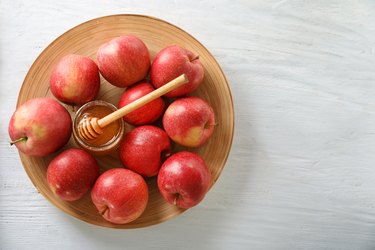
If you've ever admired a colorful display of fruits and vegetables, you've seen quercetin at work. Quercetin not only gives produce a bright hue, but it may also have antioxidant and anti-inflammatory effects. Capers, apples and onions are rich sources of this phytonutrient.
What Is Quercetin?
Video of the Day
Quercetin is the most common bioflavonoid in the human diet. According to a research review published in the journal Nutrients in March 2016, it makes up 75 percent of the total flavonol intake among adults in the U.S.
Video of the Day
Flavonols, a class of bioflavonoids, are found in purple-hued fruits, such as blueberries and blackberries. These compounds exhibit antioxidant activity — the ability to neutralize or destroy unstable molecules, including free radicals, that can damage your cells.
The oxidative stress caused by rogue molecules can lead to a host of negative effects in the body, including the development of cancer, heart disease and, potentially, obesity, reports a review published in Oxidative Medicine and Cellular Longevity in August 2017. Extensive research has been conducted to determine the role of flavonols, such as quercetin, in preventing disease and improving human health.
However, the research, most of which has been performed in a laboratory setting and not in human trials, is inconclusive. According to Memorial Sloan Kettering Cancer Center, quercetin has not been shown to treat cancer or any other disease.
Read more: Top 10 Healthiest Fruits & Vegetables
Fill Up on Quercetin Foods
Quercetin is found only in plant foods, such as fruits, vegetables, grains, nuts and seeds. If you eat a plant-based diet, you're probably already consuming a fair amount of quercetin every day.
Some of the most commonly consumed quercetin foods include apples, onions, green peppers, red leaf lettuce, asparagus, broccoli, grapes, beans and tomatoes. Black and green teas are also good sources.
But by far the richest source of quercetin is capers. Although they look like berries, capers are actually tiny flower buds that grow on shrubs throughout the Mediterranean region. According to data collected by the USDA, raw capers provide 234 milligrams of quercetin per 100 grams (3.5 ounces). Canned capers in brine — as they are commonly eaten — provide 173 milligrams of quercetin.
In comparison, 3.5 ounces of raw onions provide 39 milligrams, and the same amount of boiled asparagus has 15 milligrams, according to the USDA.
Meeting Your Quercetin Quota
Is it worth downing a lot of capers every day to get as much quercetin as possible? Probably not.
First of all, raw capers are bitter and unpalatable. Even if you like pickled foods, eating a lot of capers in brine isn't good for your health due to their high sodium content. According to the USDA, just 1 tablespoon has 200 milligrams of sodium, which is almost 10 percent of the recommended daily intake.
Too much sodium can raise your blood pressure and increase the risk of heart disease and stroke. Any positive effects quercetin might have on your heart health would be counteracted by such a high sodium intake.
Because the effects of bioflavonoids in general and quercetin specifically still aren't well understood, there isn't any recommended daily intake for the phytonutrient as there is for protein, carbohydrates, fats, vitamins and minerals. The best strategy for stocking up on quercetin and a host of other nutrients is to eat a wide variety of colorful fruits and vegetables every day.
Read more: 10 Myths About Salt Debunked
- Nutrients: "Quercetin, Inflammation and Immunity"
- International Journal of Molecular Sciences: "Bioactive Compounds and Antioxidant Activity in Different Types of Berries"
- Oxidative Medicine and Cellular Longevity: "The Beneficial Effects of Quercetin, Curcumin, and Resveratrol in Obesity"
- Memorial Sloan Kettering Cancer Center: "Quercetin"
- USDA: "USDA Database for the Flavonoid Content of Selected Foods"
- USDA: "Capers, Canned"