































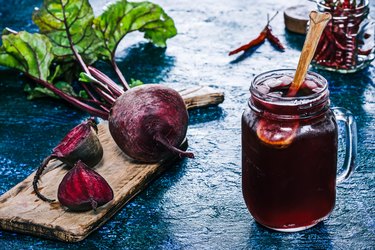


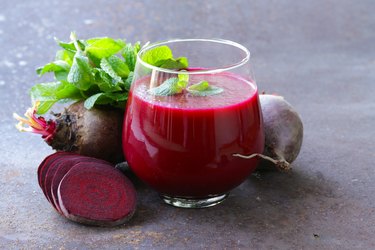




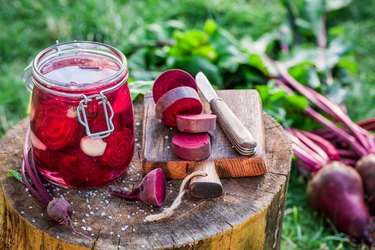





Known for their deep red coloring and sweet taste, beets are a highly nutritious vegetable. They have the highest sugar content of any vegetable, states WHFoods.org, but they are very low in calories. Technically a root, this vegetable is characterized by green leaves, which are edible, and a root portion characterized by their trademark color, but can also be found white, yellow or rainbow colored.
Folate
According to WHFoods.org, folate is the most abundant nutrient in beet roots. The site states that in one cup of beets, you get 136 mcg of folate, 34 percent of the recommended daily allowance, or RDA. Folic acid, or folate, is part of the B vitamin family. UMM.edu states that it is crucial in proper fetal development during pregnancy, higher brain function, metabolizing fats and carbohydrates, and the production of DNA and RNA.
Manganese
Beets also contain a high amount of manganese. WHFoods.org states that one cup of beets yields 27.5 percent of the RDA for manganese. According to UMM.edu, this mineral helps your body form connective tissue, bones, blood-clotting substances, and sex hormones. You also need it for fat and carbohydrate metabolism as well as calcium absorption and regulating blood sugar. The site states it may also be important for normal brain and nerve functioning.
Potassium
Potassium also ranks high on beet's nutrient list. Coming in the third spot, for every cup of beets, you obtain 518.5 mg of potassium, or 14.8 percent of your daily recommendation. Cells require potassium, and your tissues and organs depend on its presence for proper function. UMM.edu asserts it is crucial to heart function and plays a key role in skeletal and smooth muscle contraction.
Fiber
You can also count on beets for dietary fiber. Boiled beets provide almost three and a half grams of fiber per cup. According to WHFoods.org, this amount of fiber is approximately 13 percent of your recommended daily intake. Fiber is important for the proper elimination of waste, and is a recommended part of a healthy diet.
Vitamin C
One of the most well-known and powerful antioxidants, vitamin C is often touted as having the ability to prevent infections and illness. Beet roots contain some vitamin C; 6.12 mg per cup, or 10 percent of your RDA.
Tryptophan
Tryptophan is an amino acid precursor to serotonin, a brain chemical that is associated with mood and sleep. Beets contain a modest amount of tryptophan, 9.4 percent of the daily allowance, which can help promote the adequate production of serotonin.
Magnesium
Beets also contain minerals in smaller amounts. Almost 40 mg of magnesium, about 10 percent of the RDA, is found in a cup of beets. According to UMM.edu, magnesium activates enzymes, contributes to energy production, and helps regulate calcium levels as well as copper, zinc, potassium, vitamin D, and other important nutrients in the body.
Other Minerals
You can also obtain small amounts of other trace minerals, iron, copper and phosphorous, from consuming beets. A cup of beets provides 1.34 mg of iron, which is only 7.4 percent of your daily value. Only 0.13 mg of copper can be found in beets, while 64.6 mg of phosphorous is present in a cup of the root vegetable.


Member Comments