You may see B vitamins lining the supplement shelves at your grocery store, but you can often reach your daily value (DV) of this essential group of vitamins naturally through what you eat.
B vitamins are a group of eight vitamins that help your body create energy from the food you eat, per the U.S. National Library of Medicine (NLM). They may also help create red blood cells. If you don't get adequate amounts of certain B vitamins, it can cause anemia, a condition in which your blood doesn't carry enough oxygen throughout your body.
Video of the Day
Video of the Day
The B vitamins include:
- Vitamin B1 (Thiamin)
- Vitamin B2 (Riboflavin)
- Vitamin B3 (Niacin)
- Vitamin B5 (Pantothenic acid)
- Vitamin B6 (Pyridoxine)
- Vitamin B7 (Biotin)
- Vitamin B9 (Folate)
- Vitamin B12 (Cobalamin)
If you're looking to increase your vitamin B intake, look for proteins like fish, poultry, meat, eggs and dairy products. Even if you're vegan or vegetarian, you can get vitamin B from fruits, vegetables, legumes and fortified foods. For instance, avocados and oranges are fruits rich in vitamin B.
To get started, refer to this list of foods high in B vitamins.
1. Salmon
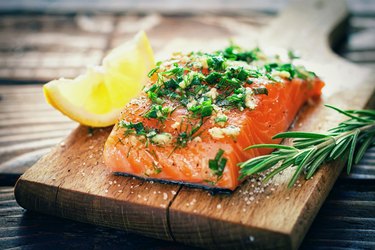
A 6-ounce fillet of cooked wild Atlantic salmon is filled with a range of healthy B vitamins, including:
- Vitamin B1: 0.5 mg (39% DV)
- Vitamin B2: 0.8 mg (64% DV)
- Vitamin B3: 17.1 mg (107% DV)
- Vitamin B5: 3.3 mg (65% DV)
- Vitamin B6: 1.6 mg (94% DV)
- Vitamin B9: 49.3 mcg (12% DV)
- Vitamin B12: 5.2 mcg (216% DV)
There are several other health benefits of salmon, including its healthy omega-3 fatty acids, protein and nutrients that support brain and bone health. Older adults who ate seafood for a meal at least once weekly did better on cognitive tests than those who ate less in a May 2016 study in the journal Neurology.
Related Reading
2. Spinach
Whether eaten raw or cooked, spinach will provide you with ample amounts of many B vitamins. One cup of cooked spinach provides you with:
- Vitamin B1: 0.2 mg (20% DV)
- Vitamin B2: 0.4 mg (33% DV)
- Vitamin B3: 0.9 mg (6% DV)
- Vitamin B5: 0.3 mg (5% DV)
- Vitamin B6: 0.4 mg (26% DV)
- Vitamin B9: 262.8 mcg (66% DV)
Spinach is also a good source of dietary fiber, iron, calcium and potassium.
Vegetarian and vegan foods like spinach do not naturally contain vitamin B12, which is present in animal-based foods — such as fish, meat, poultry and eggs, per the National Institutes of Health (NIH).
3. Brown Rice
One cup of cooked brown rice is an excellent plant-based source of B vitamins, including:
- Vitamin B1: 0.4 mg (30% DV)
- Vitamin B2: 0.1 mg (11% DV)
- Vitamin B3: 5.2 mg (32% DV)
- Vitamin B5: 0.8 mg (15% DV)
- Vitamin B6: 0.2 mg (15% DV)
- Vitamin B9: 18.2 mcg (5% DV)
Brown rice is a healthy whole grain that also provides 3.2 grams of fiber per cup. While Americans eat enough total grain foods, few eat enough whole grains. At least half of the grains you eat should be whole grains like brown rice, per the USDA.
Try it in these leftover rice recipes under 500 calories.
4. Lentils
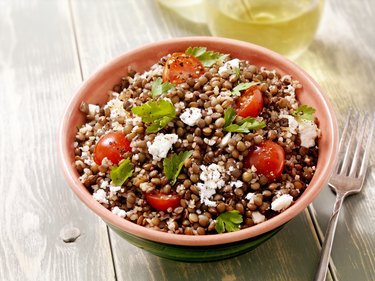
One cup of cooked lentils is a fantastic vegan or vegetarian source of B vitamins, including:
- Vitamin B1: 0.3 mg (28% DV)
- Vitamin B2: 0.1 mg (11% DV)
- Vitamin B3: 2.1 mg (13% DV)
- Vitamin B5: 1.3 mg (25% DV)
- Vitamin B6: 0.4 mg (21% DV)
- Vitamin B9: 358.4 mcg (90% DV)
Lentils are also a good source of iron (37 percent of the DV). Along with folate, iron is especially important during pregnancy, per the Mayo Clinic. Lentils also provide protein, which is essential for a baby's growth during pregnancy.
Try them in these lentil recipes that are packed with protein.
5. Chicken
A 6-ounce cooked chicken breast offers B vitamins including:
- Vitamin B1: 0.2 mg (14% DV)
- Vitamin B2: 0.3 mg (24% DV)
- Vitamin B3: 16.1 mg (100% DV)
- Vitamin B5: 2.7 mg (54% DV)
- Vitamin B6: 1.6 mg (92% DV)
- Vitamin B12: 0.3 mcg (14% DV)
Chicken breast is also a great dietary staple because it's known for being high in protein (54.5 grams per 6-ounce breast) with very little saturated fat (1.7 grams). Saturated fat is considered an unhealthy type, along with trans fat, and may raise your heart disease risk by increasing your LDL (bad) cholesterol and causing weight gain, per the NLM.
Try it in these low-calorie chicken recipes.
6. Oranges
One large orange is a fruit filled with B vitamins, including:
- Vitamin B1: 0.2 mg (13% DV)
- Vitamin B2: 0.1 mg (6% DV)
- Vitamin B3: 0.5 mg (3% DV)
- Vitamin B5: 0.5 mg (9% DV)
- Vitamin B6: 0.1 mg (6% DV)
- Vitamin B9: 55.2 mcg (14% DV)
There are several other health benefits of oranges. For instance, they can help improve your skin health with their high levels of vitamin C and provide fiber for a healthy heart. Vitamin C is key for the production of collagen, a structural protein that gives skin elasticity, per the Oregon State University Linus Pauling Institute.
Try it in these immune-supporting orange recipes.
7. Avocados
Avocado is one of the fruits that has the most B vitamins. One avocado contains:
- Vitamin B1: 0.1 mg (11% DV)
- Vitamin B2: 0.3 mg (20% DV)
- Vitamin B3: 3.5 mg (22% DV)
- Vitamin B5: 2.8 mg (56% DV)
- Vitamin B6: 0.5 mg (30% DV)
- Vitamin B9: 162.8 mcg (41% DV)
An avocado also provides 4 grams of plant-based protein, plus it's an excellent source of dietary fiber with 13.5 grams per avocado.
We should aim for 25 to 38 grams of fiber daily, per the Academy of Nutrition and Dietetics. Fiber helps you to feel full from the food you eat and it can also improve your digestion, lower cholesterol and prevent disease.
Try it in these avocado recipes that aren't toast.
8. Fortified Breakfast Cereal
Although you can find B vitamins naturally in many foods, some foods are also sometimes fortified with B vitamins — which can be particularly helpful if you're vegetarian or vegan. One commonly fortified food is breakfast cereal.
Per ¾ cup, breakfast cereal contains B vitamins such as:
- Vitamin B1: 0.3 mg (24% DV)
- Vitamin B2: 0.4 mg (33% DV)
- Vitamin B3: 5 mg (31% DV)
- Vitamin B6: 0.5 mg (29% DV)
- Vitamin B12: 1.5 mcg (62% DV)
However, look for a breakfast cereal that's lower in sugar, as many can be overloaded with the sweet stuff. Most Americans eat much more than the recommended daily amount of sugar. It's best to stick to low-sugar cereals with less than 6 grams of added sugar per serving, per the Cleveland Clinic.
9. Oysters
Three ounces of raw oysters offer up several B vitamins, particularly vitamin B12:
- Vitamin B1: 0.1 mg (5% DV)
- Vitamin B2: 0.2 mg (15% DV)
- Vitamin B3: 1.7 mg (11% DV)
- Vitamin B5: 0.4 mg (9% DV)
- Vitamin B9: 8.5 mcg (2% DV)
- Vitamin B12: 13.6 mcg (567% DV)
Oysters also have 8 grams of protein per 3 ounces, with only 0.4 grams of saturated fat and 69 calories — making them a fantastic choice if you're looking for a nutrient-rich, satiating meal that can fit into a weight loss or weight maintenance plan.
10. Edamame
One cup of prepared edamame is rich in B vitamins, including:
- Vitamin B1: 0.3 mg (26% DV)
- Vitamin B2: 0.2 mg (18% DV)
- Vitamin B3: 1.4 mg (9% DV)
- Vitamin B5: 0.6 mg (12% DV)
- Vitamin B6: 0.2 g (9% DV)
- Vitamin B9: 482.1 mcg (121% DV)
In addition to B vitamins, edamame is an excellent vegetarian or vegan source of protein with 19 grams per cup. You'll also get 8.1 grams of fiber and 34 percent of the DV for vitamin K, which is important for healthy bones and blood clotting, per the NIH.
Read on for more information about the various types of B vitamins.
Vitamin B1 (Thiamin or Thiamine)
Also known as thiamin or thiamine, vitamin B1 is good for many fundamental cell functions and the breakdown of nutrients for energy, per Harvard T.H. Chan School of Public Health. You need to eat foods high in thiamin (like meats, fish or whole grains) daily considering only a small amount of it is stored in your liver.
Too little thiamin in your diet can lead to abnormal heart functions — and in fact, about 21 to 98 percent of people with congestive heart failure (a condition in which the heart cannot properly pump blood throughout the body) have thiamine deficiency, per the university. Some research also suggests that thiamin deficiency is linked to cognitive decline, but research in humans is limited.
You can get thiamine naturally through healthy, whole foods. Although B vitamins are largely found in animal-based foods, there are also many plant-based foods rich in vitamin B1.
Foods high in vitamin B1 (thiamin or thiamine) include:
- Lean Pork Chops: 1.1 mg per 6-ounce cooked chop (96% DV)
- Atlantic Salmon: 0.5 mg per 6-ounce cooked fillet (39% DV)
- Flax Seeds: 0.5 mg per ounce (39% DV)
- Navy Beans: 0.4 mg per cup cooked (36% DV)
- Green Peas: 0.4 mg per cup cooked (35% DV)
Vitamin B2 (Riboflavin)
Vitamin B2, also known as riboflavin, plays a key role in the growth, development and function of your body's cells, per the NIH. It also helps to convert the food you eat into energy.
Riboflavin deficiency can cause skin disorders, mouth sores, hair loss, swollen and cracked lips, sore throat, liver disorders and problems with your nervous or reproductive system, according to the NIH.
You can still get vitamin B2 in your diet, even if you're vegetarian. It's often found in fortified foods like tofu and occurs naturally in vegetables like spinach or mushroom. When it comes to fruits, passion fruit is the richest source of riboflavin (24 percent DV per cup) and so is avocados (20 percent DV each) and shredded coconut (14 percent DV per cup), per the USDA.
Overall, foods high in vitamin B2 (riboflavin) include:
- Beef (skirt steak): 1.5 mg per 6-ounce cooked steak (112% DV)
- Fortified tofu: 1 mg per cup (76% DV)
- Low-fat milk: 0.9 mg per 16-ounce glass (69% DV)
- Mushrooms: 0.5 mg per cup cooked (38% DV)
- Spinach: 0.4 mg per cup cooked (33% DV)
Vitamin B3 (Niacin)
Vitamin B3, or niacin, helps to turn your food into energy like other B vitamins, per the Mayo Clinic. It also maintains your nervous system, digestive system and skin. Most people get all the niacin they need from the foods they eat because it's found in staples like milk, meat, tortillas, yeast and cereal grains. Sometimes, niacin is prescribed to help control cholesterol.
Not getting enough niacin in your diet can lead to pellagra, a condition that causes skin irritation, diarrhea and dementia, per the NLM. Although it was common in the early 20th century, pellagra is rare in today's world because foods made with flour are now fortified with niacin.
Fruits and vegetables high in niacin include vegan and vegetarian foods such as avocados (22 percent DV), green peas (20 percent DV) and sweet potatoes (15 percent DV), per the USDA.
You may even squeeze in niacin with your morning brew, but is coffee high in niacin? One cup of coffee contains 0.5 milligrams of vitamin B3, or 3 percent of the DV. Heavy-roasted coffee like Italian coffee contains more niacin than American coffee, according to a classic study published in Advances in Experimental Medicine and Biology. Meanwhile, caffeine-free coffee is lower in niacin.
Foods high in B3 or niacin include:
- Tuna (yellowfin): 37.5 mg per 6-ounce cooked fillet (234% DV)
- Lean chicken breast: 16.1 mg per 6-ounce cooked breast (100% DV)
- Lean pork chops: 13.6 mg per 6-ounce cooked chop (85% DV)
- Beef (skirt steak): 9.5 mg per 6-ounce cooked steak (60% DV)
- Portabella mushrooms: 7.6 mg per cup grilled (47% DV)
- Brown rice: 5.2 mg per cup cooked (32% DV)
Vitamin B5 (Pantothenic Acid)
In addition to helping break down fats and carbohydrates for energy, vitamin B5 (pantothenic acid) is necessary for the creation of red blood cells, plus sex and stress-related hormones made in the adrenal glands, per Mount Sinai. You also need it for a healthy digestive tract. Vitamin B5 even helps your body make use of other vitamins, especially vitamin B2.
Although vitamin B5 deficiency is rare, it can lead to symptoms like fatigue, insomnia, irritability, depression, vomiting, stomach pains, burning feet or upper respiratory infections, per Mount Sinai.
You can get B5 naturally through your diet, even if you're vegan or vegetarian. Mushrooms, sunflower seeds, sweet potatoes, lentils, split peas and yellow sweet corn are just some of the vegetarian foods high in vitamin B5, per the USDA.
Foods high in vitamin B5 or pantothenic acid include:
- Shiitake mushrooms: 5.2 mg per cup cooked (104% DV)
- Chicken breast: 2.7 mg per 6-ounce breast cooked (54% DV)
- Sunflower seeds: 2 mg per 1-ounce handful roasted (40% DV)
- Whole milk: 1.8 mg per 16-ounce glass (36% DV)
- Sweet potatoes: 1.3 mg per cup cooked and mashed (26% DV)
Vitamin B6 (Pyridoxine)
Vitamin B6 (pyridoxine) naturally occurs in several foods and your body needs it for more than 100 enzyme reactions involving metabolism, per the NIH. It's also important for immune function and brain development during pregnancy and infancy.
Fruits and vegetables high in vitamin B6 include prunes, avocados, shredded coconut meat, bananas, elderberries, pineapple, potatoes, sweet potatoes, spinach, squash, taro, red bell peppers and onions. Per 100 grams, prunes are the fruit that's the richest source of vitamin B6, per the USDA.
Overall, foods high in vitamin B6 or pyridoxine include:
- Salmon: 1.6 mg per 6-ounce fillet cooked (94% DV)
- Fortified Tofu: 1.1 mg per cup (66% DV)
- Potatoes: 0.9 mg per large potato cooked (55% DV)
- Sweet Potatoes: 0.6 mg per cup cooked and mashed (35% DV)
- Bananas: 0.5 mg per large banana (29% DV)
Vitamin B7 (Biotin)
Vitamin B7, or biotin, is found naturally in some foods and is responsible for helping enzymes break down the carbohydrates, fats and proteins in food — plus it helps regulate gene activity and cell signals, per the Harvard T.H. Chan School of Public Health.
A deficiency of biotin can lead to hair loss and problems with your skin or nails. Biotin supplements are commonly marketed for healthy hair, skin and nails, but evidence showing the benefits of biotin supplements have been inconclusive, per the university.
Almonds and bananas are sometimes touted for being foods high in biotin, but there are actually better vegetarian and vegan biotin-rich foods. In fact, ¼ cup of roasted almonds (23 almonds) contains just 5 percent of the DV while a small banana contains just 1% of the DV, per the NIH.
These are foods high in vitamin B7 or biotin, per the NIH:
- Beef liver: 30.8 mcg per 3 ounces cooked (103% DV)
- Eggs: 10 mcg per whole egg cooked (33% DV)
- Canned salmon: 5 mcg per 3 ounces (17% DV)
- Hamburger: 3.8 mcg per 3 ounces cooked (13% DV)
- Sunflower seeds: 2.6 mcg per 1-ounce handful roasted (9% DV)
Vitamin B9 (Folate or Folic Acid)
Vitamin B9 (folate or folic acid) is known for being crucial during early pregnancy to lower the risk of birth defects involving the brain and spine, per the Mayo Clinic. Folate is also important for healthy cell growth and function, plus the creation of red blood cells.
Some people with conditions that prevent proper absorption of nutrients from foods, like celiac disease, may experience folate deficiency, per the clinic. You can get B9 naturally from a wide range of foods, from potatoes (21 percent DV per large potato) to fruits like mangos (18 percent of the DV per cup).
In addition to vitamin B9, it's important to get enough iron during pregnancy, per UCSF Health. Not getting enough foods high in folic acid and iron can lead to anemia, in which you make fewer red blood cells — and in fact, iron deficiency anemia is very common. Foods high in folate and iron include spinach and lentils.
Many people of childbearing age may also have mild to moderate zinc deficiency, and taking zinc during pregnancy could help to slightly reduce preterm births, per a February 2015 study in the Cochrane Database of Systematic Reviews. However, you can also find zinc naturally in what you eat. Foods high in zinc and folic acid include edamame and lentils.
Overall, foods high in vitamin B9 (folate or folic acid) include:
- Edamame: 482 mcg per cup cooked (121% DV)
- Lentils: 358 mcg per cup cooked (90% DV)
- Asparagus: 268 mcg per cup cooked (67% DV)
- Spinach: 263 mcg per cup cooked (66% DV)
- Broccoli: 168 mcg per cup cooked (42% DV)
Vitamin B12 (Cobalamin)
Vitamin B12 (cobalamin) helps to make DNA and also keeps your nerve and blood cells healthy, per the NIH. It helps to prevent megaloblastic anemia, a type of anemia that can lead to fatigue and weakness.
B12 is mostly found in animal products, but there are many vegan foods high in vitamin b12 that have been fortified with the nutrient. It does not occur naturally in fruits and vegetables but vegan foods high in B12 include fortified cereals, fortified juice and fortified tofu, per the USDA.
You can often find vitamin B12 with other B vitamins. For instance, foods high in folate and B12 include salmon and beef liver.
Foods high in vitamin B12 (cobalamin) include:
- Clams: 84.1 mcg per 3 ounces cooked (3,502% DV)
- Alaskan king crab: 15.4 mcg per cooked crab leg (642% DV)
- Fortified soy milk: 6 mcg per 16-ounce glass (249% DV)
- Fortified tofu: 3.3 mcg per cup (137% DV)
- Swiss cheese: 0.9 mcg per ounce (36% DV)
Vitamin B Complex
If you take a vitamin B supplement, it may be vitamin B complex — which refers to all eight B vitamins, per Kaiser Permanente. These include:
- Vitamin B1
- Vitamin B2
- Vitamin B3
- Vitamin B5
- Vitamin B6
- Vitamin B7
- Vitamin B9
- Vitamin B12
The problem with many B-complex supplements is that they offer equal amounts of various B vitamins, even though your requirements for each vary widely, per Kaiser Permanente. Megadoses of these vitamins are sometimes taken to relieve stress, boost energy or manage food cravings, but they don't appear to offer a benefit unless someone is deficient in one or more of them.
If you're interested in trying a B-complex supplement, talk to your doctor first to determine if it's right for you. It's typically best to get the nutrients you need from foods, so look for healthy foods high in B complex vitamins (like those listed above) to reach your daily requirements.
Vitamin B17
Extracted from the seeds of apricots, almonds, apricots and other fruits, "vitamin B17" (also known as amygdalin or laetrile) was once used in Europe and later in the United States as an alternative cancer therapy, per Memorial Sloan Kettering Cancer Center. However, enzymes in the intestine break down vitamin B17 to produce cyanide, which can lead to toxicity.
So no, you should never eat apricot seeds.
The FDA has not approved laetrile (the partly manufactured form of vitamin B17 that is banned in the United States) as a treatment for cancer or other medical conditions, per the National Cancer Institute. Experts urge patients to avoid using the product until more research is available on its safety and effectiveness.
- U.S. National Library of Medicine: "B Vitamins"
- MyFoodData: "Wild Atlantic Salmon (Cooked)"
- Neurology: "APOE ε4 and the associations of seafood and long-chain omega-3 fatty acids with cognitive decline"
- MyFoodData: "Cooked Spinach"
- National Institutes of Health: "Vitamin B12"
- MyFoodData: "Brown Rice"
- U.S. Department of Agriculture: "Grains"
- MyFoodData: "Lentils (Cooked)"
- Mayo Clinic: "Pregnancy diet: Focus on these essential nutrients"
- MyFoodData: "Lean Chicken Breast (Cooked)"
- U.S. National Library of Medicine: "Facts about saturated fats"
- MyFoodData: "Oranges"
- Oregon State University Linus Pauling Institute Micronutrient Information Center: "Vitamin C and Skin Health"
- MyFoodData: "Avocados"
- Academy of Nutrition and Dietetics: "Easy Ways to Boost Fiber in Your Daily Diet"
- MyFoodData: "Kellogg Company - Cereal"
- Cleveland Clinic: "How to Pick a Healthy Cereal"
- MyFoodData: "Raw Pacific Oysters"
- MyFoodData: "Edamame"
- National Institutes of Health: "Vitamin K"
- Harvard T.H. Chan School of Public Health: "Thiamin – Vitamin B1"
- MyFoodData: "Pork Chops (Lean)"
- MyFoodData: "Flax Seeds"
- MyFoodData: "Navy Beans"
- MyFoodData: "Cooked Green Peas"
- National Institutes of Health: "Riboflavin"
- MyFoodData: "Nutrient Ranking Tool"
- MyFoodData: "Skirt Steak"
- MyFoodData: "Extra Firm Fortified Tofu"
- MyFoodData: "Low-Fat Milk 2%"
- MyFoodData: "White Button Mushrooms (Stir-Fried) 1 × 1 cup sliced (108g) Compare Add to Recipe White Button Mushrooms (Stir-Fried)"
- Mayo Clinic: "Niacin"
- U.S. National Library of Medicine: "Niacin"
- MyFoodData: "Top 10 Foods Highest in Vitamin B3 (Niacin)"
- MyFoodData: "Coffee"
- Advances in Experimental Medicine and Biology: "Synthesis and availability of niacin in roasted coffee"
- MyFoodData: "Cooked Yellowfin Tuna"
- MyFoodData: "Portobellos (Exposed To Sunlight Or Uv)"
- Mount Sinai: "Vitamin B5 (Pantothenic acid)"
- MyFoodData: "Top 10 Foods Highest in Vitamin B5 (Pantothenic Acid)"
- MyFoodData: "Cooked Shiitake Mushrooms"
- MyFoodData: "Dry Roasted Sunflower Seeds"
- MyFoodData: "Whole Milk"
- MyFoodData: "Mashed Sweet Potatoes"
- National Institutes of Health: "Vitamin B6"
- MyFoodData: "Baked Potatoes (With Skin)"
- MyFoodData: "Bananas"
- Harvard T.H. Chan School of Public Health: "Biotin – Vitamin B7"
- National Institutes of Health: "Biotin"
- Mayo Clinic: "Folate (folic acid)"
- MyFoodData: "Mangos"
- UCSF Health: "Anemia and Pregnancy"
- Cochrane Database of Systematic Reviews: "Zinc supplementation for improving pregnancy and infant outcome"
- MyFoodData: "Asparagus (Cooked)"
- MyFoodData: "Broccoli (Cooked)"
- MyFoodData: "Top 10 Vitamin B12 Foods for Vegetarians"
- MyFoodData: "Pan Fried Beef Liver"
- MyFoodData: "Cooked Clams"
- MyFoodData: "Alaskan King Crab"
- MyFoodData: "Unsweetened Soy Milk"
- MyFoodData: "Swiss Cheese"
- Kaiser Permanente: "Vitamin B-Complex"
- Memorial Sloan Kettering Cancer Center: "Amygdalin"
- National Cancer Institute: "Laetrile/Amygdalin (PDQ®)–Patient Version"