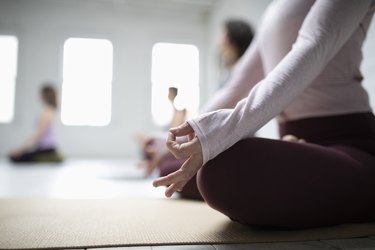
Stress is a normal part of life, but it can wreak havoc on your physical health. Meditation helps to reduce stress, and the effect of meditation on the cardiovascular system has shown to have positive results.
Tip
Meditation has been found to have positive effects on heart rate and cardiovascular health.
Video of the Day
Meditation and Heart Rate
When you experience emotional stress, your body reacts to prepare you for the fight or flight response by releasing stress hormones. This causes your heart rate to increase and your blood pressure and sugar levels to increase, advises the University of Rochester Medical Center. If you are under a lot of stress, your heartbeat during meditation may slow to a normal rate as you achieve relaxation from the practice.
Video of the Day
Many studies have been done on the effect of meditation on the cardiovascular system. Meditation has been shown to have many positive effects on physical health. A summary of several studies in the September 2017 issue of the Journal of the American Heart Association outlines some of the benefits, including:
- Improved psychological and physiological responses to stress.
- Indication that meditation reduces blood pressure to some degree.
- The rate participants quit smoking increases when subjects meditate.
Further study is needed to fully understand the effects of meditation on heart rate as well as how it impacts factors that impact heart health such as stress and smoking. The 2017 Journal of the American Heart Association article has concluded based on this collection of studies that, although evidence is not yet conclusive, meditation possibly has a beneficial impact on cardiovascular risk reduction.
Guided Meditation for Heart Health
There is no single type of meditation that promotes heart health benefits. Instead, find the type of meditation that feels best for you and practice consistently. Here is a simple meditation from Harvard Health Publishing that you can try:
- Find a comfortable seated position and close your eyes.
- Relax your body. Start at your feet and work your way up to your head and neck. Shrug your shoulders and roll your neck to help release the muscles.
- Focus on breathing slowly. On each out-breath, focus on the word "peace."
- When thoughts arise, return your attention to the word "peace" and to your breath.
You can also explore other types of meditation such as:
- Mindful meditation
- Vipassana meditation
- Loving-kindness or Metta meditation
- Transcendental meditation
- Zen meditation
Movement practices, such as yoga and tai chi, can also be very meditative. Consistency is key in reaping the benefits of meditation. Harvard Health Publishing recommends meditating for at least five to 10 minutes each day to see results. Find a time that works for you and make your meditation a habit and part of your daily routine.
Don't rely on meditation alone to support your heart health. Exercise regularly and eat a healthy diet. Incorporate other forms of relaxation into your routine to reduce stress levels such as time with friends, listening to music and practicing gratitude.
Is this an emergency? If you are experiencing serious medical symptoms, please see the National Library of Medicine’s list of signs you need emergency medical attention or call 911.