









































Hershey Milk Chocolate Bar Nutrition Facts

Hershey Milk Chocolate Bar Nutrition Facts
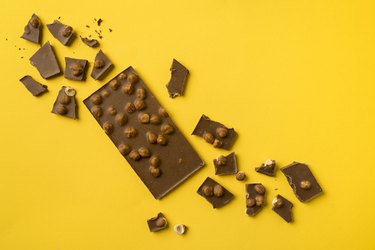
Photo Credit chocolate bar image by terex from Fotolia.com

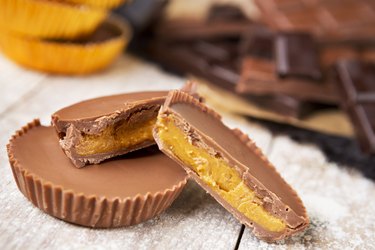
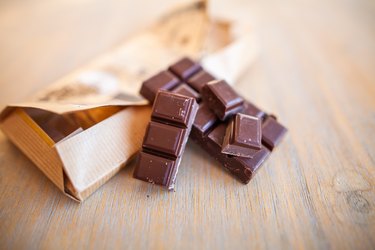
The Hershey milk chocolate bar is a classic candy bar, based on Milton S. Hershey's 1900 recipe. Hershey created the milk chocolate bar so that the average American could enjoy the taste of chocolate, a luxury mainly reserved for the wealthy at that time. The chocolate bar is crafted by blending together sweetened chocolate with milk.

Serving Size and Ingredients

The serving size of a Hershey milk chocolate bar is 1 bar, which weighs 43 grams and contains 210 calories. A Hershey milk chocolate bar consists entirely of milk chocolate, which is a mixture of sugar, milk, cocoa butter, chocolate, soy lecithin, vanillin and artificial flavors.

Fat

Of the 210 calories in this candy bar, 110 calories come from fat. The Hershey milk chocolate bar contains 13 g of fat, which is 20 percent of the recommended daily value for a 2,000-calorie diet. Saturated fat accounts for 8 g, which is 40 percent of the recommended value. The Hershey milk chocolate bar does not contain any trans fat.

Cholesterol

Each Hershey milk chocolate bar contains 10 mg of cholesterol, which is 3 percent of the daily value for this substance.

Sodium

There are 35 mg of sodium per candy bar, which is 1 percent of the daily value.

Carbohydrates

There are 26 g of carbohydrates in each milk chocolate bar, primarily from sugar in the candy. Each bar contains 24 g of sugar and 1 g of fiber. Each serving has 9 percent of the daily value of carbohydrates and 4 percent of the daily value of fiber.

Protein

There are 3 g of protein, or 6 percent of the daily value, in each Hershey milk chocolate bar. The main source of the protein is the milk.

Vitamins and Minerals

Each Hershey milk chocolate bar provides 8 percent of the daily value of calcium and 2 percent of the daily value of iron.

References

Article reviewed by Seamus Islwyn Last updated on: Sep 28, 2010

Must see: Photo Galleries

Member Comments