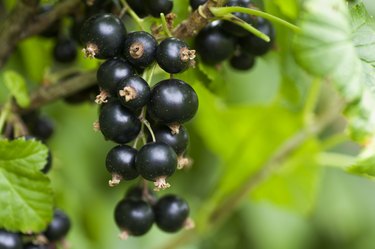
Black currant tea is made from the leaves and dried fruit of the black currant bush. The fresh leaves of the black currant plant have a fragrant aroma, but it is less pronounced once the leaves are dried. The tea can be made from fresh or dried leaves, and often includes dried black currants to add flavor and color. Black currant tea is rich in antioxidants, which provide numerous health benefits.
High in Vitamin C
Video of the Day
Black currant tea, like black currants, is rich in vitamin C. A 1/4 cup of fresh black currants becomes 1 tablespoon of dried black currants, which can be used to make a 2-cup serving of black currant tea. A tablespoon of dried black currants has more than 50 milligrams of vitamin C, which is a natural antioxidant. Vitamin C provides a boost to your immune system and helps with the repair and growth of tissues in your body. As an antioxidant, it protects your body against harmful free radicals and toxins.
Video of the Day
Anti-Inflammatory Aid
Both black currant leaves and fruits contain anthocyanins, a type of polyphenol that is a natural antioxidant. James Duke, author of the "Handbook of Medicinal Herbs," states that black currant leaf extract is a helpful anti-inflammatory agent. A study in the 2012 issue of "Journal of Medicinal Food" found that black currant extract from fruits was also rich in antioxidants that had powerful anti-inflammatory properties, which may help reduce inflammation from smoking and exposure to toxins.
Anti-Viral Benefit
A 2014 issue of "Frontiers of Microbiology" included a study that found that black currant leaf extract could protect against the influenza A virus, also known as the flu virus. The in vitro study found that black currant leaf extract was useful in preventing the proliferation of the flu virus during the early stages, less than two hours after infection. Scientists concluded that black currant leaf extract could help reduce the risk of infection from the influenza A virus, although human testing is still needed.
Anti-Cancer Benefit
Black currants, like other dark purple-colored fruits, are rich in anthocyanins, which are found primarily in the skin of the fruits. The anthocyanin content of black currants has been shown to slow down and inhibit the growth of cancer cells, potentially leading to anti-cancer benefits. A 2010 issue of "Natural Product Communications" found that black currant juice, as well as a water-based extract of black currant fruits, led to a significant reduction in the proliferation of liver cancer cells. Scientists concluded that black currant extract could possibly be used to prevent and treat liver cancer in humans.
- Ortis Laboratories: Blackcurrant
- USDA Nutrient Database: Currants, European Black, Raw
- University of Maryland Medical Center: Vitamin C
- MedlinePlus: Antioxidants
- Journal of Medicinal Food: Anthocyanin-Rich Black Currant Extract and Cyanidin-3-O-Glucoside Have Cytoprotective and Anti-Inflammatory Properties
- Frontiers in Microbiology: Antiviral Activity of Ladania067, an Extract From Wild Black Currant Leaves Against Influenza A Virus In Vitro and In Vivo
- Natural Product Communications: Anthocyanin-Rich Black Currant Extract Suppresses the Growth of Human Hepatocellular Carcinoma Cells