


















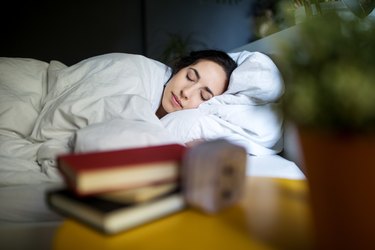



If you think that devoting yourself to a good night's sleep is the lazy man's way to diet, it's time to make peace with your inner sloth. That we spend approximately a third of our lives sleeping is hardly a waste of time, says the Division of Sleep Medicine at Harvard Medical School. Sleep is critical to a host of bodily functions, and lack of sleep may indeed result in weight gain and even more serious health problems.
Food Intake and Physical Activity
In separate studies published in the "American Journal of Clinical Nutrition," lack of sleep was associated with behaviors likely to result in weight gain: male subjects who slept for four hours or less woke up hungrier and consumed 22 percent more calories than men who had eight hours of sleep, and the amount and intensity of physical activity was shown to be lower in sleep-deprived men. Additionally, women consumed more high-carbohydrate snacks when their sleep was progressively reduced.
Appetite, Leptin and Ghrelin
Particularly in combination with decreased physical activity, increased food intake is likely to result in weight gain. How much you eat largely depends on your appetite, which in turn is regulated by the hormones leptin and ghrelin---the former an appetite suppressant, and the latter an appetite stimulant. Lowered leptin and elevated ghrelin levels were both shown to result from sleep deprivation in a study published by the Public Library of Science, and the same study also correlated decreased sleep with increased body mass index.
Stress and Cortisol
According to Brendan Brazier, author of "Thrive," lack of sleep also raises stress and cortisol levels. Sometimes called the "stress hormone," cortisol is triggered by stress but also causes stress on bodily systems, and can in turn cause poor sleep. In addition to the aforementioned behavioral and physiological effects of sleep deprivation, Brazier explains that cortisol itself can result in overeating and craving carbohydrates as the body switches fuel sources and stores fat in a crisis.
Nutrition and Rest
Although more research is needed to understand all of these complex causal relationships in full, Brazier focuses on the simple balance between stress and recovery. Stress can be positive or negative; exercise is an example of positive stress. Recovery is necessary from both positive and negative stress, and comes in the forms of nutrition and rest. According to Brazier, not only do proper nutrition and rest reduce stress and reverse its effects, but also better nutrition supports better rest and vice versa.
For a Better Night's Rest
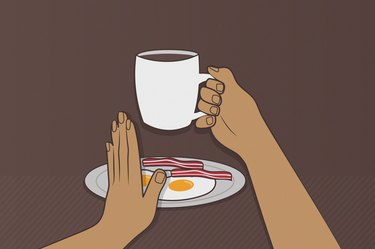
Apart from good nutrition and stress reduction in general, the Division of Sleep Medicine at Harvard Medical School recommends avoiding caffeine up to six hours before bedtime. Alcohol and nicotine can also interfere with sleep. Keep your bedroom quiet, dark and cool--and use only for sleep and sex, if possible. Natural light sets your internal sleep-wake cycle, so get some sun when it's daytime. Exercise, too, supports restful sleep--and weight loss--but not too close to bedtime.
References
- Harvard Medical School: Why Sleep Matters
- American Journal of Clinical Nutrition: Acute partial sleep deprivation increases food intake in healthy men
- American Journal of Clinical Nutrition: Short-term sleep loss decreases physical activity under free-living conditions and does not increase food intake under time-deprived laboratory conditions in healthy men
- American Journal of Clinical Nutrition: Sleep curtailment is accompanied by increased intake of calories from snacks
- Public Library of Science, Medicine: Short Sleep Duration Is Associated with Reduced Leptin, Elevated Ghrelin, and Increased Body Mass Index


Member Comments