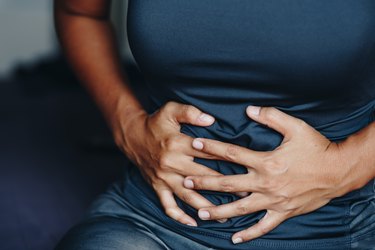
Pressure and fullness in your stomach is clearly uncomfortable. But figuring out why you have upper abdominal bloating isn't always as straightforward.
Bloating is a feeling of fullness in the abdomen. It can be accompanied by discomfort or distension — where your stomach is visibly swollen and your pants feel too tight.
Video of the Day
Video of the Day
It's not uncommon to occasionally feel a little bloated under your ribs or in your stomach after a big meal, says April Panitz, RDN, CDN, cofounder of Amenta Nutrition in New York. "But when it occurs frequently, it's time to investigate why."
Here, some of the most common causes of bloating in your upper belly, and what you can do to feel better.
1. Swallowing Excess Air
It's normal to swallow some air while eating, drinking or talking, which can build up in the body until we burp or pass it out as gas. Even if you're waking up bloated, you could be swallowing air in your sleep.
"However, when too much air is swallowed, the air that isn't released will make its way to the stomach," Panitz says. As a result, you might feel a sensation of bloating, fullness or pressure.
What's more, gulping down extra air is easy to do. It can happen when you chew gum or suck on hard candy, or if you wear dentures that aren't fitted correctly, according to the American College of Gastroenterology (ACG).
Sinus conditions like post-nasal drip (mucus that drips down the back of your throat, which can cause frequent coughing or throat-clearing) can make you swallow more air, too.
2. Eating Too Much Too Quickly
Having another bite or helping when you're already full can easily push your stomach to the point of discomfort, Panitz says.
And chowing down at lightning speed can have a similar effect: It takes 20 minutes or more for signals from your stomach that you're full to reach your brain. If you polish off your plate faster than that, you may not yet realize you've had enough and reach for more, according to Harvard Health Publishing.
Eating very fast can also make it harder to thoroughly chew your food, per Northwestern Medicine. As a result, your stomach is forced to digest larger, harder-to-break-down food particles, which can cause a gassy stomach.
3. Drinking Carbonated Beverages
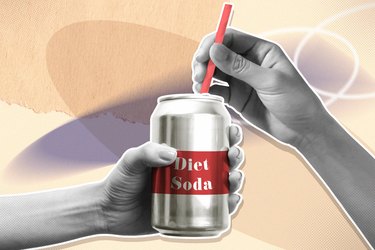
The bubbles in drinks like seltzer, soda or beer are filled with carbon dioxide. And when you sip, that gas goes straight to your stomach and can cause you to feel bloated, per the ACG, much like swallowing extra air.


4. Heartburn
Sometimes digestive issues like bloating can come with a burning feeling in the center of your chest or upper abdomen, also known as heartburn.
This burning often comes with feeling uncomfortably full and gets worse when you bend over or lie down. If it happens regularly, it's typically diagnosed as GERD.
Heartburn happens when the valve that separates the esophagus and stomach doesn't close properly, allowing acid from the stomach to splash back up toward the throat, according to the Cleveland Clinic.
Pregnant people and those who regularly take anti-inflammatory drugs or aspirin are particularly prone, but heartburn can also happen from eating certain foods, eating large meals or noshing very close to bedtime.
5. Stress or Anxiety
Chronic stress or anxiety can make your stomach ache and affect digestion, says Ashkan Farhadi, MD, a gastroenterologist at MemorialCare Orange Coast Medical Center in Fountain Valley, California.
"We know that the gut is bidirectionally connected to the central nervous system via the brain-gut axis," he says. That's why "when you're stressed, you can have stomach discomfort and hypersensitivity."
Feeling anxious can make you more prone to swallowing excess air, too.
6. Food Intolerance or Hard-to-Digest Foods
When you eat a food that doesn't agree with your system, bloating, gas and cramps are some of the ways your body may let you know.
Milk, cheese and ice cream are among the most common culprits — they contain the sugar lactose, which many people aren't able to digest, per the ACG.
Foods high in hard-to-break down carbohydrates can cause bloating too, especially cruciferous vegetables, beans and wheat.
Tip
If your bloating comes with vomiting and/or diarrhea, you may be dealing with viral gastroenteritis, or the stomach flu. This often goes away on its own with good hydration and plenty of rest, per the Mayo Clinic.
Or, you could have an infection from bacteria like E. coli or H. pylori, which require antibiotics to treat, according to Johns Hopkins Medicine and the Mayo Clinic.
7. Gastroparesis
Gastroparesis or slowed gastric emptying is a condition that affects the movement of the stomach muscles. "It can leave you with a loss of appetite and/or feeling full after eating a small amount of food," Panitz says. In some cases, the condition can also make you feel nauseous or even vomit.
Experts don't fully understand the cause of gastroparesis, but it can be a complication of diabetes or occur temporarily after surgery. Medications like opioid pain relievers, antidepressants, blood pressure drugs and allergy medications can trigger gastroparesis too, according to the Mayo Clinic.
8. Serious Stomach Conditions
In some cases, a persistent feeling of bloating or upper abdomen discomfort could be a sign of serious gastrointestinal distress — like a stomach infection, gallstones, an ulcer or pancreas problems, Dr. Farhadi says.
Another issue that causes upper abdominal pain is a hiatal hernia — a condition where part of your stomach pushes through an opening of your diaphragm into your chest, per Mount Sinai. You typically need surgery to fix this.
In very rare cases, abdominal swelling can be a stomach cancer symptom. Other cancers that may cause a distended abdomen (or fluid in the stomach) include ovarian, pancreatic, liver and colon cancers, per a February 2020 report in JAMA Oncology.
Your doctor will determine whether you need a cancer screening, especially if the root cause of upper abdominal bloating hasn't been found, per the Mayo Clinic.
Warning
If your swollen upper abdomen is accompanied by a fever, severe pain, vomiting or bleeding, see a doctor right away. You may have a more serious issue —like a bowel obstruction — that requires surgery to fix.
How to Relieve Upper Abdominal Bloating
Good news: There are upper belly bloating remedies you can try at home, along with simple lifestyle changes.
Here are some of the best methods for reducing abdominal bloating:
1. Eat More Slowly
Eating at a more leisurely pace can leave you more comfortable after meals and possibly prevent upper abdominal discomfort and bloating after eating.
"You'll take in fewer large gulps of air," Panitz says. "You'll also chew your food more thoroughly, which means less work and time in the stomach because it's already broken down."
Eating slowly will also help you sense when you're full, which can help you eat less. Aim to take at least 20 minutes to finish your food.
2. Limit Carbonated Beverages
Cutting out the bubbles can go a long way toward stopping upper stomach bloating, per the ACG. Switch to plain water with a squeeze of lemon or lime, muddled fresh herbs or berries.
Another way water helps with bloating is by moving your bowels. If you're bloated from constipation, drinking more water could help.
3. Steer Clear of Gum and Hard Candies
Again, avoiding excess chewing and sucking will keep extra air out of your system and reduce the chances for bloat.
4. Rule Out Offending Foods
Pinpoint which menu items make you uncomfortable so you can avoid or eat less of them. Keeping a food journal of what you eat and how you felt afterward can help, Dr. Farhadi says.
If tracking your food intake and symptoms feels overwhelming or you're having trouble cutting a particular food out of your diet, a registered dietitian can help.
5. Sip an Herbal Tea
Peppermint, chamomile, ginger, turmeric and fennel teas are all good options for supporting healthy digestion, according to the Cleveland Clinic. And better digestion can mean less gas and bloating.
6. Try an OTC Med
Antacids like Tums ($5.84, Amazon) can be helpful for neutralizing heartburn quickly, Panitz says.
If gas and bloating are the problem, try a surfactant like Gas-X ($13.76, Amazon). "It breaks large bubbles into smaller bubbles, making them easier to pass," she says.
There are also some vitamins that could help bloating if you're not getting enough through your diet, like vitamin D, magnesium or probiotics. Try Thorne's Magnesium Bisglycinate ($48, iHerb) or Nature Made Vitamin D3 ($20.99, Amazon).
Warning
You may want to avoid over-the-counter pain medications like ibuprofen or other NSAIDs (nonsteroidal anti-inflammatory drugs) if you're dealing with a gastric ulcer or intestinal obstruction, as it can make your ulcer worse, per Kaiser Permanente.
7. Get Moving
Take a walk or head out for a bike ride after eating to combat a distended upper abdomen.
"Mild physical activity has been shown to help speed up gas elimination and digestive transit, which can help with bloating," Panitz says.
8. Stay on Top of Stress
Managing your mental health just might help soothe your stomach woes, Dr. Farhadi says. Try one of these calming exercises the next time you start to feel overwhelmed.
9. See a Dentist or ENT
If you suspect your dentures aren't placed correctly, getting them refitted could help you swallow less air and reduce bloating.
On the other hand, an ENT can help you get problems like post-nasal drip under control.
When to See a Doctor
If your upper abdominal bloating and pain doesn't go away after a week, is very painful or is accompanied by fever, vomiting or bleeding, call your doctor, according to the Cleveland Clinic.
In other words, these symptoms "need to be investigated quickly," Dr. Farhadi says.
You may also want to see if your doctor if you feel bloated with painful bowel movements or painful sex, or you're bloated after every meal. These could be signs of a more serious condition, which can be diagnosed through the following methods, per the Mayo Clinic:
- Breath tests to check for bacteria or food intolerance
- Upper endoscopy, a procedure that uses a camera to look at the upper GI tract
- Blood tests to determine health conditions or food intolerances
- MRIs or X-rays to check for constipation or an inflammatory bowel disease
FAQ
Common Questions
Why is my stomach hard at the top?
A stomach that feels hard at the top could be due to gas, a food intolerance, inflammatory bowel disease like Crohn's disease or ulcerative colitis or reproductive issues like PMS or uterine fibroids, per Mount Sinai.
If your stomach doesn't soften after a few days or comes with other symptoms like fatigue, vomiting, diarrhea or fever, call your doctor or go to the nearest emergency room to get treated.
Why am I so bloated at the end of the day?
There are a few reasons why you could be bloated at night. You may have eaten dinner too close to bedtime and notice bloating when you lie down. You may have also eaten too much food, or you ate gas-producing foods like broccoli or beans. This type of bloating often goes away within a few hours to days, per the Cleveland Clinic.
- Harvard Health Publishing: "Slow down—and try mindful eating"
- Northwestern Medicine: "Quick Dose: Is Eating Too Fast Unhealthy?"
- Cleveland Clinic: "Heartburn"
- Mayo Clinic: "Gastroparesis"
- American College of Gastroenterology: "Belching, Bloating, and Flatulence"
- Mayo Clinic: "Stomach Cancer"
- JAMA Oncology: "Ascites, or Fluid in the Belly, in Patients With Cancer"
- Mount Sinai: "Abdomen — swollen"
- Mayo Clinic: "Viral gastroenteritis (stomach flu)"
- Mount Sinai: "Hiatal Hernia"
- Kaiser Permanente: "Peptic Ulcers and Nonsteroidal Anti-inflammatory Drugs"
- Johns Hopkins Medicine: "Bacterial Gastroenteritis"
- Mayo Clinic: "Heliobacter pylori"
- Mayo Clinic: "Understanding and managing chronic abdominal bloating and distension"
Is this an emergency? If you are experiencing serious medical symptoms, please see the National Library of Medicine’s list of signs you need emergency medical attention or call 911.