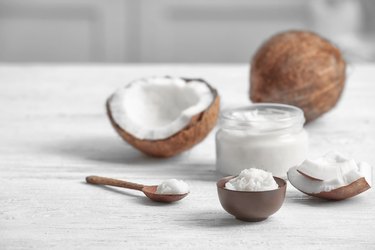
When you take a look at the coconut oil nutrition facts, the fat content takes center stage. Because it's high in saturated fat, you may want to limit the amount of unrefined coconut oil in your diet.
Fractionated coconut oil, or MCT oil, is an alternative that's been linked to benefits, but more research is needed to confirm any long-term effects on health.
Video of the Day
Video of the Day
Tip
Coconut oil can fit into a healthy meal plan, as we need fats in our diet. That said, you'll want to be mindful of your portions, as it's high in saturated fat.
Eating too much saturated fat may lead to health problems such as obesity and heart disease. Less than 10 percent of your daily calories should come from saturated fat, according to the USDA Dietary Guidelines for Americans.
Those who have heart disease or are at a higher risk are advised to limit saturated fat to no more than 6 percent of their daily calories, per the American Heart Association.
Coconut Oil Nutrition Facts
According to the USDA, one tablespoon of organic virgin coconut oil gives you:
- Calories: 130
- Total fat: 14 g
- Saturated fat: 12 g
- Trans fat: 0 g
- Cholesterol: 0 mg
- Sodium: 0 mg
- Total carbs: 0 g
- Dietary fiber: 0 g
- Sugar: 0 g
- Protein: 0 g
Coconut Oil Calories and Macros
All the calories in coconut oil come from fat. While that sounds intimidating, you're supposed to have some fat in your diet.
Fat helps with the absorption of vitamins, protects your organs, creates several hormones and keeps your bodily temperature within a normal range. One tablespoon of coconut oil has 14 grams of total fat and 130 calories.
Coconut oil nutrition isn't particularly high in any micronutrients, but that doesn't mean it lacks benefits.
What Kind of Fat Is in Coconut Oil?
Most of the fat in coconut oil is saturated fat. A very small amount of the fat in coconut oil comes from polyunsaturated omega-6 fatty acids, but these make up less than 2 percent of the total fat.
While many claim that the coconut oil benefits are due to it's fat content, the research shows otherwise, according to the Harvard T.H. Chan School of Public Health.
Most of the studies supporting any heart health benefits of coconut oil used a special type of coconut oil including just the medium-chain triglicerides (also known as MCTs) in it. MCTs are digested faster and get used immediately as a source of energy, per the Harvard T.H. Chan School of Public Health.
The most predominant type of saturated fat in coconut oil is lauric acid, which acts like a long-chain fatty acid in the body. This means that the benefits of MCT oil derived from coconuts aren't the same as the benefits of commercially available unrefined coconut oil, per the Harvard T.H. Chan School of Public Health.
Saturated fat, including the fats in unrefined coconut oil, have been linked to higher LDL (that's the bad one) cholesterol levels and may increase your risk of heart disease. Less than 10 percent of your calories should come from saturated fat, according to the USDA Dietary Guidelines for Americans. If you eat a 2,000-calorie diet, that amounts to 200 calories from saturated fat.
The American Heart Association reccomends replacing saturated fat in your diet with sources of healthy, unsaturated fats instead.
Expeller-Pressed vs. Cold-Pressed Coconut Oil
With so many different varities on the market, many wonder what the differences are between expeller-pressed coconut oil versus cold-pressed coconut oil.
With expeller-pressed coconut oil, a machine is used to press (extract) the oil from the coconut meat using either heat or steam. Additional measures are taken to remove impurities and bacteria from the oil. Some brands may use chemical solvents to extract oil from coconut meat. Expeller-pressed coconut oil is considered "refined," as the composition of the oil changes during this process.
Cold-pressed coconut oil is made by pressing the oil out of the coconut meat without heat. During the process, the temperature remains below 120 degrees Fahrenheit, which is thought to help the final product retain more nutrients.
Tip
Refined oil has a higher smoke point than unrefined oil, reaching 400 to 450 degrees Fahrenheit as compared to 350 degrees Fahrenheit for your standard virgin or extra virgin coconut oil.
The refining process also removes all coconut flavor and odor, which may be more suitable for certain recipes.
When stored properly, you can expect refined coconut oil to last a few months. Store it either in a cool, dark place in an airtight container or in the refrigerator.
Fractionated Coconut Oil (MCT Oil)
With fractionated coconut oil, steam and pressure are used to separate (or fractionate) the long-chain amd medium-chain fatty acids. The long-chain fatty acids are then removed, leaving only medium-chain triglicerides (or MCTs).
You might see fractionated coconut oil, or MCT oil, as an ingredient in many health and weight loss diets. That's because these fatty acids are used by the body as an immediate source of energy, per the Harvard T.H. Chan School of Public Health.
MCT oil is liquid at room temperature, as opposed to unrefined coconut oil, which is solid at room temperature. This shows that the long-chain fatty acids, which normally give coconut oil its solid structure, have been removed.
Small studies have linked MCTs to positive changes in LDL cholesterol, weight loss and metabolism, but more research is needed to confirm these claims, per the Harvard T.H. Chan School of Public Health.
Tip
MCT oil has a low smoke point, so it doesn't bode well as a cooking oil. People typically use it raw, adding it to foods like coffee or smoothies.
Virgin Coconut Oil vs. Extra Virgin
The term "virgin" as applied to oils just means that the oil has not beeen refined or treated with heat.You'll also notice some coconut oil is labeled "virgin" and some is labeled "extra virgin."
When it comes to olive oil, these two phrases mean different things. That's not the case when it comes to coconut oil. They are one and the same.
- USDA National Nutrient Database for Standard Reference: Oil, Coconut
- U.S. Department of Agriculture and U.S. Department of Health and Human Services: Dietary Guidelines for Americans 2010
- Cleveland Clinic: Olive Oil vs. Coconut Oil: Which is Heart-Healthier?
- Harvard Medical School: Listing of Vitamins
- Harvard Medical School: Ask the Doctor: Coconut Oil
- San Francisco Gate: Refined versus Unrefined Coconut Oil
- USDA MyFoodData: Organic Virgin Coconut Oil
- USDA: 2020-2025 Dietary Guidelines for Americans
- American Heart Association: Unsaturated Fats
- Lipids: Effects of Dietary Coconut Oil on the Biochemical and Anthropometric Profiles of Women Presenting Abdominal Obesity.