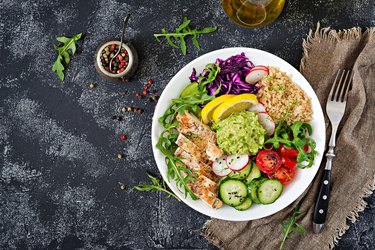
Low-carb filling foods that are healthy include nonstarchy vegetables, whole grains and certain fruits, all plentiful sources of fiber, a food constituent that satiates appetite. While meat and high-fat foods are low carb and filling, eating too much of them isn't beneficial.
Pick Low-Carb Filling Foods
Video of the Day
Harvard Health Publishing states that fruits and vegetables are rich in fiber, which slows digestion and promotes a sense of fullness. In addition to fiber, these foods contain many vitamins, minerals and phytonutrients. Nutritionists consider them an essential part of a healthy diet. However, their carbohydrate content varies, so people watching their carbs should choose those with lower amounts.
Video of the Day
Low-carb fruits include blackberries, raspberries, strawberries, cantaloupes, watermelons, peaches, kiwis, grapefruit and clementines, according to the Centers for Disease Control and Prevention (CDC). One of the downsides of the keto diet is that it can be low in nutrients, so anyone following this eating plan could benefit from eating some of these fruits daily.
Those who are counting carbs may select from a broad variety of nonstarchy vegetables. Celery, alfalfa sprouts, cucumbers, mushrooms, iceberg lettuce, broccoli, zucchini, cauliflower, radishes and asparagus are all low in carbohydrates. Other good options involve green leafy vegetables, such as kale, spinach, collard greens and mustard greens. Conversely, starchy vegetables, like potatoes and corn, are higher in carbohydrates.
Choose the Right Grains
Grains, another source of carbohydrates, come in two styles: refined and whole. For weight management, it's important to choose the right kind. Most people who avoid processed and refined grains notice a weight reduction, states the CDC. Since these foods don't contain fiber, they don't satisfy hunger easily, which results in overeating. Low-fiber foods include white bread, white rice, cookies, crackers, cakes and white flour pastas.
In contrast, whole grain foods are full of satiating fiber and other nutrients. Some examples of these foods include quinoa, oats, brown rice and whole grain bread.
Read more: The Best Grains on a Low-Carb Diet
When shopping at the supermarket, it can be hard to identify which grain products are truly whole grains. Harvard Health Publishing recommends checking the nutrition label to see if they contains at least 1 gram of fiber for each 10 grams of carbohydrates. If, say, one serving of the product has 23 grams of carbohydrates, it should contain at least 2.3 grams of fiber.
Prepare Filling Low-Carb Meals
Unless your doctor has advised you to go on a diet that is very low in carbs, just concentrate on eating healthy carbs in place of unhealthy ones. Healthy carbs include fruits, vegetables and whole grains; while unhealthy carbs are found in sweets, sugary beverages and refined grains. Some low-carb diets, such as the keto diet, tend to limit nutritious carbs and focus on meat and high-fat foods: The long-term safety of these eating plans aren't known, says Harvard Health Publishing.
If you follow the guidelines set forth by the USDA's ChooseMyPlate, you'll have a nutritious, filling meal featuring lots of fiber foods. Make half of your meal fruits and vegetables, 30 percent grains and 20 percent lean protein. Good sources of protein are fish, poultry, eggs, nuts and beans.
An example of a low-carb lunch is a large salad comprising an assortment of nonstarchy vegetables. For protein, you can sprinkle nuts on top. Instead of using a prepared dressing, which is likely to contain added sugar, try making your own dressing of lemon juice mixed with olive oil.
For dinner, you could feature healthy carbohydrates like steamed broccoli and brown rice, along with baked salmon. Dessert could be a dish of mixed berries.
Know Your Salt Limit
The recommended daily sodium intake is no more than 2,300 milligrams, which is about 1 teaspoon of salt, but the ideal intake is no more than 1,500 milligrams for most people, advocates the American Heart Association. On average, Americans consume more than 3,400 milligrams daily.
Sodium adds up quickly in the diet, warns the CDC. Processed foods are notoriously high in salt. In fact, more than 70 percent of the sodium Americans consume comes from either packaged foods or restaurant meals. For instance, one slice of frozen pizza can have 370 milligrams to 730 milligrams of sodium; and one slice of bread may contain 80 milligrams to 230 milligrams.
According to the USDA, an unsalted fresh raw egg contains only 142 milligrams of sodium, but prepared eggs have much higher quantities. Other highly salty foods include canned soups, snack foods, processed tomato products, salad dressings and processed meats and poultry.
Cut Back on Salt
The Food and Drug Administration provides tips to reduce your salt intake. If you follow the recommended guidelines, your taste for salt will diminish over time. Get in the habit of checking the sodium content on nutrition labels and try not to exceed the 2,300-milligram daily limit. When dining at a restaurant, choose options that are low in salt or request that your order be prepared without salt.
When possible, prepare your meals at home and limit the use of mixes, packaged sauces and "instant" products. In cooking, add herbs and spices to impart flavor and cut down on the need for salt. Choose reduced-sodium condiments. Rinse canned tuna before eating to remove some of the salt.
Instead of canned vegetables, buy fresh or frozen ones that don't come with sauces. When selecting fresh meat, check the label to see if a salt or saline solution is listed.
Benefits of Reducing Salt Intake
Research indicates cutting back on salt has wellness benefits. An October 2016 study published in the Journal of the American College of Cardiology explored the effect of sodium intake on death rates. The authors found a link between increased sodium consumption and a higher risk of mortality.
In a June 2014 study published in Electrolytes & Blood Pressure, scientists examined how salt intake relates to blood pressure. They concluded that a moderate reduction in dietary salt was generally effective in lowering blood pressure.
Interestingly, the research team in the Electrolytes & Blood Pressure study noted that some scientists contend that extreme reductions of salt intake actually raise cardiovascular risk: Future studies may help identify optimal salt-lowering strategies. Although the jury may still be out about diets that are very restricted in salt, there is no question about the negative health effects of high-salt diets.
People trying to lose weight may wonder if decreasing salt intake will help. A February 2018 study published in Oncotarget investigated whether reducing sodium consumption resulted in weight loss.
The study only involved 85 participants, but it's worth mentioning because it was a randomized, controlled clinical trial. Researchers discovered that two months on a low-salt diet led to a reduction in body mass, but the benefit was due to a decrease in body water, rather than body fat.
- Harvard Health Publishing: "How to Sneak in More Dietary Fiber"
- Centers for Disease Control and Prevention: "Diabetes and Carbs"
- Harvard Health Publishing: "The Trick to Recognizing a Good Whole Grain: Use Carb-to-Fiber Ratio of 10-to-1"
- Harvard Health Publishing: "Ketogenic Diet: Is the Ultimate Low-Carb Diet Good for You?"
- USDA ChooseMyPlate: "10 Tips to a Great Plate"
- American Heart Association: "How Much Sodium Should I Eat per Day?"
- Centers for Disease Control and Prevention: "Get the Facts: Sodium and the Dietary Guidelines"
- USDA FoodData Central: "Egg, Whole, Raw"
- Food and Drug Administration: "Use the Nutrition Facts Label to Reduce Your Intake of Sodium in Your Diet"
- Journal of the American College of Cardiology: "Sodium Intake and All-Cause Mortality Over 20 Years in the Trials of Hypertension Prevention"
- Electrolytes & Blood Pressure: "Dietary Salt Intake and Hypertension"
- Oncotarget: "Low Salt and Low Calorie Diet Does Not Reduce More Body Fat Than Same Calorie Diet: A Randomized Controlled Study"