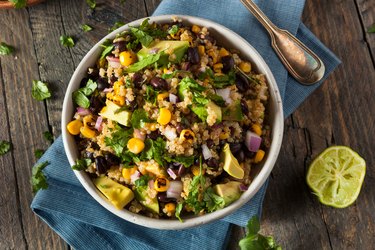
There are plenty of reasons to try the vegetarian diet, including reduced animal cruelty, helping the environment and of course, losing weight. But a vegetarian diet isn't always a guaranteed way to drop pounds.
You might very well eat processed chips, cereal, energy bars and pasta as the bulk of your diet and still be heavier than someone following an omnivorous diet consisting of lean meats and leafy greens. Long-term vegetarians, though, do tend to have less body fat and lower cholesterol than meat eaters, reported a study in Nutrition Research and Practice published in 2012.
Video of the Day
Video of the Day
Vegetarians successful at keeping a healthy body weight focus on eating whole foods, such as beans and legumes, fresh vegetables, soy protein and, if ovo-lacto, eggs and milk. To lose weight as a vegetarian, you'll still need to moderate your calorie intake and exercise.
Vegetarian Weight-Loss Fundamentals
Weight loss on any type of diet occurs when you eat fewer calories than you burn. A deficit of 3,500 calories leads to 1 pound lost. You create this deficit by cutting calories, exercising more or a combination of the two.
The Centers for Disease Control and Prevention recommends not losing weight at a rate faster than about 2 pounds per week or you'll be less likely to keep it off. This may not fit your definition of "fast," but it's the most manageable and safest rate.
A 2-pound-per-week weight loss requires a deficit of about 1,000 calories per day. But don't consume fewer than 1,200 calories per day, which can leave you nutritionally deficient.
After you figure out your daily burn — use an online calculator or consult with a dietitian — determine if you can safely cut out 1,000 calories. If not, plan on using a combination of physical activity and reduced calories to achieve your goal. Exercise expedites weight loss for vegetarians and omnivores.
From there, plan on eating a 40-30-30 split between getting 40 percent of your calories from carbohydrates and 30 percent each from fats and protein. To help you accomplish that, here's a quick (but not comprehensive) list of the best vegetarian foods for weight loss.
Vegetarian Protein for Weight Loss
- Quinoa
- Chickpeas
- Beans
- Greek yogurt
- Tofu
- Seitan
- Tempeh
- Nutritional yeast
- Lentils
- Peas
Vegetarian Carbohydrates for Weight Loss
- Kale
- Spinach
- Apples
- Bananas
- Carrots
- Mangoes
- Whole-grain bread
- Whole-grain pasta
- Rice
Vegetarian Fats for Weight Loss
- Avocado
- Extra virgin olive oil
- Cheese
- Olive
- Nuts and seeds
- Flaxseed (ground or as oil)
Types of Vegetarian Diets for Weight Loss
One of the benefits of a vegetarian diet is that you're cutting out potentially high-calorie foods, such as fatty meats, poultry with the skin and processed meats. A vegetarian diet includes no animal flesh and sometimes no animal products. Here's a breakdown of the basic differences between the types of vegetarians:
- A lacto-ovo vegetarian chooses to eat dairy and eggs along with plant foods.
- A lacto-vegetarian eats dairy and no eggs.
- A ovo-vegetarian only eats eggs, but no dairy.
- A pescatarian eats fish and seafood along with plan foods.
- A vegan consumes only plant foods.
All can help you lose weight, but lacto-ovo vegetarian variations need to be extra careful to avoid full-fat dairy and baked treats made with butter and eggs.
Weight-Loss Benefits of a Vegetarian Diet
A 2007 study in the journal Obesity compared a low-fat, vegan diet with the Therapeutic Lifestyle Changes Diet, or TLC, diet promoted by the National Cholesterol Education Program on weight loss for 14 weeks and weight-loss maintenance over two years.
Researchers found that vegans lost more weight than TLC dieters and kept lost weight off better. The TLC diet restricts fat intake, advising dieters to skip butter and cheese as well as red meat, but permits dieters to eat lean animal proteins, including skinless chicken and fish. A vegan diet has eaters subsist on leafy greens, starchy vegetables, soy proteins, beans and legumes and some nuts and oils.
A Vegetarian Weight-Loss Plan
Once you know exactly how many calories you need to prompt weight loss, and how you want to structure your diet, make those calories consist of whole, unprocessed foods. Skip the refined sugar and grain options that may fit the definition of vegetarian, but add excess calories and limited nutrients.
Poached eggs or egg whites with veggies, scrambled soft tofu with salsa or a fruit smoothie made with yogurt or vegetarian protein powder make nutrient-dense breakfasts that have protein to help keep you full. Or try one of these vegetarian breakfast options:
- A yogurt parfait with bananas, berries and granola
- French toast
- A meatless breakfast burrito
- An egg scramble with veggies
- Pancakes with whole-wheat flour
A large salad with chickpeas, vegetable soup with kidney beans or a black-beans-with-brown-rice dish are all high-fiber lunches. The beans add fiber as well as protein, both of which help make you feel more satisfied and not deprived. Here are five more vegetarian lunch options:
- Veggie fried rice
- An veggie Italian sub with eggplant instead of meat
- A flatbread pizza
- A burrito bowl salad without meat
- A hearty salad with nuts, legumes and roasted veggies
For dinner, stir fry tempeh or tofu with minimal oil and serve with a mound of roasted vegetables, or steam the veggies and spritz with lemon juice. A small serving of whole grains, such as quinoa or wild rice, or a starchy vegetable round out the meal. The size of your servings depends on how many calories you've figured you need daily to achieve your goal. Or try one of these vegetarian dinners:
- Vegetarian tortilla soup
- Vegetarian chili with noodles
- Fettuccine with tomato sauce and arugula
- A tempeh stir-fry with asparagus and shiitake mushrooms
- Quinoa and kidney beans
- Grilled tofu with couscous and lemon dressing
- Vegetarian zucchini oatmeal
Vegetarian Weight-Loss Mistakes
Just because a food item says it's vegetarian doesn't mean it's low-calorie. Here are a few of the pitfalls vegetarians may encounter on their weight-loss journey.
1. High-Fat Snacks
To lose weight quickly, you may need to limit certain snacks that are healthy and vegetarian, but can easily lead to overeating. A scant handful of nuts or two tablespoons of hummus fit into a vegetarian weight-loss plan, but if they turn into a half- or full-cup serving, you're better off resisting them altogether. Opt for a snack of plain, low-fat yogurt with berries, a piece of fresh fruit or cut-up vegetables, instead.
2. Fried Vegetarian Foods
Stay away from fried vegetarian foods, including french fries and tempura vegetables. Don't deprive yourself of fats altogether when trying to drop pounds, though. Just opt for healthy unsaturated versions by sprinkling a few seeds over your salad, tossing roast vegetables in a tablespoon of olive oil, or adding a tablespoon of chia seeds to your morning smoothie.
3. Vegetarian and Vegan Junk Food
Vegetarian and vegan cookies, cupcakes and pizza usually contain a large amount of calories and could undermine your results. In fact, Oreos are vegan, but that doesn't mean you need a sleeve every night for dessert.
4. High-Calorie Dressings and Condiments
Salads are excellent meal options, as long as you limit the amount of high-calorie toppings — including croutons, creamy dressing, cheese crumbles, dried fruit and candied nuts. Opt for mustard or balsamic vinegar in place of high-calorie condiments like BBQ sauce, ketchup and mayonnaise.
- Report Buyer: Top Trends in Prepared Foods 2017
- EurekAlert: New Research Reveals Benefits of a Vegetarian Diet
- EurekAlert: Even Moderate Adherence to Vegetarian Diet Could Prevent Overweight/Obesity in Middle Age
- NCBI: A Plant-Based Diet for Overweight and Obesity Prevention and Treatment
- SpringerLink: Vegetarian Diets and Weight Reduction: A Meta-Analysis of Randomized Controlled Trials
- ScienceDirect: Comparative Effectiveness of Plant-Based Diets for Weight Loss: A Randomized Controlled Trial of Five Different Diets
- MDPI: Beyond Meatless, the Health Effects of Vegan Diets: Findings From the Adventist Cohorts
- Nutrition Journal: Effects of High-Protein vs. High-Fat Snacks on Appetite Control, Satiety, and Eating Initiation in Healthy Women
- PETA.org: 11 Complete Protein Sources That Every Vegan Should Know About
- MedlinePlus: Amino Acids