












Making the right choices at a salad bar can help you achieve your healthy eating goals. Making the wrong choices can sabotage your efforts. Learn which common salad bar foods to select and which to avoid so you can stay on track with your weight loss or other dietary goals and still eat a nutritionally sound meal.
Choose Colors
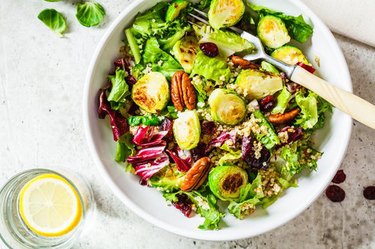
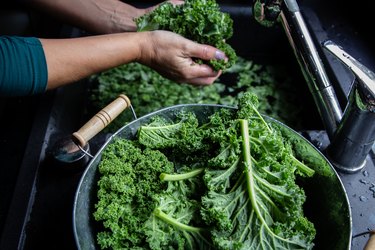
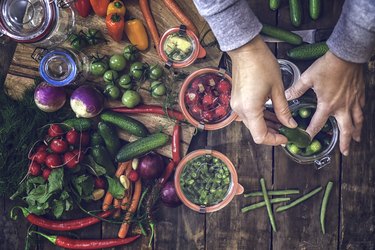
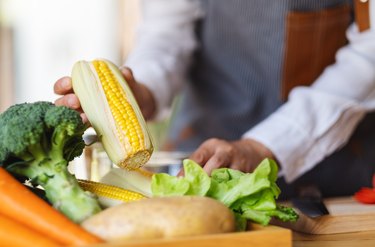
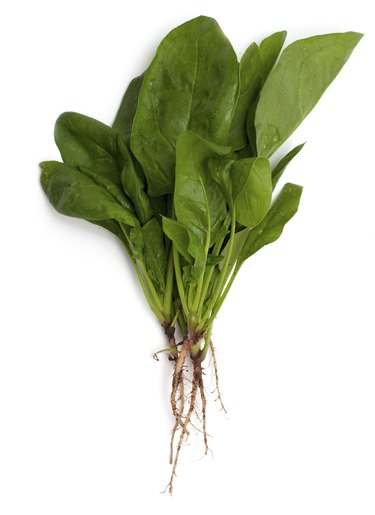
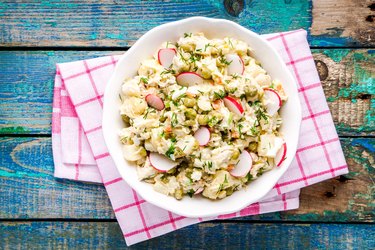
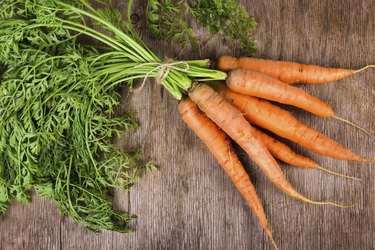
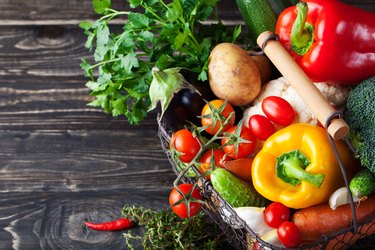
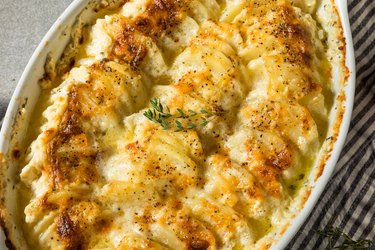
Avoid prepared salads such as potato salad, macaroni salad or cole slaw, recommends HealthMad.com. The dressings in these creamy white salads are often high fat mayonnaise. According to nutritional information compiled at KimBensen.com, these creamy salads can have over 200 calories in a 1/2 cup serving. Even though a Waldorf salad contains apples and fruits, the high fat dressing can make it an unwise choice. Instead, opt for leafy greens and colorful fresh vegetables and fruits. Choose romaine lettuce, spinach or mesclun greens as a base for your salad. They have more nutrients than iceberg lettuce, according to FoodFit.com. Add a variety of fresh, colorful vegetables for a nutrient boost. The University of Iowa Health Care website says that leafy greens are high in vitamins C and A. Tomatoes, strawberries and citrus are also high in vitamin C, and you can get additional vitamin A from broccoli, carrots and peaches.
Toppings
Toppings can add extra fat and calories, but there are some choices that will make your salad more nutritious. While 1 oz. of cheddar cheese has 114 calories and 9g of fat, it also provides 7g of protein, 86 units of vitamin A and 204mg of calcium, says the nutrition website Rd411.com. One boiled egg provides protein, calcium and vitamin A with about 78 calories. The World's Healthiest Foods website says that although it is high in calories, 1/4 cup of sunflower seeds offers significant protein and fiber with an array of vitamins. One-quarter cup contains over 90 percent of the daily value of fat-soluble antioxidant vitamin E. Sunflower seeds are high in heart-healthy unsaturated fats. Avocados and olives also provide healthy fats and fiber.
Dressings
No matter what type of salad dressing you choose, one serving size is 2 tbsp. Salad dressings may contain 140 to 160 calories in one serving, and many people use more than one serving on a salad. Select oil and vinegar type dressings, especially if you know they are made with olive oil or other healthy oils. Fat-free dressings are another option. According to Rd411.com, regular Italian dressing has 140 calories and 15g of fat per serving, and fat-free Italian has only 10 calories and no fat.
Other Choices
Melons, strawberries, pineapple and other fruits in a fresh fruit salad are vitamin-rich, and they can satisfy your craving for sweets. Fruits are also a source of fiber.
Take-out Tip
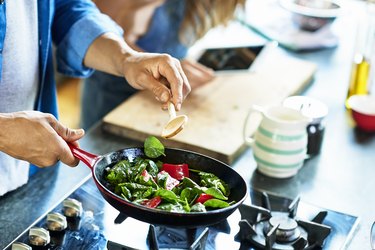
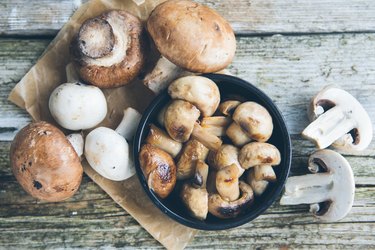
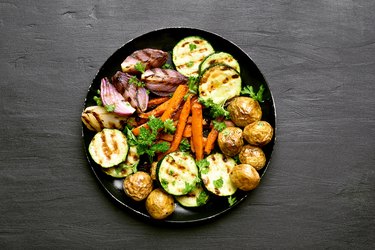
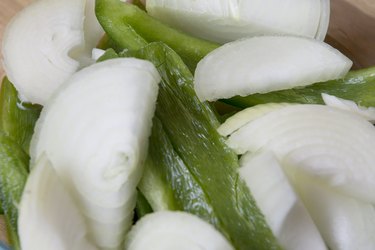
FoodFit.com suggests that a take-out salad bar can be a speedy and economical way to gather prepared fresh vegetables to take home for your homemade stir-fry. Celery, carrots, broccoli, sprouts, mushrooms, onions, peppers and most of the other vegetables on the salad bar will also work in a wok.


Member Comments