
Ever wondered how canned goods or jars of condiments boast an expiration date months or even years in the future?
You can chalk that up to food preservatives, a type of additive that helps maintain the taste, texture, nutrition and appearance of food, says Natalie Allen, RD, an instructor of biomedical sciences at Missouri State University.
Many preservatives act as antimicrobials, which are important because they prevent food from spoiling from microbes, per the U.S. Food and Drug Administration (FDA). These microbes include bacteria, yeast and mold and can lead to serious, even life-threatening, foodborne illnesses, per the Michigan State University Center for Research on Food Safety.
And it's not just safety: Preservatives help fruit, vegetables and meat stay colorful and appetizing, as well as enhance and maintain flavor. For example, certain antioxidants (such as vitamin E) act as preservatives and help foods with fat or oil maintain their taste and prevent them from becoming rancid, per the FDA.
Preservatives also ensure consistency, says Allen — that way, you can count on a jar of tomato sauce or can of soup from your preferred brand always looking and tasting the same way.
Are Preservatives Safe to Eat?
Scan a food label, and you may find the names of food preservatives long and intimidating. After all, the words "calcium phosphate" don't trip easily off the tongue. But, all food preservatives and additives found in food are regulated by the FDA.
Some additives found harmful to people or animals can still be allowed in foods, but only at the level of 1/100 of the amount that is considered harmful.
There's a reason to feel somewhat cautious about preservatives: "Some research shows that certain preservatives can be carcinogenic at high levels and that others can interfere with gut health and absorption," says Amy Shapiro, RD, CDN and founder of Real Nutrition.
Nitrites, a preservative used in processed meats, may be carcinogenic, notes the American Cancer Society. And sulfites, a preservative commonly used in wine and beer, may negatively affect the good bacteria found in the gut and mouth microbiome, according to a lab study published in October 2017 in PLOS One.
Despite these cautionary notes, these preservatives are likely OK to consume because they're used in very small quantities. In fact, some additives found harmful to people or animals can still be allowed in foods, but only at the level of 1/100 of the amount that is considered harmful, notes the U.S. National Library of Medicine.
Testing preservatives and assessing their safety is an ongoing process for scientists, says Allen, noting that, "as we learn more, information evolves." Bottom line: It's safer to eat preservatives than risk eating foods infected by bacteria and fungi.
Tip
If you want to avoid eating preservatives, eat more whole foods and fewer packaged ones, Shapiro says.
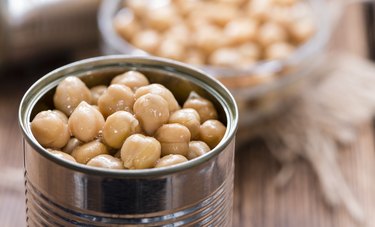
Synthetic Preservatives
1. Calcium Phosphate
This preservative is used to thicken and stabilize foods, Allen says. It helps prevent lumps from forming, too. "It's common in baked goods," such as cake mixes and flour. It's also found in canned foods, bread and jelly, per the FDA.
Other forms of phosphorus are also used as a food additive, according to the National Institute of Diabetes and Digestive and Kidney Disease (NIDDK) — you'll find them in foods such as beer, cheese, milk and dried beans.
"Those with chronic kidney disease should limit their intake of calcium phosphate because their kidneys may not remove phosphorus properly," Allen says. People with chronic kidney disease should also avoid foods with ingredients that include "phos" in their name, according to the NIDDK.
2. Sorbic Acid
When used as a preservative, sorbic acid is created synthetically and considered GRAS. It also occurs naturally in fruits, particularly berries. It's used in wine and cheese, as well as to preserve meats, Shapiro says. (Note that sorbic acid isn't the same thing as ascorbic acid.)
Like many preservatives, sorbic acid has microbial properties, notes Shapiro. It helps prevent mold and yeast from developing, according to the Food and Agriculture Organization of the United Nations (FAO). You won't taste — or smell — this additive when it's used in low levels.
3. Nitrates and Nitrites
Both of these preservatives are commonly added to processed meats. Many fruits and vegetables naturally have nitrates and nitrites, which are safe when naturally occurring, according to the Michigan State University Center for Research on Ingredient Safety.
In meat, the preservative is synthetic and serves to add color and preserve shelf-life, Shapiro says. Most likely, you've also seen meats advertised as being "nitrite- or nitrate-free." That's because there are health risks to adding sodium nitrate to meat — it can lead to carcinogenic chemicals forming, according to the Harvard T. H. Chan School of Public Health.
The cooking method for foods with these preservatives is also a cause for concern: Cooking foods with these preservatives on high heat creates nitrosamines, a carcinogen, per the Center for Research on Ingredient Safety.
So that bacon cooked on a high-temperature oven or a hot dog flaming up on the grill could lead to a person ingesting a carcinogen. However, adding vitamin C to foods with nitrites can reduce the nitrosamine content, and is now required by the USDA.
4. Benzoic Acid and Sodium Benzoate
Benzoic acid and sodium benzoate are grouped together because they can be interchangeable in some cases. "Benzoic acid is the oldest and most widely used preservative," according to the FAO.
You'll find it naturally in some fruits and spices, FOA notes. You'll most often find benzoic acid and sodium benzoate used to preserve acidic foods, such as fruit juice and pickles, Shapiro says, adding that they help limit microbial growth and enhance flavor.
Since benzoic acid isn't very water-soluble, sodium benzoate, which is man-made, is often used instead, per the World Health Organization (WHO).
The problem with benzoate is that it can cause drinks to contain traces of the carcinogen benzene, according to an April 2018 study in Beverages. And a survey of nearly 500 college students found that people who drank beverages with sodium benzoate displayed more ADHD symptoms, an April 2014 study in the Journal of Attention Disorders found.
However, the FDA tested the majority of drinks with these preservatives and found that they contained either no detectable benzene or levels well below the 5 ppb (parts per billion) limit deemed safe.
5. Sulfites
Sulfites are a commonly used food preservative that helps prevent browning, per the USDA.
You'll see them on the ingredient list as sulfur dioxide, sodium sulfite, sodium bisulfite, potassium bisulfite, sodium metabisulfite and potassium metabisulfite, per the USDA.
Thanks to its antimicrobial properties, sulfur dioxide helps prevent dried fruits from rotting, according to the USDA. As well as dried fruits, it's also used as a preservative in fruit juices, Shapiro notes. It's also found in wine, according to the USDA.
While sulfur dioxide is generally considered safe, it "can be harmful for those who suffer from asthma," Shapiro says.
Up to 1 percent of the population may be sensitive to sulfur dioxide, the USDA notes. Some people may have asthma symptoms, from wheezing or a more severe asthma attack, after eating foods with sulfur dioxide, according to the Cleveland Clinic.
6. EDTA
This common food preservative, which is found in canned goods, sauces, soda and other foods, is approved for consumption by the FDA. EDTA is an abbreviation for ethylenediaminetetraacetic acid — it's one of many intimidating-sounding additives that are considered safe.
It's known as a chelating agent and helps to prevent oxidation, per the Academy of Nutrition and Dietetics. When food oxidizes, it can result in a change to its color and taste, as well as lead to food turning rancid.
Even when EDTA is in food, your body does not absorb much of it so long as you don't have a mineral deficiency, according to the Environmental Protection Agency (EPA). And there are limits for how much EDTA can be included in food, per the FDA guidelines.
7. BHT and BHA
Both BHT (Butylated Hydroxytoluene) and BHA (Butylated Hydroxyanisole) are antioxidants that halt oxidation, per the Academy of Nutrition and Dietetics. BHA is a waxy substance and BHT is a powder.
Both are approved for consumption with limitations for how much can be added to foods by the FDA. They are classified as "generally recognized as safe" or GRAS by the FDA. You'll find BHT and BHA in dehydrated potato shreds, cereal, beverages prepared from dry powder and active dry yeast.
But while the FDA considers these foods safe for consumption, other agencies differ. BHA "is reasonably anticipated to be a human carcinogen," a November 2016 National Toxicology Program's Report on Carcinogens states. This conclusion is due to animal studies. What's more, BHA is listed as an additive to avoid by the Center for Science in the Public Interest (CSPI), a consumer advocacy group that champions healthy foods.
Studies of BHT are inconclusive — some animal studies have shown that BHT caused an increase in cancer, while others have shown it leads to a decrease, notes the CSPI, recommending you try to avoid it.
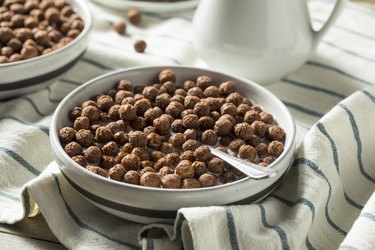
Natural Preservatives
1. Ascorbic Acid
You'd probably recognize this preservative by its more common name: vitamin C. It's considered GRAS by the FDA.
"Ascorbic acid prevents breads from spoiling and used to add citrus flavor to fruit drinks, food and candies," Shapiro says. This antioxidant is also used in foods to prevent browning, according to the Center for Research on Ingredient Safety.
If you want to make an at-home preservative solution for fruit, you can simply crush a vitamin C supplement and mix it with water, according to the National Center for Home Food Preservation.
2. Citric Acid
Naturally occurring in citrus fruits, citric acid is a widely used and GRAS preservative that can actually enhance the flavor of some foods.
"It's used in items, such as jams and fruit juice to retain flavor, as well as gel-like things like jelly so they don't change states," Allen says. It's also frequently used in carbonated beverages, per the FAO. It can also be included in pickle juice and other liquids that benefit from an acidic taste.
3. Vitamin E (Tocopherols)
Vitamin E (tocopherol) is an antioxidant preservative that helps prevent browning, per the Academy of Nutrition and Dietetics. Tocopherol is found naturally in nuts and seeds, per the European Food Information Council (EFIC).
Synthetically created tocopherol, which mirrors the molecular structure of the naturally occurring antioxidant, has been permitted to be used in foods since 2001, according to the USDA.
You'll find tocopherols in a wide array of foods, including cereals, vegetable oils, snacks and processed meats, per the USDA. They're GRAS by the FDA.