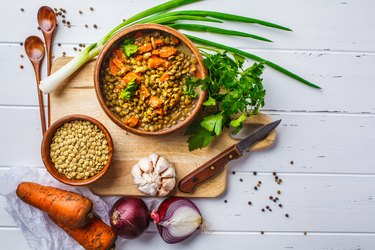
Lentils are a healthy food rich in fiber and protein. Like most legumes, lentils can be combined with another plant-based protein to make them a complete protein. This means you may use them a substitute for meat and other animal foods.
Are Lentils a Complete Protein?
Video of the Day
Consumed by themselves, lentils provide lots of fiber and complex carbohydrates, while low in fat and calories, according to Lentils.org, an informational website of lentil growers in Saskatchewan, Canada. They are high in protein, with a half-cup serving (cooked) providing 9 grams of protein, according to the USDA National Nutrient Database.
Video of the Day
In contrast, a 3-ounce serving of lean chicken breast provides 27.3 grams of protein, per the USDA. A healthy person should eat anywhere from 50 to 175 grams of protein a day, according to the Mayo Clinic.
But lentils are missing one of the essential amino acids that make up a complete protein. They're low in methionine and cysteine, according to a July 2017 review of the protein quality of cooked beans, which was published in Food Science & Nutrition. Whole green lentils and split red lentils are particularly low in methionine, as the researchers note.
To make lentils a complete protein, according to the Cleveland Clinic, you should eat a variety of legumes, nuts, seeds and whole grains each day. That will allow you to get all the essential amino acids, and therefore, complete proteins. One good combination you could try would be lentils and rice for protein, but you don't need to eat them at the same meal to get complete proteins.
Read more: Health Consequences of Too Many Lentils
Amino Acids and Protein
According to the Cleveland Clinic, there are 20 amino acids that join together in a chain to form a complete protein. The human body can produce 11 of them on its own. The other nine must come from food. Some foods contain some of those nine amino acids in different amounts, but not all of them. Those include legumes, nuts, seeds, whole grains and vegetables.
Complete proteins can be found in food produced from animals, as well as some soy products. Fish, poultry, eggs, beef, pork and dairy are all complete sources of protein. Whole sources of soy also provide a complete protein. These include tofu, edamame, tempeh and miso. There are many complete protein vegetarian recipes that can help you combine plant-based sources, some of which you can get from Lentils.org.
If you eat lentils for protein and consume other sources of protein that same day, you're bound to get the amino acids you need to give your body complete proteins. The Cleveland Clinic suggests eating a variety of legumes, lentils, nuts, seeds and whole grains to get complete proteins, even if you don't consume any animal products.
Read more: What Pulses Are and Why You Should Be Eating Them
How Much Protein Do You Need?
If you're worried about getting enough protein on a vegetarian or vegan diet, you should just focus on eating a varied diet. Even the Dietary Guidelines for Americans, 2015-2020, suggests that all Americans get this nutrient from a variety of sources, including legumes, beans, nuts, seeds and soy products. They also suggest that males ages 14 to 70 decrease their eating of red meat, poultry and egg products.
According to the Mayo Clinic, you should get anywhere from 10 to 35 percent of your calories from protein. The recommended daily intake is at least 0.8 grams of protein per kilogram of body weight a day. Most daily protein intake recommendations are provided per kilogram of body weight, not per pound. A kilogram is about 2.2 pounds.
The example the Mayo Clinic uses is that a 165-pound sedentary person on a 2,000-calorie diet should consume at last 60 grams of protein per day. If you exercise regularly, you should eat more protein, about 1.1 grams to 1.5 grams per kilogram of body weight. Too much would be more than 2 grams of protein per kilogram of weight.
The healthiest form of protein, says Kristi Wempen, a Mayo Clinic Health Systems registered dietitian nutritionist, are plant sources, which includes lentils. She adds that if you're not a vegan, however, egg whites and low-fat dairy are also good sources. If you're not a vegetarian, lean meats and fish are also good sources. She recommends getting your protein needs from whole foods rather than protein supplements.
Read more: How Much Protein Is in Lentils?
Lentils in Your Diet
The protein you're getting from lentils helps maintain healthy skin, bone, muscles and organs, according to a Mayo Clinic article on vegetarian diets. Lentils come in several colors — brown, green and red. One cup of cooked lentils provides 16 grams of fiber, according to the USDA Nutrient Database, which is more than half of the 25 grams recommended each day. It also provides 230 calories.
These legumes also have lots of folate, iron, phosphorus and potassium, according to a Mayo Clinic article on cooking with lentils. They are typically sold dried, in packages. In the supermarket, you're likely to find brown lentils, while green and red lentils are usually found at specialty markets. Lentils are also gluten-free.
This food is a good source of complex carbohydrates, according to the American Diabetes Association. Lentils, with all the fiber they provide, are a less-processed carbohydrate and may help keep your blood sugar in check.
How to Cook With Lentils
Store lentils in a dry, cool location on a pantry shelf for up to one year, recommends Lentils.org. Even if you buy them in bulk, store them in an airtight package. After a year, cooking time will increase and the quality of lentils will decrease.
Rinse them until they're free of debris and cook them using three cups of water to one cup of dry lentils. Bring to a boil, cover tightly and simmer until tender. It takes about 15 to 20 minutes to cook whole lentils, and about five to seven minutes to cook split lentils.
Don't salt the lentils before boiling them. It will make them tough. If you decide to use canned lentils, rinse them first. These legumes don't need to be soaked overnight as many dried beans and legumes do.
Once cooked, you can freeze cooked lentils or puree them and freeze them for up to three months, or refrigerate them for one week in airtight containers. Then you can use them in vegetarian recipes, like hummus, chili, veggie burgers or lentil fritters, according to Lentils.org. Or you can combine them with lean meats or fish for healthy, one-pot meals.
Correction: An earlier version of this story incorrectly listed the amount of protein in chicken. We appreciate readers who bring errors like these to our attention! If you spot something in one of our articles, please contact us.
- Lentils.org: "Lentils"
- Mayo Clinic: "Vegetarian Diet: How to Get the Best Nutrition"
- Mayo Clinic: "Are You Getting Too Much Protein?"
- Mayo Clinic: "I Know Lentils Are Supposed to Be Good For Me, But How Do I Prepare Them?"
- USDA National Nutrient Database: "Lentils, Mature Seeds, Cooked, Boiled, Without Salt"
- USDA: "Lean Chicken Breast (Cooked)"
- Food Science & Nutrition: "Determination of the Protein Quality of Cooked Canadian Pulses"
- Health.gov: "Dietary Guidelines for Americans, 2015-2020"
- American Diabetes Association: "Get to Know Carbs"
- Cleveland Clinic: "Do I Need to Worry About Eating Complete Proteins?"