
































































What is the Definition of a High-Fat Diet?

Fat is critical to the functions of the body. It helps dissolve vitamins, lubricate the skin and maintain the structure of cellular membranes. However, it's also energy dense, containing 9 calories per gram, and quite controversial: the role of fat in heart disease is still debated. A high-fat diet is a diet that increases the consumption of dietary fat beyond the level of an average person.

Percentage

There is no formal definition for a high-fat diet, but diets that are high in fat content typically derive at least 50 percent of total calories from fat nutrients. Based on a 2,000 calorie diet, this is equivalent to at least 111 g of fat. By comparison, the American Academy of Family Physicians, the AAFP, states that the typical American diet gets 35 percent of its calories, or 85 g, from dietary fat.

Diets

A high-fat diet is usually the same thing as a low-carbohydrate diet, which raises your intake of dietary fat to compensate for a carbohydrate restriction. The Atkins Diet and Carbohydrate Addict's Diet are two types of low-carbohydrate diet that increase the consumption of dietary fat. In fact, the nascent induction phase of the Atkins Diet raises fat intake to as much as 59 percent of your total calories.

Types of Fat

High-fat diets utilize both animal- and plant-based sources of dietary fat. However, animal foods such as meat, eggs and dairy contain more saturated fat than plant sources, and the American Heart Association recommends that no more than 7 percent of total calories should come from saturated fat.

However, the exact amount of saturated fat that you need for a healthy diet is a scientific point of contention among different researchers and studies. The conventional wisdom espoused by most experts and nutritionists such as the American Heart Association is that saturated fat translates to lipids, which are fats and related compounds, in the blood, but a lot of factors influence blood lipid levels, including exercise and weight. The AAFP notes that several studies have found that individuals who eat higher amounts of saturated fat on a low carbohydrate diet do not necessarily have abnormal lipid levels.

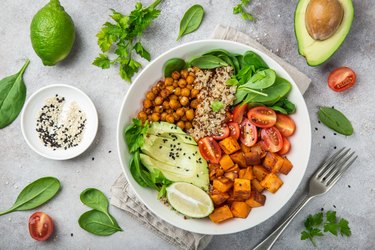
Regardless, most of the fat in a high-fat diet should come from the unsaturated fat found in vegetables, legumes, nuts, seeds, fish and lean meats. Omega-3 and omega-6 are two important types of unsaturated fat that should come through your diet.

Warning

Though saturated fat is a contentious issue, it is vital for a healthy diet that you avoid certain fats. Trans fats, for example, are likely to cause heart disease and obesity. The term trans fats describes a particular molecular structure in fatty acids like hydrogenated oil. They are used in highly processed foods such as baked goods and fried foods.

Calories

High-fat diets are also generally low in calories. For example, someone on the Carbohydrate Addict's Diet will eat only about 1,476 calories a day. Though fat contains 9 calories per gram, many foods such as vegetables and nuts are filling and relatively low in calories.

References

Article reviewed by Janine Baer Last updated on: Nov 8, 2010

Must see: Photo Galleries

Member Comments