


























Healthy Meals for Breakfast, Lunch & Dinner

Healthy Meals for Breakfast, Lunch & Dinner
Photo Credit Jupiterimages/Creatas/Getty Images

Healthy meals for breakfast, lunch and dinner can be easy to prepare and delectable to the palate. With the right types of ingredients and smart cooking techniques, you can create healthy meals that will improve your energy, your overall nutritional profile and your health. Instead of adhering to rigid rules, follow broad strategies to help you make the healthiest meal choices.

Features

Healthy breakfasts, lunches and dinners feature whole, unprocessed foods without added sugars, saturated or trans fats and excess sodium. Include products from the food groups outlined by the U.S. Department of Agriculture Food Guide Pyramid. Healthy meals should help you reach the minimum recommendations of 2-1/2 cups of vegetables, 1-1/2 cups of fruit, 3 cups of dairy, 5-1/2 oz. of meat or beans and 6 oz. of grains daily. Choose plant foods most often, stick to lean meats, eat unsaturated fats instead of saturated or trans fats and opt for whole grains at most meals.

Cooking Methods

Healthy meals emphasize cooking methods that do not require lots of added fats. Broiling, roasting and grilling meats brings out their natural flavors. Steaming or roasting vegetables preserves their natural low-calorie qualities. Cook grains like rice or quinoa in water with diced tomatoes or low-sodium broth to add flavor without butter and salt. Buttery sauces, mayonnaise-based dressings and fried foods are not recommended as healthy options.

Strategy

An easy way to create a healthy breakfast lunch or dinner is to divide your plate into three sections. Load up at least half your plate with watery, fibrous vegetables cooked without added fats. Reserve another quarter for a lean protein like egg whites, chicken breast or fish. Fill the last quarter with a whole grain or starchy vegetable.

Misconceptions

Eating healthy foods does not automatically mean you will lose weight. Weight control is about balancing calories eaten against calories burned. If you overeat any type of food, you will gain weight. A standard-sized serving of meat or fish is about the size of a deck of cards, a 1/2 cup of grains is the size of a muffin cup and a piece of fruit is the size of a baseball.

Sample Meals

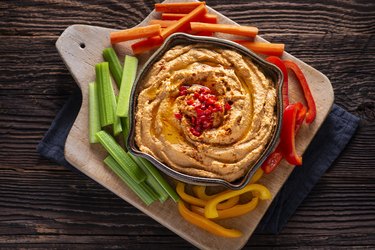
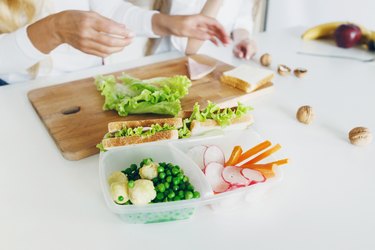
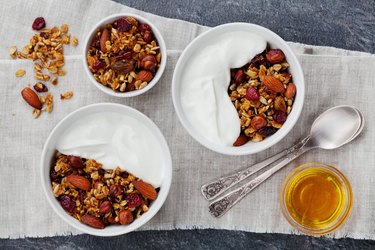
Healthy breakfasts include egg white omelets made with sauteed vegetables and low-fat cheese, smoothies made with low-fat yogurt, berries and bananas, and whole grain cereal with low-fat milk and fresh fruit. Healthy lunches include salads topped with vegetables, chicken or beans and olive oil dressing, whole-grain sandwiches with lean turkey breast or hummus and spinach and tomatoes, or broth-based soups made with fresh vegetables and ground turkey. At dinner time, broil tilapia and then top with a vinaigrette made with diced cherry tomatoes, red wine vinegar, olive oil and fresh thyme. Serve with brown rice and steamed asparagus. Another alternative is whole-grain pasta mixed with olive oil, Parmesan cheese, frozen green peas and diced chicken breast. Serve a large baby spinach salad on the side topped with chopped apple and walnuts and tossed with an olive oil and apple cider vinegar dressing.

References

Article reviewed by Contributing Writer Last updated on: Aug 11, 2011

Must see: Photo Galleries

Member Comments