
























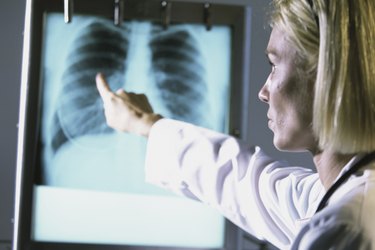









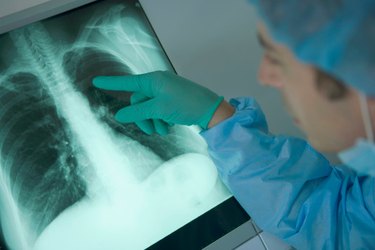


Pneumonia is a lung infection that is caused by bacteria, fungi or viruses. In some cases, patients may inhale these pathogens into the lungs, per Medline Plus. In others, the pathogens already present in the body grow out of control. Those with chronic lung disease and immune problems, as well as smokers, people in nursing homes and people with recent viral infections, such as a cold or flu, are most at risk. Breathing exercises can help improve lung function, and Merck Manuals Online Medical Library recommends deep-breathing exercises to help prevent pneumonia in high-risk groups.
The Belly Breath
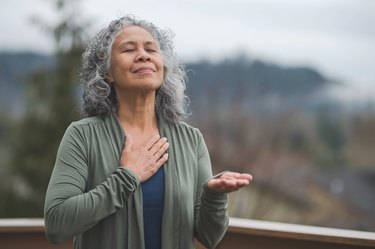
A complete breath fills the lungs to capacity and helps clear secretions as you exhale. Lie on your back with one hand on your stomach just above your belly button and one hand on your chest. Inhale slowly until your lungs fill completely -- both your abdomen and chest should rise. Hold your breath for three seconds, exhale slowly until it feels as if your lungs are empty and then contract your abdomen to push out more air -- you may find yourself coughing. Repeat three to five times and pause for three seconds between breaths.
Alternate Nostril Breathing
Alternate nostril breathing conditions you to breathe through each nostril. Sit in a comfortable position with the third finger of your right hand on your left nostril and your thumb on your right nostril. Press your thumb against the right nostril and inhale deeply through your left nostril. Fill your lungs to capacity and hold your breath for three seconds. Press your third finger against your left nostril, release your right nostril and exhale naturally. Repeat three to five times and pause for three seconds between breaths. Do not practice alternate nostril breathing if you have blocked nasal passages.
Pursed Lip Breathing
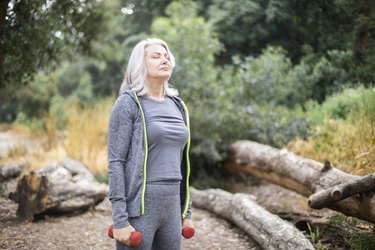
Pursed lip breathing conditions your lungs by narrowing the opening through which you exhale. According to the Cleveland Clinic, this type of breathing releases trapped air in the lungs and keeps the airways open longer. Sit comfortably and inhale deeply through your nose. Let your abdomen and chest fully expand and hold your breath for up to three seconds. Purse your lips and exhale slowly, making a hissing sound. Repeat this exercise up to five times, but stop if you feel light-headed.


