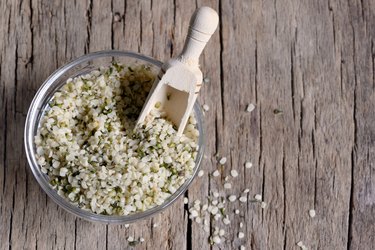
Hemp seeds, also known as hemp hearts in their hulled form, are a trendy health food that's actually been around for centuries. Whether you sprinkle, stir or eat them straight, these tiny, nutty-flavored seeds have powerful properties. Contrary to what you might think, though, instead of getting you high, hemp seeds can help get you healthy. Like other plant foods, they have many nutritional benefits, but there are also a few hemp seed side effects.
What Are Hemp Seeds?
Video of the Day
Shelled hemp seeds, also known as hemp hearts, come from the Cannabis sativa L. plant. While it's related to the marijuana plant, this variety is grown for industrial and nutritional uses. The seeds of the Cannabis sativa L. plant have extremely low levels of THC, so they don't have the psychoactive effects of recreational marijuana.
Video of the Day
According to a March 2018 review published in the journal Phytochemistry Reviews, hemp seeds were one of the five grains of ancient China. They were an important part of Chinese diets until about the 10th century. Other old-world cultures also recognized hemp seeds' nutritional benefits. In Europe, whole hemp seeds (including the hulls), were eaten during times of famine. Today, they've been rediscovered as a powerful source of nutrients and phytochemicals that have health-promoting benefits.
Read more: What Are the Benefits of Eating Hemp Hearts?
Hemp Seeds Nutrition
It's no wonder that hemp seeds were a staple food back in the day. These tiny seeds are packed with protein, healthy fats, fiber and numerous vitamins and minerals. In fact, the National Hemp Association touts them as being more nutritious than any other edible plant food grown on earth.
Technically a nut, hemp seeds' nutrition content surpasses that of many other nuts and seeds. According to the USDA, a 3-tablespoon serving of hemp seeds provides about 10 grams of protein, 15 grams of healthy omega-rich fats and 3 grams of carbs. Hemp seeds' nutrition profile also includes magnesium, phosphorus, iron, zinc, calcium and fiber. In addition, they have been identified as a source of various antioxidants, including polyphenols, flavonoids and flavanols.
The Protein in Hemp Seeds
Hulled hemp seeds are rich in protein, and they're especially high in the amino acid arginine, according to a still often-cited 2010 study in Journal of Agricultural and Food Chemistry. Unlike many other plant foods, the protein in hemp seeds provides all nine of the essential amino acids, so they're considered a nutritionally complete protein source. In addition to their excellent amino acid profile, another bonus is that the protein in hemp seeds is easy for most people to digest.
The 10 grams of protein in a 3-tablespoon serving of hemp seeds is about the same amount you'd get from 1 1/2 ounces of peanuts, 2 small eggs or a little over a half cup of lentils. Hemp seeds are an especially easy way to boost the protein content of your meal if you're trying to cut back on meat, because they pack a lot of protein into a small serving. Try sprinkling them on cereal, yogurt or a salad as a delicious and nutty-tasting garnish.
The Fats in Hemp Seeds
Most of the calories in hemp seeds come from fat, but it's the good-for-you unsaturated kind. Hemp seed oil is rich in essential fatty acids — fats that you must eat because your body can't make them. These include linoleic acid, which is an omega-6 fatty acid, and alpha-linolenic acid, an omega-3 fatty acid. Hemp seeds also contain a more rare type of omega-6 fat called gamma-linolenic acid, or GLA, which has anti-inflammatory properties.
Because they are high in fat, hemp seeds can also be high in calories. According to the USDA, a 3-tablespoon serving of shelled hemp seeds contains 166 calories. Even though they're healthy calories, they can add up quickly if you overdo them.
Hemp Seed Side Effects
According to Michigan Medicine, most people tolerate hemp seeds without negative side effects. In fact, because of their nutrients, hemp seed side effects may be positive rather than harmful. The healthy fats in hemp seeds may be helpful in reducing the risk of heart disease by reducing inflammation and preventing platelets from becoming too sticky and forming plaques.
Because of the anti-inflammatory properties of their GLA, hemp seeds may also improve symptoms associated with conditions like inflammatory bowel disease or rheumatoid arthritis.
Sometimes foods can interact with medications, but according to Michigan Medicine, there are no known interactions between hemp seeds and medications. However, because the fats in hemp seeds have anti-platelet activity, eating large amounts may increase the risk of bleeding if you take blood-thinning medications.
Another potential hemp seeds side effect, especially if you eat them in large amounts, is loose stools or diarrhea. One additional rare, but possible, hemp seeds side effect is the small risk that they contain higher than expected amounts of THC, the psychoactive component in marijuana.
Risk of Hemp Seed Allergy
It's not very common to have a hemp seeds allergy, but it certainly is possible, and it may be one of the more serious hemp seeds side effects. An article in the February 2016 Journal of Allergy and Clinical Immunology detailed a case series of five patients who had a hemp seeds allergy that resulted in anaphylaxis after eating the seeds. If you have a hemp seeds allergy, be aware that they may be used in commercially baked products like bread, cereals, crackers and snack bars, so always read food labels carefully.
Read more: 10 Facts You Need To Know About Food Allergies
Who Should Eat Hemp Seeds?
Anyone without a hemp seed allergy should be able to eat them and enjoy various health benefits. Research published in October 2018 in the journal Food Chemistry showed that the antioxidants in hemp seeds have the ability to fight oxidative stress and protect cells from damage — something everyone can benefit from. The authors suggest that hemp seeds should be considered a functional food because of their wide range of health benefits.
Sprinkling some hemp seeds into a meal is an easy way to bump up your beneficial fats, protein and fiber. Their omega-3 and essential fats may also reduce the risk of heart disease, certain types of cancer, help keep your brain sharp and your weight in check.
- Phytochemistry Reviews: "Chemical Composition and Nutraceutical Properties of Hempseed: An Ancient Food With Actual Functional Value"
- National Hemp Association: "The Ultimate Source of Nutrition"
- USDA National Nutrient Database: "Lentils, Mature Seeds, Cooked, Boiled With Salt"
- USDA FoodData Central: "Seeds, Hemp Seed, Hulled"
- Michigan Medicine: "Shelled Hemp Seed"
- Journal of Allergy and Clinical Immunology: "Case Series of 5 Patients With Anaphylaxis to Hemp Seed Ingestion"
- Food Chemistry: "Nutraceutical Potential of Hemp (Cannabis sativa L.) Seeds and Sprouts"
- Journal of Agricultural and Food Chemistry: "Evaluating the Quality of Protein From Hemp Seed (Cannabis sativa L.) Products Through the Use of the Protein Digestibility-Corrected Amino Acid Score Method"