

























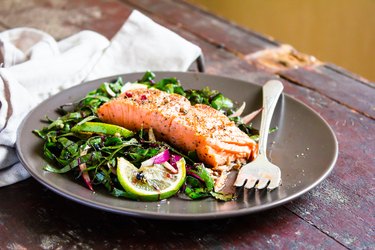
Your metabolic rate is the amount of calories you burn every day for vital body processes, for physical activity and for digesting food. The higher your metabolic rate, the more efficiently your body burns fats instead of storing them. You can speed up your metabolism by making good food choices such as spicing your food with chili peppers, drinking green tea and eating fewer high-fat foods.
Lean Protein and Vegetables
The body uses more energy to digest protein than fat or carbohydrates. Lean meats such as turkey and skinless chicken help raise metabolic rate. In 2009 in a study in the "International Journal of Obesity" M. Claessens and colleagues compared high-protein diets and high-carbohydrate ones. People who ate the protein diets burned significantly more calories than those with high-carbohydrate meals. One cup of low-fat cottage cheese or a 4-oz. piece of boneless chicken at each meal will give you about 30 g of protein.
Dark leafy vegetables such as kale, spinach and collards rank with fish as metabolic boosters because of the magnesium they contain. Other good sources of magnesium include peanuts, cashews, soybeans, almonds, black-eyed peas and lentils.
Fruits and Whole Grains
Complex carbohydrates such as whole grain products raise metabolic rates by keeping the insulin levels low after eating. Eating oatmeal is a good way to help raise your metabolic rate because it breaks down slowly in the stomach and does not cause an insulin spike.
Tomatoes, blueberries, raspberries, grapefruit, apples, oranges, pears and lemons raise your metabolic rate. A half grapefruit with each meal or three small apples or pears a day can boost your metabolism because they are rich in fiber that is difficult for the body to break down without expending more calories. Eaten with yogurt, apples and pears give you protein and good fats.
Chili Peppers
Capsaicin, the compound that gives chili peppers their heat, can fire up your metabolism. In 2010 Jong Won Yun and colleagues at Daegu University in Korea fed high-fat diets with and without capsaicin to rats. They found capsaicin helped rats lose eight percent of their body weight as opposed to capsaicin-free rats. These temporary metabolic spikes can occur after eating only a tablespoon of chopped chilies.
Green Tea
The University of Maryland Medical Center reports that an element in green tea extract helps the body burn fat and boost metabolism. Allow green tea to brew at least three minutes and drink it hot. Other boosts to the metabolic rate are drinking eight glasses of water a day and not skipping meals, which slows down metabolism.
References
- "International Journal of Obesity;" The Effect of a Low-Fat, High-Protein or High-Carbohydrate Ad Libitum Diet on Weight Loss Maintenance and Metabolic Risk Factors; Claessens M, van Baak MA, Monsheimer S, Saris WH.; 2009
- University of Maryland Medical Center: Green Tea
- Metabolism Boosters: Metabolism Boosting Foods
- National Cancer Institute: NCI Drug Dictionary
- "Journal of Proteome Research;" Proteomic Analysis for Antiobesity Potential of Capsaicin on White Adipose Tissue in Rats Fed with a High Fat Diet; Jeong In Joo, Dong Hyun Kim, Jung-Won Choi and Jong Won Yun; 2010


Member Comments