
"Eat your vegetables" might have been your parents' mantra, but "eat your probiotics" might soon overtake that phrase as the parental admonishment du jour.
When it comes to the benefits of probiotics, research suggests it all comes down to your gut. "Probiotics change the gut into a healthier environment," says Toby Smithson, RDN, CDE, diabetes lifestyle expert and author of Diabetes Meal Planning & Nutrition for Dummies.
Video of the Day
Video of the Day
"Probiotics are the good bacteria and resemble those that are found in your gut. When we ingest enough probiotics, they can improve the microbiota," Smithson says. "There are numerous studies over the past decade revealing that microbiota may play a major role in the regulation of metabolism and in health and disease."
This can lead to a number of benefits. "Probiotics often help with digestion," says Maxine Yeung, RD, CPT, a dietitian and personal trainer. "Many people have an abundance of bad bacteria in their gut, and probiotics can help restore the good bacteria."
According to Harvard Health Publishing, there's also some evidence that probiotics might help with managing health conditions, including:
- Crohn's disease
- Diarrhea
- Eczema
- Irritable bowel syndrome (IBS)
- Ulcerative colitis
And, Yeung says, "Some studies show that increasing your probiotic intake may help with improved mental health, especially with depression, anxiety and stress." Plus, it's good to include probiotic foods when you're taking antibiotics or if you have diarrhea or are vomiting (because these things disrupt our microbiome).
While there are no formal guidelines for servings of probiotic foods, Yeung generally recommends that people eat a serving every day. Start with the foods high in probiotics list below.
1. Yogurt
The tangy, versatile snack is made from milk that's been fermented by gut-healthy bacteria, which is how it gets its probiotics.
Fun fact: "Real" yogurt contains one of two specific types of bacteria, according to Harvard Health Publishing:
- Streptococcus thermophilus
- Lactobacillus bulgaricus
While any yogurt with live and active cultures will offer a dose of probiotics, strained options like Greek and Icelandic (skyr) probiotic yogurts also contain a healthy balance of protein and carbs, and are a good source of calcium, Smithson says. Plus, some people with lactose intolerance can tolerate yogurt thanks to the live cultures.
Just be sure to opt for varieties with no more than 10 grams of sugar per serving or go for plain yogurt, and top it with fruit. We like siggi's ($1.69, Amazon.com).
2. Kefir
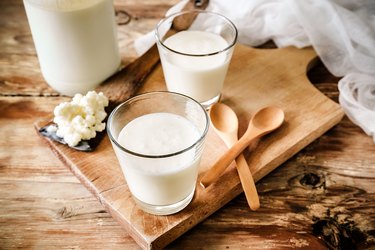
Kefir is essentially drinkable yogurt. Like any yogurt with live and active cultures, it's loaded with natural probiotics.
"Kefir sometimes has even more probiotics than traditional yogurt," Yeung says.
Thanks to its high levels of Bifidobacterium and Lactobacillus bacteria, kefir may help counteract the growth of "bad" bacteria and aid in digestion, she adds. The result is a healthier gut. Kefir might also help support your immune system and is a solid source of protein as well as calcium and potassium.
Yeung emphasizes that it's important to look for a product with live and active cultures, or else you might not actually get any probiotics. She also recommends avoiding products with lots of added sugar — try Lifeway plain kefir ($4.79, Amazon.com).
3. Fermented Cheeses
These fermented cheeses often contain good bacteria:
- Blue cheese
- Cheddar cheese
- Gouda
- Mozzarella
That's thanks to a fermentation-based process that draws on lactic acid bacteria. For example, blue cheese is fermented by lactic acid and fungi, per September 2016 research in Fermented Foods in Health Disease and Prevention.
Healthy bacteria are sometimes able to survive the cheesemaking and aging processes, meaning probiotics are still present in the cheese when you eat it. For example, a June 2014 study in the Journal of Applied Microbiology found that probiotics survived the cheddar cheese-making process. Similarly, a November 2012 study in the Journal of Dairy Science found that beneficial bacteria can also survive mozzarella's manufacturing process.
That said, these benefits aren't guaranteed. As with yogurt, it's important to shop for cheeses that explicitly state that they contain live and active cultures, such as Good Culture cottage cheese ($6.39, Amazon.com).
4. Traditional Buttermilk
Chances are, the buttermilk on your local supermarket's shelves is cultured buttermilk — the type that's made by fermenting pasteurized milk and does not contain probiotics.
On the other hand, traditional buttermilk, which is often enjoyed in South Asia and Northern Europe, is the liquid left over after churning butter (hence the name "buttermilk") — this type does contain probiotics.
You can find it online: Kate's Real Butter Milk ($2.49, Instacart.com).
5. Sauerkraut
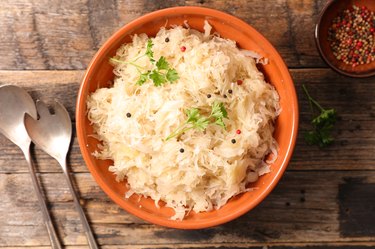
Sauerkraut — the stuff that tops hot dogs and Reuben sandwiches — is made from raw, shredded cabbage that's fermented by bacteria.
Thanks to the fermentation process, the tangy dish contains plenty of good-for-you probiotics, Yeung says. Not only can sauerkraut support a healthy gut, but it's also rich in vitamins, minerals and fiber.
And that fiber is really important. "A fiber-rich diet (especially one centered around fruits and vegetables) is equally as important as including probiotics as part of a healthy eating plan," Smithson says. "Without adequate fiber in the diet, the probiotics will not be able to survive long enough to produce certain benefits."
When shopping for sauerkraut, make sure to opt for refrigerated varieties. "Shelf-stable sauerkraut does not have probiotics, because the pasteurization process kills the bacteria," says Yeung. We like Bubbies Sauerkraut ($6.29, Amazon.com).
6. Kimchi
We like to think of kimchi as sauerkraut's cousin.
Often served as a side next to main dishes, this spicy Korean staple is made from cabbage that's fermented with lactic acid bacteria (a group of bacteria that include the well-known probiotic Lactobacillus). Those bacteria are a major source of probiotics, which is why Yeung considers kimchi one of her go-to probiotic foods.
Beyond cabbage, kimchi often contains additional spices (such as ginger and garlic) and vegetables (like radishes and scallions). The extra spices and veggies make this an especially nutrient-dense dish. We like Mother In Law's Kimchi ($9.29, Amazon.com).
7. Kombucha
Over the past half-decade or so, kombucha has become a mainstay of the wellness world. This popular beverage is made from fermented black or green tea, and the fermentation process introduces good-for-you-bacteria (which is why it requires refrigeration).
"Kombucha is a popular source of probiotics," Yeung says, noting that the brew also contains antioxidants. Just be aware that it can also be high in sugar, so choose your brand carefully. Also note that much of the research into kombucha's benefits is still preliminary, and there's not yet much strong human evidence for the brew.
If you'd like to try the bubbly drink, give the brand Health-Ade a go ($40 per 12-pack, Health-ade.com).
8. Pickles and Other Fermented Vegetables
Along with being a tasty and nutritious snack, fermented vegetables can be a great source of probiotics. Fermented vegetables — think cucumbers (pickles) or beets (like in beet kvass), cauliflower, radishes and so on — offer gut-friendly bacteria.
The emphasis here is on fermented: These benefits only come from fermented vegetables that are made using a fermentation method (rather than brining with vinegar).
One caveat: Salt is often an important part of the fermentation process, so if you're following a low-sodium diet, you may want to avoid or limit how many servings of probiotic vegetables you dig into, Smithson says.
9. Apple Cider Vinegar
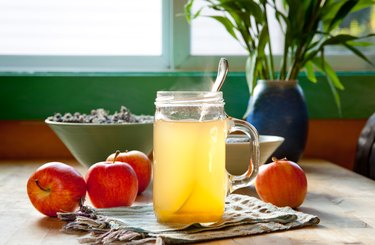
Don't worry, we're not suggesting that you make a habit of chugging vinegar (doing so is actually linked to some ugly side effects!).
Instead, Smithson recommends using ACV — which is produced through a process of fermentation driven by probiotic bacteria — into dressings or marinades. In addition to serving up probiotics, "vinegars contain very low to no carbs and are very low in sodium," Smithson says.
Tip
Apple cider vinegar is a probiotic food, but make sure to look for products labeled "with the mother" — only these contain live and active cultures. We like Bragg Apple Cider Vinegar ($3.28, Amazon.com).
10. Miso
Although traditionally made with soybeans, miso can also be made from fermented rye, beans, brown rice, barley and other grains — and it's a potent source of probiotics, according to Harvard Health Publishing.
That's probably thanks to the process of fermentation, which might draw on lactic acid bacteria or even a probiotic-rich fungus.
For a quick fix, try mixing miso paste with hot water for a fast, nutritious soup or try stirring it into marinades.
Tip
While miso is a beneficial probiotic food, it tends to be high in sodium, Smithson says. So if you're watching your salt intake, opt for a low-salt variety, like Marukome Reduced Sodium Miso ($19.98, Amazon.com).
11. Tempeh
Tempeh, made from fermented soybeans, is a great protein-rich meat substitute that boasts a nutty flavor and chewy texture. Plus, it offers benefits beyond protein and probiotics.
Soybeans are naturally high in phytic acid, which decreases the absorption of minerals like iron and calcium. But, tempeh's fermentation lowers the phytic acid content and therefore helps your body take in those vital nutrients, per an August 2006 article in the Journal of Food Science.
Try it: Lightlife ($3.39, Amazon.com).
12. Natto
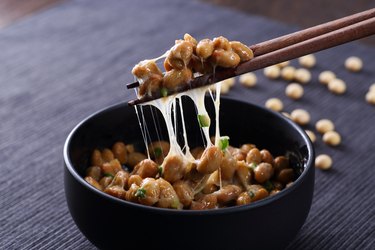
Natto is a fermented soy product (just like tempeh and miso) that's made with the bacteria Bacillus subtilis. This sticky Japanese cuisine staple has a very unique flavor that some say is comparable to old Brie cheese or foie gras.
Along with plenty of probiotics, a 1/2 cup of natto has 17 grams of protein, 5 grams of fiber and 42 percent of your daily value of iron, per the USDA. Try New York Natto ($12.99, Freshdirect.com).
How to Add Probiotic Foods to Your Diet
While it might be tempting to rush to the grocery store and buy all these probiotic-rich foods, you're better off introducing them into your diet more gradually.
"A common side effect from eating too many probiotics is having extra gas and bloating," Yeung says. Plus, "some people experience headaches when eating probiotic foods due to the amines, such as histamine and tyramine, found in those foods."
To minimize the chance of side effects, Yeung recommends going slow. "Gradually introduce probiotics into your diet with a serving a day, and then increase the amount once your digestive system has adjusted." Your gut will thank you.
Related Reading