If your bones feel achy or your muscles feel particularly fatigued, calcium absorption could be to blame. To up your intake and ensure that your bones are getting enough of the essential nutrient, check out the calcium foods list below.
Tip
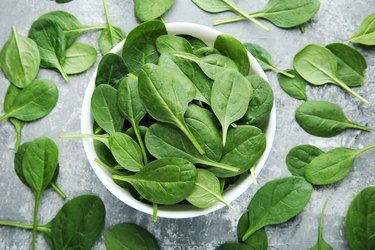
Foods rich in phytic acid and oxalic acid, like spinach and Brazil nuts, have the potential to block calcium absorption.
Video of the Day
The Ideal Calcium Level
First things first. Let's discuss why calcium is so essential. According to the National Institutes of Health (NIH), calcium is responsible for muscle function, nerve transmission, hormonal secretion and more. Despite relying on calcium to function, these processes only account for less than 1 percent of the body's total calcium. The other 99 percent resides in bones and teeth, lending to strength and structure.
Video of the Day
While calcium is the most abundant mineral in the body, it needs to be regularly replenished. In order to do so, experts at the NIH recommend 200 milligrams for infants, 260 milligrams for babies 7 to 12 months in age, 700 milligrams for toddlers between the ages of 1 and 3, 1,000 milligrams for children between the ages of 4 and 8, 1,300 milligrams for adolescents and teens ages 9 through 18 (to promote growth spurts during puberty) and then back down to 1,000 to 1,200 milligrams a day for people 19 and older.
Foods That Block Calcium Absorption
While the essential nutrient can be found in many foods — there's calcium in milk, yogurt and cheese — there are just as many foods that actually block the absorption of calcium. Researchers at NIH claim that humans absorb about 30 percent of calcium from the foods they consume, though that varies based upon the specific food.
According to American Bone Health, a diet high in phytic acid (which can be found in beans, Brazil nuts, hazelnuts and more) and sodium, as well as one low in vitamin D, can lead to poorly absorbed calcium. Where phytic acid binds calcium and other minerals, effectively blocking absorption, excess sodium consumption forces the body to take minerals from the bones to create balance, resulting in an overall net loss of absorption. Insufficient vitamin D messes with calcium regulation overall.
What's more, The National Osteoporosis Foundation notes that foods high in oxalic acid, like spinach, rhubarb and beet greens, also block calcium absorption. The same holds true for wheat bran, excess alcohol (they recommend limiting to no more than two to three drinks a day) and soda.
In addition to these foods, habits such as smoking and excess coffee consumption also play a role in calcium absorption. They interfere with intestinal absorption since they act as mild diuretics, forcing calcium out in excretions before it has the chance to be absorbed.
Foods That Promote Calcium Absorption
Believe it or not, consuming more calcium isn't the only way to help promote overall calcium absorption. According to HelpGuide, vitamin D and magnesium also assist, and play a vital role in bone health overall.
That said, it's important to keep an eye out for not only high-calcium foods, but foods rich in vitamin D and magnesium as well. Examples of these include low-fat and non-fat dairy products, canned sardines and salmon, tofu, kale, broccoli, red peppers, strawberries and more.
Easy ways to add these foods into your diet include switching from water to milk when cooking oatmeal, getting creative with yogurt to make dips to accompany healthy veggies, and enjoying a Parisian-inspired dessert of fruit and cheese (while you're at it, why not add a hearty glass of red for good measure?).
If you're unable to easily fit these foods into your diet, be sure to stock up on calcium supplements and add omega-3s to your routine, as these also help promote bone health.