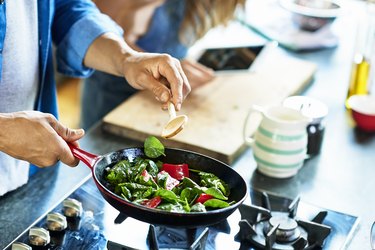


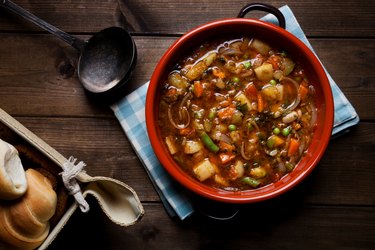

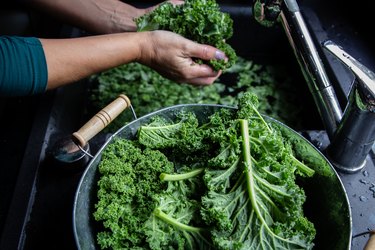




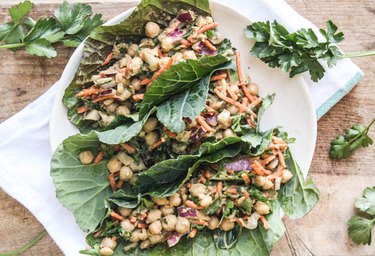


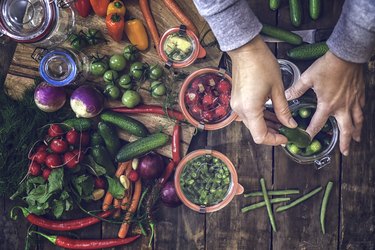




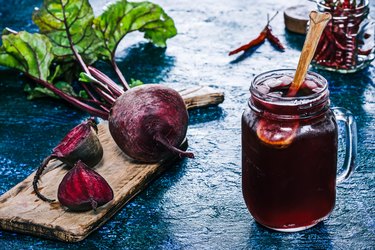
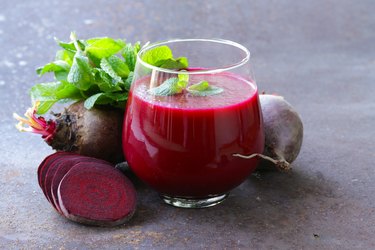
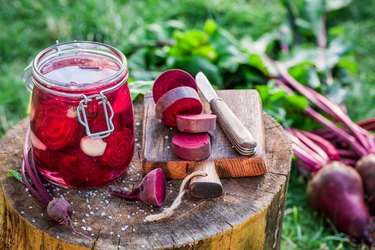



Beet leaves, also common called beet greens, are the green leafy tops of beets. While the beet itself grows below the ground, the tops are found above the dirt. These sturdy greens generally have red veins and resemble Swiss chard. You may add this green to recipes, such as risotto or soups, or saute or boil beet leaves alone for a tasty, nutritious side dish.
Calories and Fat
One cup of boiled beet leaves has 39 calories and no fat. When served as a side dish, this makes an excellent accompaniment to a low-fat and low-calorie meal. It adds a serving of vegetables to your meal plan -- the USDA Food Pyramid recommends consuming 3 to 5 servings each day -- but to make a balanced meal, consider serving a cup of boiled beet leaves with a grain, such as quinoa, millet or bulgur, along with a lean protein source like tofu or fish.
Protein and Carbohydrates
A 1-cup serving of beet leaves contains 8 g of carbohydrates, a macronutrient that serves as your body's primary source of energy. Carbohydrates also play a critical role in maintaining the health of your bowels and digestive health in the form of fiber, a carbohydrate that does not break down into fuel. Each serving has 4 g of fiber. One cup of beet leaves also provides you with 4 g of protein. Your body uses protein as a secondary source of fuel; however, protein also helps your body make muscle, repairs tissues and cells and promotes the health of your immune system. In addition, your body would be unable to manufacture hormones and enzymes without adequate levels protein.
Vitamins
Incorporating beet leaves into your eating plan helps you get the vitamin C your body requires every day, which is important because your body does not have the capability to store this vitamin. A 1-cup serving of these greens contains 60 percent of the daily recommended intake. Vitamin C helps repair tissues and cells in your body, making it vital for wound healing. It is the vitamin A content that sets beet leaves apart, though -- each 1-cup serving provides 220 percent of the daily recommended intake. Your immune system depends on vitamin A, working with vitamin C to help make you well when you are sick or injured. Vitamin A also helps maintain your vision, particularly your night vision.
Minerals
Your mother may have told you to eat your greens -- while she may not have meant beet leaves, the advice applies. A 1-cup serving of beet leaves provides you with 15 percent of the daily recommended value of iron, a mineral your body uses to help make red blood cells. It also helps your body regulate cell growth and differentiation. A portion of beet greens also contains 15 percent of the calcium you need every day. Calcium keeps your bones and teeth strong and healthy; however, it also may play a role in lessening the symptoms of premenstrual syndrome such as bloating, mood swings and headaches. A calcium deficiency may have a higher risk of high blood pressure.
Alternatives
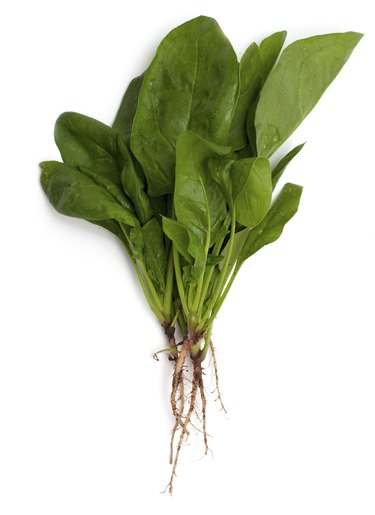
Beet leaves impart a strong flavor, but it may not be to your liking. Alternative options to these greens include Swiss chard and turnip greens. You may also use spinach, although it cooks faster than other choices. In all cases, choosing a substitute for beet leaves still offers you a range of nutritional value.
References
- The Cook's Thesaurus: Cooking Greens
- MyFitnessPal: Beet Greens - Cooked, Boiled, Drained, Without Salt
- Harvard School of Public Health: Healthy Eating Pyramid
- McKinely Health Center: Macronutrients: The Importance of Carbohydrate, Protein, and Fat
- MayoClinic.com: Dietary Fiber: Essential for a Healthy Diet
- MedlinePlus: Vitamin C


Member Comments