








































Cleaning and dressing a wound can be a daunting task, whether you're tending to your own injury or that of another person. Abrasions, puncture wounds, cuts, burns and surgical incisions often call for cleaning and dressing the affected site. Many wounds may be treated at home. If unsure of how to properly carry out the procedure, check with your doctor.
Prepare to Dress the Wound
Step 1
Apply pressure to the injury if minor bleeding occurs. Wait until bleeding stops before cleaning and dressing the wound.
Step 2
Take pain medication. This step may be unnecessary for minor wounds, but for cuts in need of hard scrubbing, the medication may help.
Step 3
Wash your hands with antibacterial soap and warm water. Dry them with a clean cloth, then put on gloves.
Clean and Dress the Wound
Step 1
Wash the wound with antibacterial soap. Cleanse in the shower or over a sink. Use antibacterial soap and warm water.
Step 2
Scrub the wound with gauze dampened with the cleaning solution. A new wound may be filled with debris and dirt if it results from a fall or scrape. Older wounds often produce dead tissue, which should be removed.
Step 3
Rinse the wound with cleaning solution. If you don't have prescription solution, use water.
Step 4
Apply medicated cream to the wound. Use gauze or a clean tongue depressor if your doctor has prescribed the cream. Spread the cream carefully over the wound, avoiding the surrounding skin.
Step 5
Apply surgical tape around the gauze. Do this if the gauze does not come with adhesive edges.
Tips and Warnings
- In the case of unexpected injury, you may not have prescribed cleaning solution or antibacterial soap on hand. Use water rather than hydrogen peroxide to clean the wound, suggests the University of Maryland Medical Center. Change the bandage every day. Avoid wetting the wound. If it does get wet, change the bandage.
- According to the UMMC, a wound longer than 1/2 inch or that reveals bone or muscle requires medical attention. Animal and human bites also should be cared for by a doctor. Call your doctor if the wound oozes pus or continues to bleed and begins to smell unpleasant or if you develop a fever. Redness or pain may also indicate the need for medical attention. To avoid infection, keep your hands, the wound and anything else that comes into contact with the wound sterile. Even when using disposable gloves, it's important to wash your hands first because you may be touching dressing or something else that comes in contact with the wound.
Things You'll Need
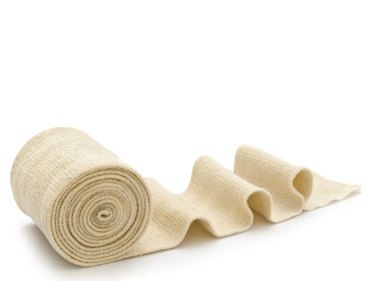
- Clean gauze
- Stretch gauze (optional)
- Surgical tape (optional)
- Scissors for tape (optional)
- Disposable gloves
- Antibacterial soap
- Cleaning solution, prescription
- Wound ointment, prescription
- Tongue depressor (optional)


Member Comments