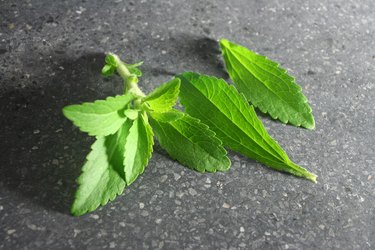
If your goal is to eat less sugar, stevia can be a good alternative — the plant-derived sweetener is all natural and has zero calories. There are several branded sweeteners made from stevia, one of which is Truvia. However, when you take a close look at Truvia versus stevia, there are some differences.
Sugar by the Numbers
Video of the Day
According to the Harvard T.H. Chan School of Public Health, the average American consumes 22 teaspoons of added sugar a day. This amounts to 350 extra calories. Though it's delicious, there are no nutritional benefits to consuming table sugar. In fact, eating it has been linked to heart disease risk, obesity, high blood pressure, high cholesterol, diabetes and inflammation in the body, according to the American Heart Association (AHA).
Video of the Day
The AHA recommends limiting added sugars to no more than 100 calories a day for women and no more than 150 calories for men. This amounts to a 6-teaspoons-per-day maximum for most women and a maximum of 9 teaspoons per day for most men.
If you take these recommendations to heart and are aiming to decrease your sugar consumption, stevia is a great option. According to the Cleveland Clinic, the best sweetener from a nutritional perspective is fresh or frozen fruit. The second best is stevia, especially when it's 100-percent pure and organic.
Read more: Is Stevia Good for You?
What Is Stevia, Exactly?
Stevia is an all-natural sweetener derived from an herb called Stevia rebaudiana, which has been used for centuries, according to the American Council on Exercise (ACE). It grows wild in Brazil and Paraguay but can also be cultivated in other tropical climates.
Stevia rebaudiana contains rebaudioside A, which is the sweetest compound found in the stevia leaf. Rebaudioside A has no aftertaste and is chemically similar to sugar in onset, intensity and duration of sweetness, according to the ACE. While the FDA has not approved whole-leaf stevia or crude stevia extracts, it has labeled rebaudioside A as a food ingredient that is generally recognized as safe (GRAS).
According to the ACE, the majority of stevia-sweetened products — such as Coca-Cola Life, Vitamin Water Zero and Starbucks Refreshers — contain mostly extracted rebaudioside A with some combination of stevioside. A white crystalline compound found in the stevia leaf, stevioside is 100 to 300 times sweeter than table sugar.
Read more: What Drinks Use Stevia?
A July 2019 review published in the Journal of Functional Foods suggests that stevia has several health promoting properties that include anti-inflammatory, oral health-promoting, antihypertensive, and chemopreventive effects. Moreover, according to the same review, stevia may have antidiabetic properties, such as improving insulin secretion and decreasing blood glucose levels.
Keep in mind, though some of the studies included in this review were done on humans, most were in vitro, meaning tests were done on tissue or cell samples in a test tube or culture dish. More research conducted on humans is needed to confirm the health-promoting effects of stevia.
Read more: What Are the Benefits of Stevia Leaf?
Truvia Vs. Stevia
Stevia is marketed under the brand names of Truvia, PureVia, and SweetLeaf. Though they have different names, all three sweeteners are essentially the same product, but each contains slightly different proportions of rebaudioside A and stevioside, according to the ACE.
Truvia contains less than one percent stevia, according to the Truvia website. The other ingredients in the sweetener are erythritol and natural flavors. According to a December 2017 review published in the journal Applied Microbiology and Biotechnology, erythritol is a non-caloric sugar alcohol that has no effect on blood glucose and insulin levels when consumed and is often used to mask unwanted aftertastes of alternative sweeteners.
According to the same review, overconsumption of erythritol can cause a few unpleasant side effects, such as flatulence and increased frequency of having a bowel movement. Furthermore, according to Truvia's website, the stevia extract used in Truvia is not organic. If you are looking for an alternative sweetener with the least possible side effects, pure and organic stevia leaf extract might be a better option than Truvia.
The Truvia website offers no Truvia to stevia conversion chart or calculator. But, because Truvia is only one percent stevia extract by weight, it takes much more Truvia to attain the same amount of sweetness found in stevia extract, which is considered a high-intensity sweetener.
Read more: Erythritol vs. Stevia vs. Xylitol
Truvia Vs. Sugar
The Truvia website offers a useful sugar conversion chart, which may come in handy if you are cooking or baking with the sweetener. If you usually sweeten your coffee with 1 teaspoon of sugar, you will need a half of a packet of Truvia to attain the same sweetness. If you are making a cake recipe that calls for 1 cup of sugar, you can use 24 packets of Truvia as a substitute.
In terms of calories, Truvia is the clear winner over table sugar. A teaspoon of Truvia contains zero calories, while 1 teaspoon of sugar contains 16 calories, according to the USDA. Both sweeteners contain no fat, protein, sodium or vitamins and minerals.
If you are using Truvia or stevia in order to manage your weight, keep in mind that while these sweeteners can help, they aren't magic bullets. According to the Mayo Clinic, sugar-free foods can contain other sources of calories, such as fat and protein. Therefore, even if you eat a lot of sugar-free food sweetened with Truvia or stevia, you can still gain weight.
According to a May 2015 paper published in the journal Nutrition Today, there is evidence that stevia does not effect satiety, or one's feeling of fullness. Also, according to the paper's authors, not enough research has been done on stevia and its effect on calorie intake reduction and weight loss to determine whether consuming the sweetener affects obesity. More research on humans is needed.
- Journal of Functional Foods: "The Functional and Health-Promoting Properties of Stevia Rebaudiana Bertoni and its Glycosides With Special Focus on the Antidiabetic Potential - A Review"
- Harvard T.H. Chan School of Public Health: "Added Sugar in the Diet"
- American Heart Association: "Added Sugar Is Not So Sweet - Infographic"
- Cleveland Clinic: "5 Best and Worst Sweeteners: Your Dietitians’ Picks"
- American Council on Exercise: "The Truth About Stevia—The So-called "Healthy" Alternative Sweetener"
- FDA: "Has Stevia Been Approved by FDA to Be Used as a Sweetener?"
- Truvia: "Truvia Ingredients"
- Applied Microbiology and Biotechnology: "Erythritol as Sweetener — Wherefrom and Whereto?"
- Truvia: "Why Is Truvía® Natural Sweetener Less Than 1% Stevia?"
- Truvia: "Truvia Natural Sweetener Conversion Chart"
- USDA: "Basic Report: 19335, Sugars, Granulated"
- Mayo Clinic: "What is Stevia? I've Heard it's Good for Weight Control."
- Nutrition Today: "Stevia, Nature’s Zero-Calorie Sustainable Sweetener"