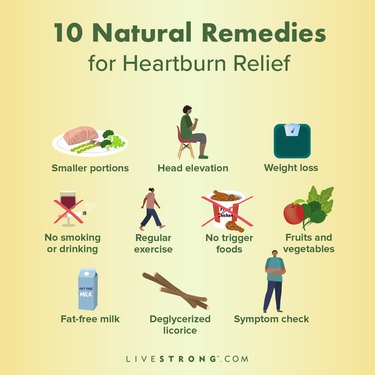

You enjoyed that spicy burrito for dinner, but then it hits you — that uncomfortable feeling in your chest that can only mean one thing: heartburn. Fortunately, certain natural remedies for heartburn may help ease your discomfort.
Heartburn is the most common symptom of acid reflux and can be a normal part of life for many people. About 60 million Americans have heartburn at least once a month, and it's estimated that as many as 15 million have heartburn every day, according to the American College of Gastroenterology.
Video of the Day
Video of the Day
But what helps heartburn? Along with working with a doctor to assess and manage your symptoms, there are also some steps you can take to relieve acid reflux.
Here's how to stop heartburn naturally (and fast!) with the help of home remedies.
Warning
If you regularly have heartburn more than two or three times per week, see a doctor, because your symptoms may be due to a more serious condition called GERD.
1. Eat Smaller Portions
One frequently effective acid reflux remedy is limiting how much you eat at one time, dietitian Holly Dykstra, RDN, tells LIVESTRONG.com. Making sure your stomach doesn't get too full may help prevent reflux in the first place.
Dykstra suggests eating several smaller meals rather than two or three larger meals during the day to see if it makes a difference in your symptoms.
"Large meals can overfill the stomach and prevent the esophageal sphincter from working appropriately, leading to reflux," she says.
2. Remain Upright for an Hour or 2 After Eating
Here's how to get rid of heartburn at night especially: Avoid eating too soon before bedtime or eating and then lying down, Dykstra says. Going horizontal makes it more likely that acid will flow backward into your esophagus.
If you find it difficult to avoid eating before to bedtime, you can try elevating the head of your bed to stay upright as you sleep. You can insert a wedge between your mattress and box spring to do the trick (propping yourself up with extra pillows usually doesn't help), according to the Mayo Clinic.
Does Eating Slowly Help Heartburn?
One of the old-fashioned heartburn remedies is chewing food thoroughly and slowing down when you're eating, but research doesn't support this idea. A small 2013 study in the Turkish Journal of Gastroenterology found eating speed had no significant effect on reflux attacks in people with GERD.
3. Get to a Healthy Weight
According to Dykstra, being at the right weight for you is one of the most helpful steps you can take to manage your acid reflux symptoms without medication. Especially if you have a body mass index (BMI) greater than 25 or a waist circumference greater than 35 to 40 inches, you may find heartburn relief from losing weight.
"This is because excess fat around the abdomen increases pressure on the stomach, and that can lead to reflux," Dykstra says. "Even a 5- to 10-pound weight loss can make a difference."
4. Avoid or Cut Down on Smoking and Drinking
If you're a smoker, it's time to quit, and if you regularly drink alcohol, it's definitely worth considering cutting back or staying sober altogether.
"Both smoking and drinking alcohol have been known to irritate the digestive tract, so if there is already some inflammation and reflux happening, these habits may make the situation worse," Dykstra says.
5. Get Regular Exercise
A regular exercise routine can help strengthen all the muscles in your body, and that includes the ones in your digestive tract, Dykstra says. (Who knew?)
As a bonus, exercise may also reduce the risk of constipation, which can in turn help reduce acid reflux.
"Constipation can increase stomach volume and therefore cause the sphincter not to work properly," Dykstra says. "So if constipation is present, it can be helpful to treat."
It doesn't matter what kind of workout you do, so long as you enjoy it and keep it up.
Sometimes, getting active can trigger that burning feeling, but don't let that deter you from working out — instead, learn about small changes you can make to handle heartburn during exercise.
6. Avoid Trigger Foods
Heartburn triggers can vary from person to person, but in general, Dykstra says these are the foods to avoid with acid reflux:
- Spicy foods, like hot peppers, chili powder, curry powder or hot sauce
- Caffeine in coffee, tea, soda or chocolate
- Tomatoes or tomato-based foods like tomato sauce, ketchup and tomato paste
- Citrus fruits, like lemons, grapefruit, limes and oranges
- Carbonated beverages, including soda and seltzer
- High-fat foods, especially fried foods and those made with a lot of butter, cream or oil-based dressings
- Spearmint or peppermint, like in gum, mints or tea (although these are debated, and there's limited data on whether they worsen heartburn)
- Alcoholic beverages
Because everyone responds to food differently, it may be helpful to keep a food diary, noting what you eat and when you have heartburn, to help you figure out which foods trigger symptoms for you.
7. Eat Your Fruits and Veggies
Overall, Dykstra recommends sticking to a nutrient-dense, balanced diet that includes plenty of vegetables and fruits, because eating enough fiber is a natural remedy for acid reflux.
"Produce is high in fiber and also provides helpful antioxidants that can help reduce chronic inflammation," she says.
Indeed, diets low in fiber are associated with delayed gastric emptying and poor gut motility (when food doesn't move through your system as quickly as it should), which can cause reflux and increase the risk of GERD, per a June 2018 study in World Journal of Gastroenterology. Fiber may also help neutralize stomach acid.
Beyond fruits and veggies, high-fiber foods include:
- Bulgur
- Barley
- Seeds, including flaxseed and sunflower seeds
- Nuts, including pistachios and almonds
- Beans
- Popcorn
8. Drink a Little Milk
Here's a riddle for you: Does milk help with acid reflux? The answer is...yes and no.
Milk can temporarily reduce symptoms like heartburn in some people, but in other people, it can actually aggravate their symptoms. The only way to know is to pay attention to how milk affects you personally.
If you do decide that milk relieves heartburn fast for you, Dykstra suggests sticking to fat-free or 1 percent milk because the fat content in 2 percent or whole milk could make reflux symptoms worse.
What Else Can You Drink for Acid Reflux?
Reach for the following drinks for heartburn relief to avoid that burning sensation in your throat or chest:
- Water (avoid sparkling water)
- Coconut water
- Caffeine-free herbal teas, such as chamomile (avoid spearmint or peppermint)
- Plant-based milks, such as almond or coconut milk
- Non-acidic juices, such as carrot or cabbage juice (avoid tomato, apple, pineapple and citrus juices like orange juice)
- Smoothies made with plant-based milk, leafy greens and low-acid fruit, such as watermelon or pear
9. Take Deglycerized Licorice
Deglycyrrhizinated or deglycerized licorice (DGL) is a popular heartburn remedy made from a type of licorice root that's been processed to remove an active substance (glycyrrhiza) that can sometimes cause side effects, according to Mount Sinai.
And taking DGL for acid reflux or heartburn may help ease your condition. A small June 2017 study in the Journal of the Australian Traditional-Medicine Society found when 58 people with GERD took an herbal supplement containing DGL, slippery elm and peppermint oil, they experienced more relief compared to taking antacids.
However, it's hard to know how much of the effects come from DGL versus the other two ingredients, so more research is needed. What's more, this study was small, so bigger studies are necessary to better understand the effects of taking DGL licorice for acid reflux or GERD.
But how does DGL help acid reflux, exactly? It may soothe and protect the mucus membrane lining your stomach to relieve irritation, per the Journal of the Australian Traditional-Medicine Society study.
And this DGL heartburn treatment isn't just the best licorice for acid reflux — it's possible that it may also help treat stomach ulcers, per Mount Sinai. However, more studies are needed in humans to better understand whether DGL can actually help with this condition.
Tip
Talk to your doctor before trying any herbal supplement, as the FDA doesn't require these products to be proven safe or effective before they're sold. There’s no guarantee any supplement you take is safe, contains the ingredients it says it does or produces the effects it claims.
10. Pay Attention to Other Symptoms
If you notice any additional digestive symptoms besides heartburn — such as nausea, diarrhea, bloating or vomiting — it's important you discuss those with a doctor to see if there may be additional causes behind your acid reflux.
For instance, Dykstra says sometimes gluten or lactose intolerance can cause digestive symptoms, including reflux.
What About Baking Soda?
You may have heard baking soda acts as a natural antacid and helps with acid reflux relief, but there's no research to support this idea.
Plus, baking soda is high in sodium and can cause uncomfortable side effects such as gas and burping, so it's best to avoid this old-fashioned remedy.
What About Pickle Juice?
Perhaps you've heard rumors that drinking pickle juice is good for acid reflux. But does pickle juice help with heartburn in reality?
The short answer: Likely not. That's in part because the gut-healthy probiotic bacteria in pickle juice are usually removed during fermentation and processing, and therefore can't ease any symptoms of heartburn, per the Cleveland Clinic.
What's more, pickle juice is acidic because it contains vinegar. And the strong aroma and taste of vinegar may overwhelm the sensation of any reflux symptoms, which may be why people swear pickles or pickle juice is good for heartburn, according to the Cleveland Clinic.
But this doesn't actually address the underlying issue — in fact, drinking pickle juice may actually exacerbate your condition. In other words, there's no evidence to show that drinking pickle juice does help acid reflux or that eating pickles helps heartburn, per the Cleveland Clinic.. So try one of the natural remedies above instead.
What About Herbs?
Some claim that herbal remedies for heartburn like bay leaves, oil of oregano and basil are good for acid reflux. In reality, though, there's no research in humans that suggests these ingredients can help get rid of heartburn.
Indeed, purported remedies like burning basil leaves, eating bay leaves for heartburn and drinking oregano tea or oregano oil for acid reflux don't have any scientific evidence to back them up.
When to See a Doctor
If you are having frequent, recurrent acid reflux or if heartburn is interfering with your quality of life, you should schedule a checkup with your doctor. They can help you determine what may be behind your symptoms and work with you to manage them.
Your doctor can also assess you for a more severe form of acid reflux called GERD, which might require more treatment, like medication or even surgery. It could also be gastric ulcer disease, which can be dangerous if left untreated.
"Acid reflux is usually easily treated with diet and lifestyle changes," Dykstra says. "However, it is possible that other conditions are causing it, such as infection, food intolerances or other disorders. It's important to discuss symptoms with your physician to determine the cause."
She also recommends seeking help from a registered dietitian. "The goal is to avoid restricting foods if possible," she says. "A dietitian can help you figure out how to do that."
If needed, your doctor may recommend over-the-counter heartburn medications, according to the Mayo Clinic, such as:
- Antacids, like Tums and Alka-Seltzer, which neutralize the acid in your stomach
- H2 blockers, like Tagamet HB and Pepcid AC, which lower levels of stomach acid
- Proton pump inhibitors like Nexium, Prevacid and Prilosec, which also reduce stomach acid
FAQ
Common Questions
What should I drink first in the morning for acid reflux?
Waking up with heartburn? Postpone your coffee or tea and start your day with water. In a September 2020 study in Clinical Gastroenterology and Hepatology, people who replaced two servings of coffee a day with two servings of water had a lower risk of GERD symptoms.
What should I eat at night for acid reflux?
Whole grains, veggies and lean protein are among the best foods for acid reflux and can be combined in countless ways for a satisfying evening meal. But perhaps more important than what you eat is when you eat at night: Try not to lie down until at least an hour or two after eating, Dykstra says.
- American College of Gastroenterology: "Acid Reflux"
- Journal of Traditional Chinese Medicine: “Efficacy and Safety of Aloe Vera Syrup for the Treatment of Gastroesophageal Reflux Disease: a Pilot Randomized Positive-Controlled Trial”
- Mayo Clinic: "Heartburn-Symptoms and Causes"
- Mayo Clinic: "Heartburn: Diagnosis & Treatment"
- Turkish Journal of Gastroenterology: "The effect of the speed of eating on acid reflux and symptoms of patients with gastroesophageal reflux disease"
- World Journal of Gastroenterology: "Fiber-enriched diet helps to control symptoms and improves esophageal motility in patients with non-erosive gastroesophageal reflux disease"
- Cleveland Clinic: "Can Drinking Pickle Juice Help Your Acid Reflux Symptoms?"
- Journal of the Australian Traditional-Medicine Society: "Prevention of symptoms of gastric irritation (GERD) using two herbal formulas: An observational study"
- U.S. Food and Drug Administration: “FDA 101: Dietary Supplements”
- Mount Sinai: "Licorice"
- Clinical Gastroenterology and Hepatology: "Association Between Beverage Intake and Incidence of Gastroesophageal Reflux Symptoms"
Is this an emergency? If you are experiencing serious medical symptoms, please see the National Library of Medicine’s list of signs you need emergency medical attention or call 911.