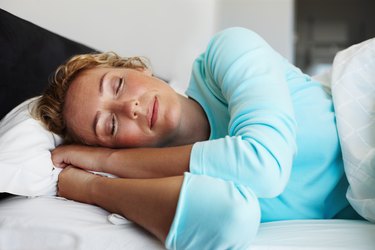
You wake at 3 a.m. and you're drenched. It's not enough to just change your pajamas, you also must change your bedding. What gives? Enter night sweats, more formally known as sleep hyperhidrosis.
Night sweats can get in the way of quality sleep, and are often a symptom of an underlying issue. To help you address the root cause of your bedtime perspiration, here are the common causes of night sweats and how to deal with them.
Video of the Day
Video of the Day
1. Menopause
Heavy sweating from hot flashes at night is among the most common symptoms of menopause, according to the North American Menopause Society (NAMS).
If you're at or near age 51 — the average age for the start of menopause — and your periods have become irregular, menopause onset could likely be causing your night sweats, says Stephanie Faubion, MD, NAMS medical director and the director of the Mayo Clinic Center for Women's Health in Rochester, Minn.
During menopause, levels of the female sex hormone estrogen drop dramatically, and this affects the hypothalamus, the part of your brain that regulates body temperature. Cue hot flashes and night sweats, which may last for seven or more years as you go through menopause, according to an April 2015 study in JAMA Internal Medicine.
Fix it: Fortunately, "they are treatable," Dr. Faubion says. Talk to your doctor about hormone therapy, which involves taking estrogen to balance out symptoms that occur due to menopause-induced hormone decreases, per the Mayo Clinic.
2. Other Hormonal Changes
Menopause isn't the only hormonal change that can lead to night sweats.
Testosterone levels also decline over time, which can likewise cause symptoms like night sweats for people assigned male at birth, according to Harvard Health Publishing.
Fix it: Hormone replacement therapy can help ease these types of hot flashes as well, so work with your doctor to determine if it's the best treatment for you.
3. Certain Conditions
If your night sweats are accompanied by a fever, weight loss, pain or other symptoms — whether or not they come on after menopause — see your doctor to find out what is going on, as an underlying illness may be to blame, according to the Mayo Clinic.
Per the Mayo Clinic, common conditions that can cause night sweats include:
- Autoimmune disorders
- Autonomic neuropathy
- Bacterial infections
- Certain kinds of cancer like leukemia, lymphoma and intestinal cancer
- Heart lining infections
- HIV/AIDS
- Sleep apnea, which people going through menopause may be at higher risk for, per an April 2018 study in Menopause
- Stroke
- Hyperthyroidism or other thyroid disease
- Tuberculosis
This list is by no means exhaustive — for instance, low blood sugar can cause a hot flash, per the University of Michigan Health. Night sweats are also a common symptom of multiple sclerosis, according to the National Multiple Sclerosis Society.
Fix it: If you're experiencing night sweats along with other symptoms, visit your doctor to identify and treat the underlying problem.
Does Vitamin D Deficiency Cause Night Sweats?
There's little evidence to suggest that a lack of vitamin D leads to hot flashes and sweating at night.
And when it comes to vitamin D deficiency and menopause specifically, research has found that there's no significant association between vitamin D levels and symptoms like hot flashes and night sweats, per February 2016 research in Menopause.
But can too much vitamin D cause hot flashes? Similarly, there's no compelling research to establish this connection.
4. Medication Side Effects
Certain medications may be the source of your perspiring. According to the Sleep Foundation, night sweats can be a side effect of the following medicines:
- SSRI antidepressants like citalopram or dapoxetine
- Steroids
- Fever reducers like aspirin or acetaminophen
Ironically, taking sleep aids like melatonin can also produce side effects like night sweats, per the National Health Service (NHS).
Fix it: Work with your doctor to treat sweaty side effects, adjust your medication dosage or find an alternative medicine.
If you've started sweating while snoozing after starting melatonin and the symptom doesn't improve after a few days, stop taking the supplement and talk to your doctor about other sleep aid options, per the NHS.
Can Birth Control Cause Night Sweats?
There's not much evidence to suggest that birth control night sweats occur. In fact, low-dose birth control pills are sometimes given to people at the start of menopause to help treat symptoms like hot flashes, according to a January 2019 review in the Journal of Mid-Life Health.
5. Anxiety
Anxiety is another potential cause of night sweats, according to the Cleveland Clinic.
Fix it: If this is the case for you, addressing the root cause of your anxiety may help alleviate associated symptoms, including night sweats. Consider working with a mental health professional to get therapy or the medication you need to treat your condition, per the Mayo Clinic.
You can also try anxiety-relieving techniques such as:
- Exercising regularly
- Eating a balanced diet
- Meditating
- Grounding yourself in reality
6. Certain Foods
Your diet may also contribute to night sweats. Certain foods can raise your body temperature and lead to bedtime sweating, particularly if you eat these foods at night, according to the Sleep Foundation. Foods that can cause night sweats include:
- Sources of caffeine like coffee or caffeinated tea
- Alcohol
- Spicy foods
Some people experiencing menopause also find that a sugar-rich diet induces hot flashes, per the Cleveland Clinic.
Indeed, May 2013 research in the American Journal of Clinical Nutrition analyzed the diets and menopause symptoms of 6,040 people for nine years and found that a diet high in fat and sugar was linked with a heightened risk for night sweats and hot flashes. On the other hand, eating a Mediterranean-style diet that emphasizes vegetables, fruits, grains and beneficial fats was associated with fewer of those symptoms.
This link between carbs and night sweats applies to people who aren't experiencing menopause, too. That's because eating simple carbs like sugar can cause your blood sugar to rapidly spike and then fall, which can induce sweating, per Sanford Health.
Fix it: Avoid eating sweat-triggering foods and sugary or high-carb snacks close to bedtime to curb perspiration overnight.
Foods That Help With Hot Flashes
On the flip side, eating foods that contain naturally occurring plant estrogens called phytoestrogens may actually help relieve night sweating or hot flashes in people experiencing menopause, per the Cleveland Clinic. Phytoestrogen sources include:
- Soy products like soy milk, soybeans, tempeh and tofu
- Fruits like strawberries and dried fruit
- Vegetables like Brussels sprouts and zucchini
- Nuts and seeds like flaxseeds, peanuts and sunflower seeds
And does dairy cause hot flashes? There's no evidence to suggest dairy and night sweats go hand-in-hand: In fact, eating calcium-rich dairy products is another key part of a balanced menopause diet.
How to Deal With Night Sweats
Ignoring night sweats can continue to rob you of sleep, which, over time, can lead to severe fatigue and even depression.
Per the Sleep Foundation, here are some extra tips for how to practice good sleep hygiene and get ahead of night sweats and sleep loss during menopause or otherwise:
- Sleep in a cool room (around 65 degrees Fahrenheit is ideal) with lighter bedding
- Wear loose, breathable fabrics to bed (like cotton and linen)
- Turn off the lights
- Keep a consistent sleep schedule
- Stop using devices 30 minutes to an hour before bed
- Give yourself time to wind down and relax before bed


- North American Menopause Society: "Hot flashes”
- JAMA Internal Medicine: “Duration of Menopausal Vasomotor Symptoms Over the Menopause Transition”
- Menopause: “Association of Vasomotor Symptoms and Sleep Apnea Risk in Midlife Women”
- Sleep Foundation: “Sleep Hygiene”
- Mayo Clinic: “Night Sweats: Causes”
- National Multiple Sclerosis Society: "Sleep Disturbance and Multiple Sclerosis"
- Sleep Foundation: "Common Causes of Night Sweats and How to Fix Them"
- Mayo Clinic: "Hot flashes"
- National Health Service: "Melatonin for sleep problems"
- Journal of Mid-Life Health: "Menopausal Hot Flashes: A Concise Review"
- Cleveland Clinic: "Frustrated By Night Sweats While You’re Sleeping?"
- Mayo Clinic: "Anxiety disorders"
- Cleveland Clinic: "Menopause: Non-Hormonal Treatment & Relief for Hot Flashes"
- American Journal of Clinical Nutrition: "Fruit, Mediterranean-style, and high-fat and -sugar diets are associated with the risk of night sweats and hot flushes in midlife: results from a prospective cohort study"
- Menopause: "Vitamin D levels and menopause-related symptoms"
- University of Michigan Health: "Hypoglycemia (Low Blood Sugar) in People Without Diabetes"
- Sanford Health: "Sugar Crash Effects and How to Fix Them"
- Harvard Health Publishing: "Hot flashes in men: An update"
Is this an emergency? If you are experiencing serious medical symptoms, please see the National Library of Medicine’s list of signs you need emergency medical attention or call 911.